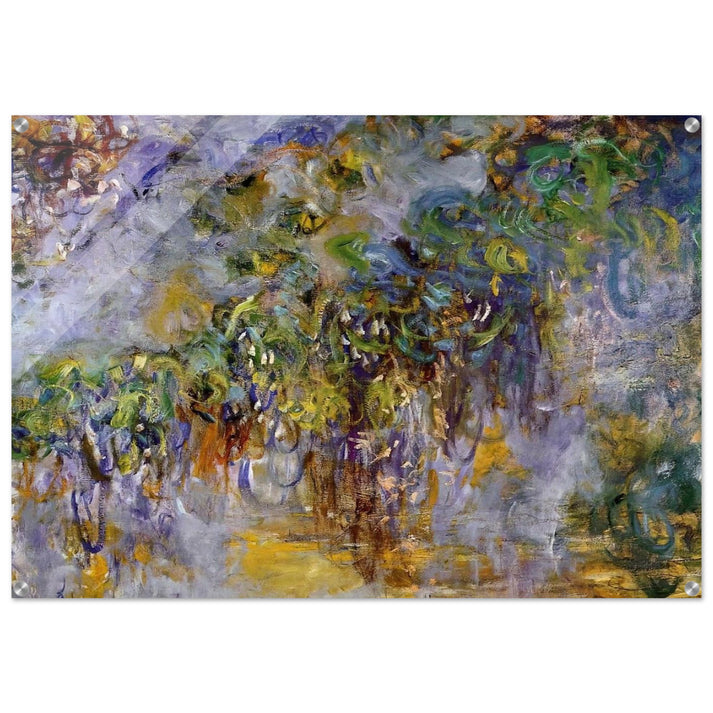


Wisteria rechte Hälfte - Claude Monet Acrylbild - 70x100 cm / 28x40″ Zoll
Wisteria rechte Hälfte - Claude Monet Acrylbild - 70x100 cm / 28x40″ Zoll
Verfügbarkeit für Abholungen konnte nicht geladen werden
Wisteria – Rechte Hälfte – Acrylbild von Claude Monet
Tauchen Sie ein in die ätherische Schönheit von Claude Monets Wisteria – Rechte Hälfte, einem Meisterwerk aus seiner ikonischen Seerosen-Serie. Diese museumsqualitative Reproduktion fängt die revolutionäre impressionistische Technik des Künstlers ein, bei der geflecktes Licht und lebendige Farben die Form in reine Empfindung auflösen. Monet malte dieses Werk in seinem Garten in Giverny und nutzte schnelle, ausdrucksstarke Pinselstriche, um das flüchtige Blühen des Glyziniengewächses über dem Wasser einzufangen – ein Zeugnis seiner lebenslangen Suche nach der Erfassung vergänglicher Naturmomente.
RedKalion präsentiert diesen archivtauglichen Fine-Art-Druck auf hochwertigem 4 mm (0,15") Acryl, der eine schlanke, lebendige und strapazierfähige Oberfläche bietet, die mit Galerieausstellungen mithalten kann. Die geraden Ecken verleihen dem Bild einen modernen Look, während transparente Hintergründe standardmäßig auf Weiß gesetzt werden, um eine optimale Präsentation zu gewährleisten. Jedes Stück enthält ein vollständiges Aufhängeset mit Hardware, Schrauben und vorgebohrten Schraubenlöchern (14 mm vom Rand, 8 mm Durchmesser) für eine mühelose Installation. Mit den Maßen 70 x 100 cm / 28 x 40 Zoll verwandelt dieses Acrylbilder jeden Raum in eine Oase künstlerischer Eleganz.
Veredeln Sie Ihr Zuhause oder Büro mit einer zeitlosen Reproduktion, die Monets Vermächtnis ehrt. RedKalions Engagement für Archivstandards garantiert ein Stück, das Bestand hat und die Gelassenheit von Giverny in Ihren Alltag bringt.
```


Discover Unlimited Art Possibilities
At RedKalion, you can find virtually any artwork from any artist, available in a wide range of sizes to perfectly match your space.
If you didn’t find what you’re looking for, contact us at support@redkalion.com . We will source any artwork and produce it in any size and format you need, including art prints, posters, canvas, framed pieces, framed canvas, and more.
For dedicated art enthusiasts, we also offer handcrafted replicas of any artwork, carefully painted by highly skilled artists using traditional techniques.
For custom requests, contact us at support@redkalion.com .
What are the dimensions and material of this Monet acrylic print?
This fine art print measures 70x100 cm (28x40 inches) and is crafted on 4mm (0.15") premium acrylic for a vibrant, durable, and museum-quality finish with straight-cut corners.
How is the Wisteria Right Half acrylic print mounted and hung?
It includes a full hanging kit with hardware, screws, and pre-drilled screw holes (14mm from edge, 8mm diameter) for easy installation, ensuring a secure and modern display.
What is the historical significance of Monet's Wisteria Right Half?
Painted in his Giverny garden, it's part of Monet's Water Lilies series, showcasing his Impressionist technique to capture fleeting natural light and color in wisteria blooms over water.
Does the print have a white background or transparent one?
Transparent backgrounds default to white for optimal presentation, enhancing the artwork's colors and providing a clean, gallery-style look in your space.
How durable and archival is this acrylic print from RedKalion?
Made with archival-grade materials, it resists fading and damage, offering long-lasting vibrancy and durability for a premium fine art reproduction.
What shipping and care does RedKalion provide for this artwork?
We offer secure, tracked shipping with protective packaging. Clean gently with a soft cloth; avoid harsh chemicals to maintain the acrylic's sleek finish.
Why did Monet focus on wisteria in his later works?
In his later years at Giverny, Monet explored wisteria as a subject to experiment with abstraction and color, reflecting his deepening interest in light and atmosphere.