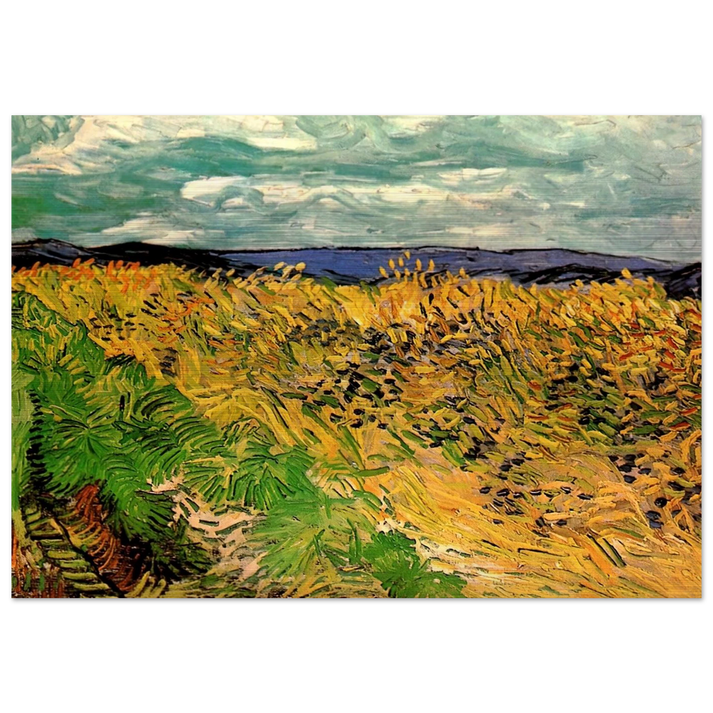


Weizenfeld mit Kornblumen - Vincent van Gogh Aluminiumdruck - 70x100 cm / 28x40 Zoll | Vincent van Gogh Aluminiumdruck | Vincent van Gogh Drucke
Weizenfeld mit Kornblumen - Vincent van Gogh Aluminiumdruck - 70x100 cm / 28x40 Zoll | Vincent van Gogh Aluminiumdruck | Vincent van Gogh Drucke
Verfügbarkeit für Abholungen konnte nicht geladen werden
Weizenfeld mit Kornblumen - Vincent van Gogh Aluminiumdruck auf gebürstetem Aluminium
Tauchen Sie ein in die strahlende Energie von Vincent van Goghs "Weizenfeld mit Kornblumen" mit diesem museumrelevanten Druck auf gebürstetem Aluminium. Erstellt 1890 während seines produktiven letzten Jahres in Auvers-sur-Oise, fängt dieses Meisterwerk die ikonischen wirbelnden Pinselstriche und die lebendige Farbpalette des Künstlers ein und ruft die rohe Schönheit und emotionale Intensität der französischen Landschaft hervor. Van Goghs Technik hier zeigt seinen ausgereiften Stil, bei dem dicker Farbauftrag und dynamische Linien sowohl die physische Landschaft als auch seine innere Unruhe vermitteln, was es zu einer tiefgründigen Aussage der postimpressionistischen Kunst macht.
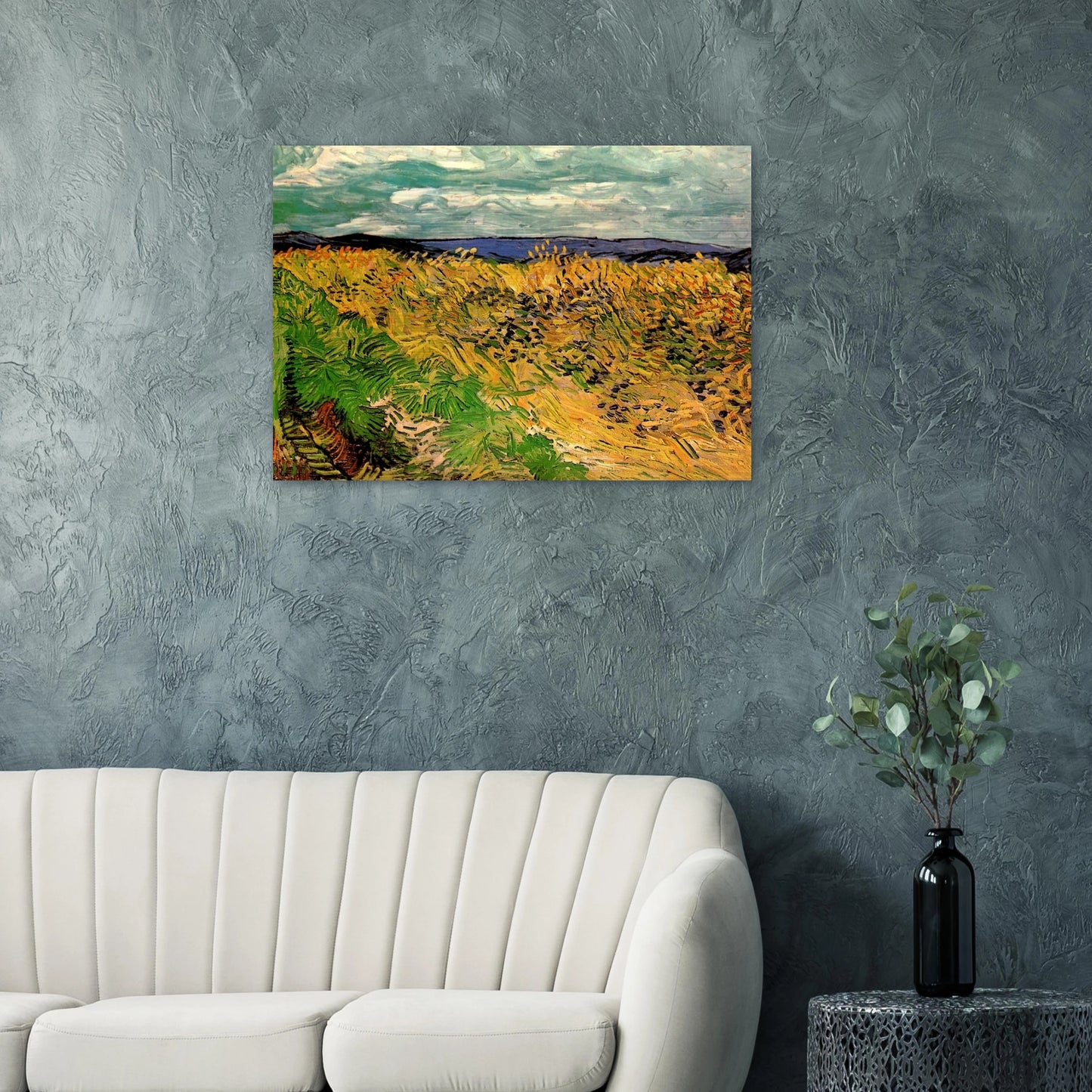
RedKalion präsentiert diese archivwürdige Reproduktion auf hochwertigem gebürstetem silbernem Aluminium DIBOND®, mit den Maßen 70x100 cm / 28x40 Zoll. Der Direktdruck auf einer 3 mm (0,12 Zoll) starken, starren Basis sorgt für lebendige, farbecht resistente Farben mit matter, blendfreier Oberfläche, während unbedruckte Bereiche einen auffälligen metallisch-silbernen Effekt für zusätzliche Tiefe zeigen. Dieser hochwertige Kunstdruck verbindet historische Bedeutung mit moderner Haltbarkeit und bietet eine anspruchsvolle Ergänzung für jeden Raum.
Veredeln Sie Ihr Zuhause oder Büro mit einem Stück, das Kunstgeschichte und zeitgenössisches Design verbindet. Vertrauen Sie RedKalion für fachkundig kuratierte, archivwürdige Meisterwerke, die Bestand haben.
```


Discover Unlimited Art Possibilities
At RedKalion, you can find virtually any artwork from any artist, available in a wide range of sizes to perfectly match your space.
If you didn’t find what you’re looking for, contact us at support@redkalion.com . We will source any artwork and produce it in any size and format you need, including art prints, posters, canvas, framed pieces, framed canvas, and more.
For dedicated art enthusiasts, we also offer handcrafted replicas of any artwork, carefully painted by highly skilled artists using traditional techniques.
For custom requests, contact us at support@redkalion.com .
What are the dimensions and material of this Vincent van Gogh print?
This fine art print measures 70x100 cm (28x40 inches) and is crafted on brushed silver Aluminum DIBOND® with a 3mm thickness for a durable, museum-quality reproduction.
How does the brushed aluminum finish enhance the artwork?
The metallic finish and horizontal grain create a dynamic look, with a matte, glare-free surface that highlights van Gogh's vivid colors and reveals a striking silver effect in unprinted areas.
Is a hanging kit included with this aluminum print?
Yes, a hanging kit is included; specific components may vary by fulfillment country to ensure secure installation for your archival art piece.
What makes this a museum-quality reproduction?
It uses direct printing on Aluminum DIBOND® for fade-resistant, vivid colors and a 3mm rigid base, meeting archival standards for longevity and premium display.
How should I care for this brushed aluminum print?
Gently dust with a soft, dry cloth; avoid harsh chemicals. The archival materials ensure long-term durability for your van Gogh fine art print.
What historical context surrounds "Wheat Field with Cornflowers"?
Painted in 1890 in Auvers-sur-Oise, it reflects van Gogh's mature Post-Impressionist style, using swirling brushstrokes to convey emotional depth and the beauty of rural France.
Why are cornflowers significant in van Gogh's work?
Cornflowers, often blue, contrast with golden wheat, symbolizing hope and nature's vibrancy in his later pieces, enhancing the artwork's emotional and visual impact.