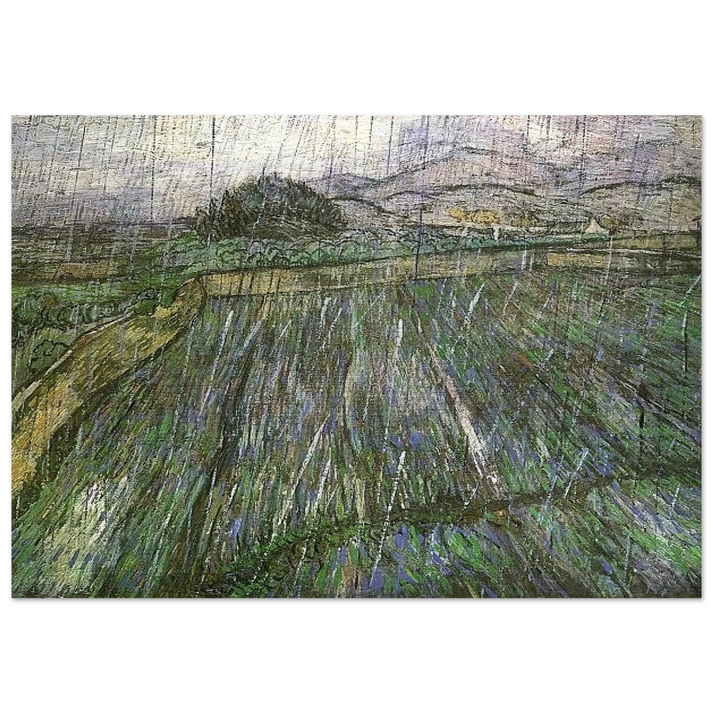


Weizenfeld im Regen - Vincent van Gogh Aluminiumdruck - 70x100 cm / 28x40 Zoll | Vincent van Gogh Aluminiumdruck | Vincent van Gogh Drucke
Weizenfeld im Regen - Vincent van Gogh Aluminiumdruck - 70x100 cm / 28x40 Zoll | Vincent van Gogh Aluminiumdruck | Vincent van Gogh Drucke
Verfügbarkeit für Abholungen konnte nicht geladen werden
Weizenfeld im Regen – Vincent van Gogh Aluminiumdruck mit gebürsteter Oberfläche
Erleben Sie die rohe emotionale Kraft von Vincent van Goghs Weizenfeld im Regen (1889), einem Meisterwerk aus seinen letzten Jahren in Saint-Rémy-de-Provence. Diese museumsqualitative Reproduktion fängt die charakteristischen wirbelnden Pinselstriche und stürmischen Himmel des Künstlers ein und ruft ein tiefes Gefühl von der Dramatik und der Introspektion der Natur hervor. Van Goghs Technik, mit dickem Impasto und dynamischen Linien, vermittelt die Energie des Sturms und die Widerstandsfähigkeit des Weizens – eine eindringliche Spiegelung seiner eigenen turbulenten Psyche.
RedKalion präsentiert dieses ikonische Werk als Premium-Aluminiumdruck mit gebürsteter Oberfläche, sorgfältig gefertigt für nachhaltige Wirkung. Direkt auf 3 mm dickem Aluminium DIBOND® mit metallischer Oberfläche und horizontaler Maserung gedruckt, bietet es lebendige Farben und eine matte, blendfreie Oberfläche. Die unbedruckten weißen Bereiche zeigen einen auffälligen gebürsteten Silbereffekt, der den Kontrast und die moderne Anmutung des Kunstwerks verstärkt. Dieser Fine-Art-Druck misst 70 x 100 cm (28 x 40 Zoll) und enthält ein Aufhängeset, bereit, jeden Raum mit archivbeständiger Haltbarkeit zu bereichern.
- Material: Gebürstetes silbernes Aluminium DIBOND® mit metallischer Oberfläche und horizontaler Maserung.
- Dicke: 3 mm (0,12 Zoll) für eine stabile, langlebige Basis.
- Druck: Direktdruck für lebendige Farben und matte Oberfläche; unbedruckte Bereiche zeigen metallisches Silber.
- Oberfläche: Matt, blendfrei, ideal für dynamische visuelle Wirkung.
- Größe: 70 x 100 cm / 28 x 40 Zoll.
- Enthalten: Aufhängeset (variiert je nach Land).
Als vertrauenswürdiger Kurator weltklasse Reproduktionen stellt RedKalion sicher, dass jedes Detail van Goghs Vermächtnis ehrt. Bereichern Sie Ihr Zuhause oder Büro mit diesem archivbeständigen Meisterwerk, das historische Bedeutung mit zeitgenössischer Handwerkskunst verbindet.
```


Discover Unlimited Art Possibilities
At RedKalion, you can find virtually any artwork from any artist, available in a wide range of sizes to perfectly match your space.
If you didn’t find what you’re looking for, contact us at support@redkalion.com . We will source any artwork and produce it in any size and format you need, including art prints, posters, canvas, framed pieces, framed canvas, and more.
For dedicated art enthusiasts, we also offer handcrafted replicas of any artwork, carefully painted by highly skilled artists using traditional techniques.
For custom requests, contact us at support@redkalion.com .
What are the specifications of this Vincent van Gogh aluminum print?
This print is 70x100 cm (28x40 inches), made from 3mm brushed silver Aluminum DIBOND® with a metallic finish and horizontal grain, featuring direct printing for vivid colors and a matte, glare-free surface.
How does the brushed aluminum enhance the Wheat Field in Rain artwork?
The brushed aluminum print offers a dynamic look with a metallic silver effect in unprinted areas, adding contrast and modern appeal to van Gogh's swirling brushstrokes and stormy skies.
Is the hanging kit included with this fine art print?
Yes, a hanging kit is included, though it may vary by fulfillment country to ensure secure installation for your museum-quality reproduction.
What makes this a museum-quality reproduction of van Gogh's work?
RedKalion uses archival-grade materials and precise printing techniques to capture the vivid colors and texture of van Gogh's original, ensuring durability and artistic fidelity.
How durable is the brushed aluminum print for long-term display?
The 3mm Aluminum DIBOND® base provides a rigid, durable structure resistant to warping, making it ideal for lasting display as a premium art print.
What historical context surrounds Wheat Field in Rain by Vincent van Gogh?
Painted in 1889 during van Gogh's stay in Saint-Rémy-de-Provence, this work reflects his emotional turmoil and mastery of impasto technique to depict nature's drama.
Why did van Gogh choose a wheat field subject for this painting?
Van Gogh often used wheat fields as symbols of life and death, with the rain adding a layer of melancholy and movement, showcasing his deep connection to the Provençal landscape.