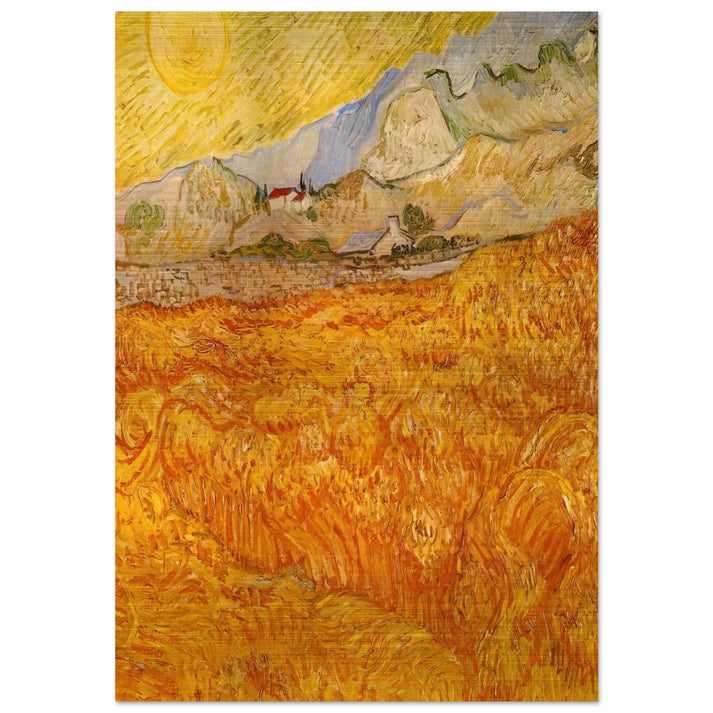


Weizenfeld hinter dem Saint-Paul-Hospital mit einer Sämaschine - Vincent van Gogh Aluminiumdruck - 70x100 cm / 28x40 Zoll | Vincent van Gogh Aluminiumdruck | Vincent van Gogh Drucke
Weizenfeld hinter dem Saint-Paul-Hospital mit einer Sämaschine - Vincent van Gogh Aluminiumdruck - 70x100 cm / 28x40 Zoll | Vincent van Gogh Aluminiumdruck | Vincent van Gogh Drucke
Verfügbarkeit für Abholungen konnte nicht geladen werden
Weizenfeld hinter dem Saint-Paul-Krankenhaus mit einem Schnitter – Vincent van Gogh Aluminiumdruck
Tauchen Sie Ihren Raum in die intensive, wirbelnde Energie von Vincent van Goghs spätem Meisterwerk, Weizenfeld hinter dem Saint-Paul-Krankenhaus mit einem Schnitter. 1889 während seines Aufenthalts in der Anstalt Saint-Paul-de-Mausole in Saint-Rémy gemalt, fängt dieses Werk van Goghs tiefe Verbindung zur Natur und seine stürmische Innenwelt ein. Die dynamischen, pastosen Pinselstriche zeigen ein goldenes Weizenfeld unter einem stürmischen Himmel, mit einem einsamen Schnitter – ein Symbol für sowohl Leben als auch Tod – der im Vordergrund arbeitet. Dieses ikonische Werk verkörpert van Goghs postimpressionistisches Genie und verbindet emotionale Tiefe mit einer lebendigen Farbtheorie.
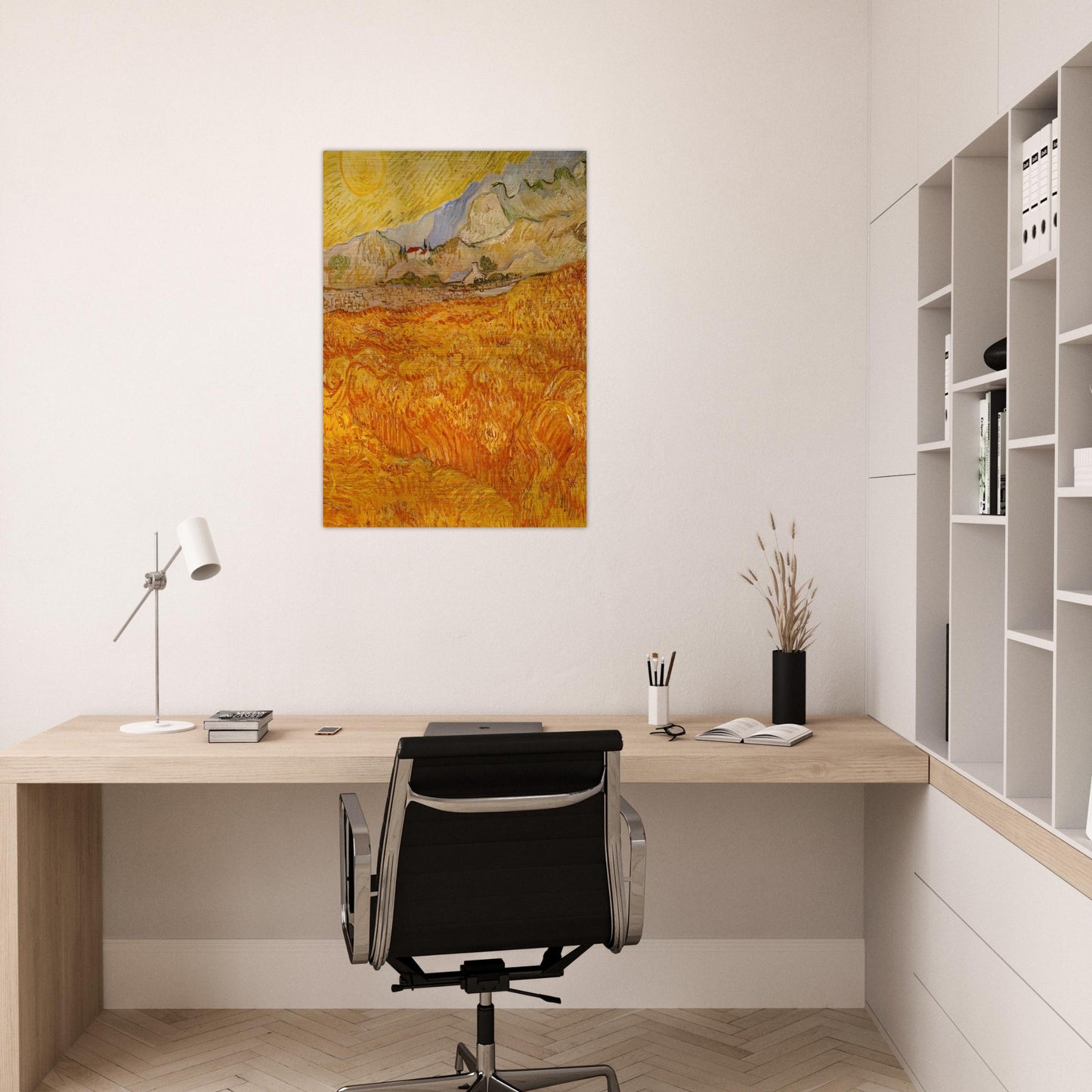
RedKalion präsentiert dieses Kunstwerk als museumsqualitative Reproduktion auf hochwertigem gebürstetem silbernem Aluminium DIBOND®. Unser Fine-Art-Druck wird mit einer Direktdrucktechnik auf eine 3 mm (0,12 Zoll) dicke AluDibond-Platte gefertigt, wodurch lebendige, farbechthe Farben und eine stabile, starre Basis gewährleistet werden. Die matte, blendfreie Oberfläche verstärkt die dramatischen Kontraste des Kunstwerks, während unbedruckte Bereiche einen auffälligen metallisch-silbernen Effekt zeigen, der van Goghs kräftige Farbpalette ergänzt. Jeder Druck enthält ein vollständiges Aufhängeset für eine mühelose Präsentation.
Veredeln Sie Ihr Zuhause oder Büro mit einem archivierbaren Meisterwerk, das Bestand hat. Dieser Vincent-van-Gogh-Aluminiumdruck misst 70 x 100 cm / 28 x 40 Zoll und bietet eine beeindruckende Präsenz, die die visionäre Hinterlassenschaft des Künstlers ehrt. Vertrauen Sie RedKalion für fachkundig kuratierte, archivqualitative Reproduktionen, die Weltklasse-Kunst in Ihren Alltag bringen.
```


Discover Unlimited Art Possibilities
At RedKalion, you can find virtually any artwork from any artist, available in a wide range of sizes to perfectly match your space.
If you didn’t find what you’re looking for, contact us at support@redkalion.com . We will source any artwork and produce it in any size and format you need, including art prints, posters, canvas, framed pieces, framed canvas, and more.
For dedicated art enthusiasts, we also offer handcrafted replicas of any artwork, carefully painted by highly skilled artists using traditional techniques.
For custom requests, contact us at support@redkalion.com .
What are the dimensions and material of this Vincent van Gogh print?
This fine art print measures 70x100 cm (28x40 inches) and is crafted on brushed silver Aluminum DIBOND® with a 3mm thickness for durability and a dynamic metallic finish.
How is the print applied to the aluminum surface?
We use direct printing on AluDibond, which ensures vivid colors and a matte finish, with unprinted areas revealing a striking metallic silver effect for enhanced visual appeal.
What is included with the print for hanging?
A complete hanging kit is included with every order, though specific components may vary by fulfillment country to ensure secure and easy installation.
Is this print archival and fade-resistant?
Yes, this museum-quality reproduction features archival-grade printing that resists fading, ensuring long-lasting vibrancy and durability for your Vincent van Gogh artwork.
How does the finish affect the artwork's appearance?
The matte, glare-free finish minimizes reflections and enhances the artwork's contrasts, making it ideal for displaying van Gogh's bold, expressive brushstrokes.
What is the historical significance of this van Gogh painting?
Painted in 1889 during van Gogh's asylum stay, it reflects his emotional turmoil and mastery of Post-Impressionism, with the reaper symbolizing themes of life and death.
Why did van Gogh choose a wheat field and reaper for this scene?
Van Gogh often used wheat fields to express cycles of nature and human life, with the reaper representing both harvest and mortality, echoing his personal struggles.