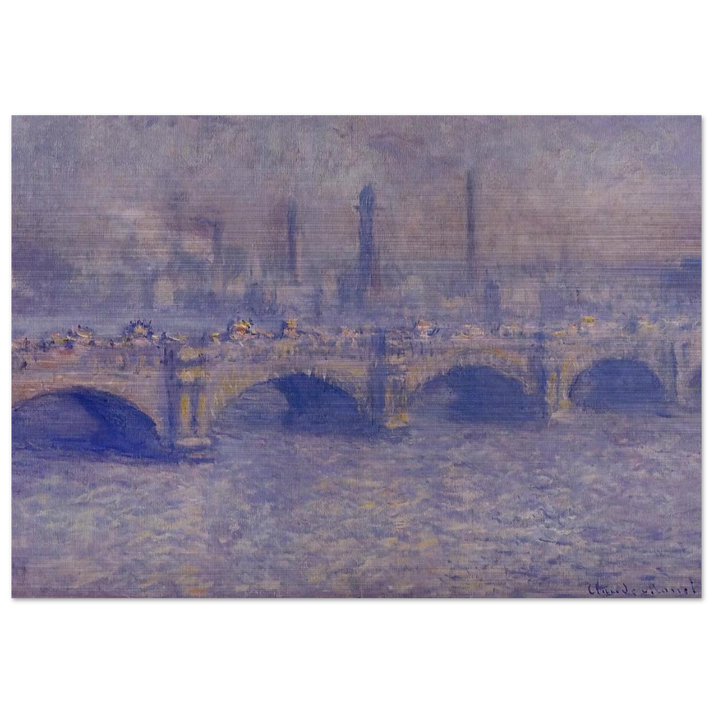


Waterloo Bridge, Sonnenlichteffekt - claude monet Aluminiumdruck - 70x100 cm / 28x40 Zoll | claude monet Aluminiumdruck | claude monet Drucke
Waterloo Bridge, Sonnenlichteffekt - claude monet Aluminiumdruck - 70x100 cm / 28x40 Zoll | claude monet Aluminiumdruck | claude monet Drucke
Verfügbarkeit für Abholungen konnte nicht geladen werden
Waterloo Bridge, Sonneneffekt von Claude Monet
Tauchen Sie ein in die strahlende Schönheit von Claude Monets Waterloo Bridge, Sonneneffekt, einem Meisterwerk aus seiner ikonischen London-Serie. Diese museumsreife Reproduktion fängt die revolutionäre impressionistische Technik des Künstlers ein, bei der flüchtiges Licht und atmosphärischer Dunst die Themse in ein glitzerndes Spektakel verwandeln. Monet malte diese Szene während seines London-Aufenthalts zu Beginn der 1900er Jahre und stellte dabei gekonnt den industriellen Nebel und das sonnenbeschienene Wasser mit lockeren, ausdrucksstarken Pinselstrichen dar, die einen Sinn für vergängliche Schönheit vermitteln.
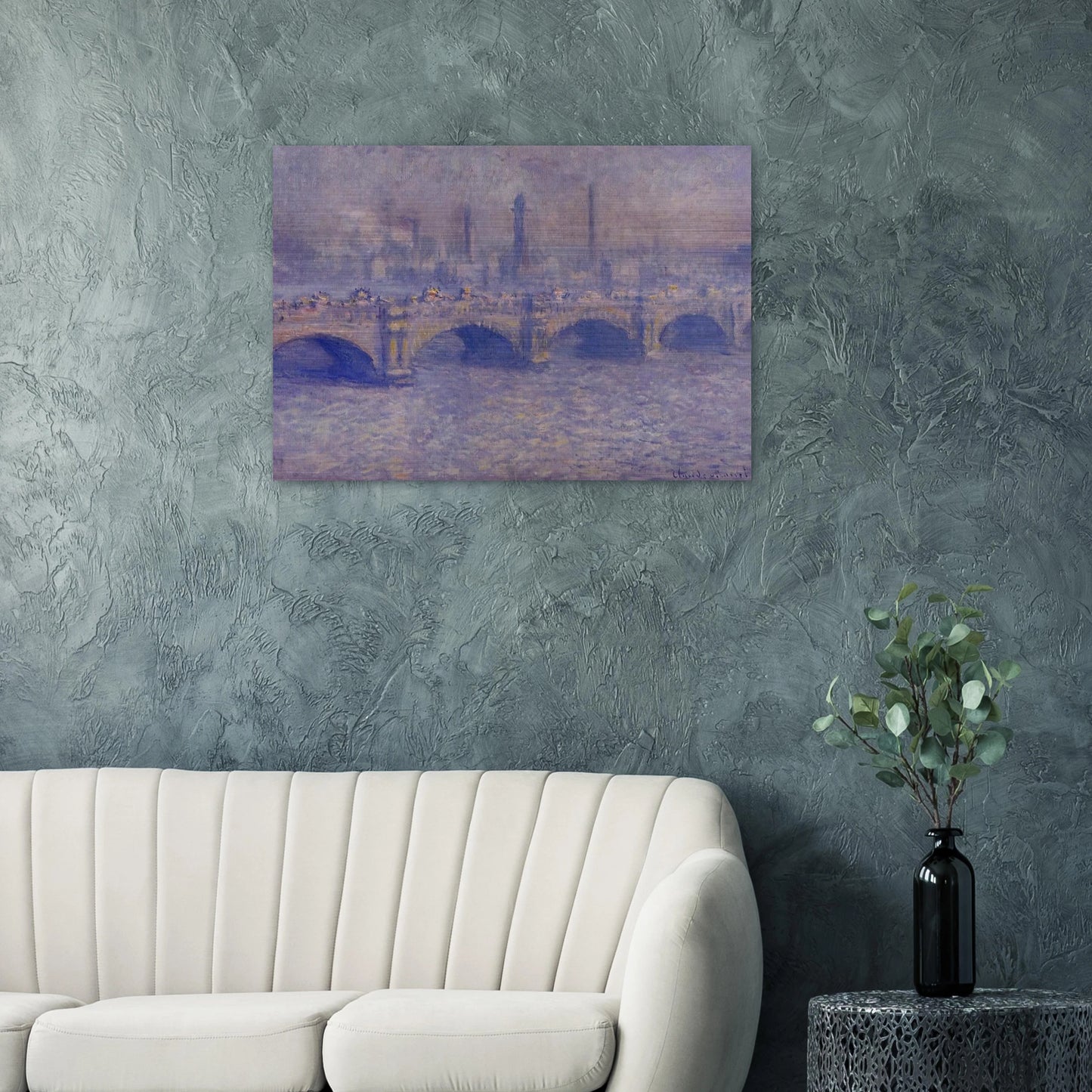
RedKalion präsentiert diesen archivtauglichen Fine-Art-Druck auf hochwertigem gebürstetem silbernem Aluminium DIBOND® mit den Maßen 70x100 cm (28x40 Zoll). Die 3 mm dicke, stabile Unterlage sorgt für Langlebigkeit, während die Direktdrucktechnologie lebendige, farbechte Farben mit einem edlen matten Finish liefert. Unbedruckte Bereiche zeigen einen dynamischen metallischen Silbereffekt, der die leuchtende Qualität des Kunstwerks unterstreicht. Dieser Claude Monet Aluminiumdruck enthält ein vollständiges Aufhängeset für eine mühelose Präsentation und ermöglicht es Ihnen, jeden Raum mit einem zeitlosen Stück Kunstgeschichte zu bereichern.
- Material: Gebürstetes silbernes Aluminium DIBOND® mit metallischem Finish und horizontaler Maserung für einen dynamischen Look.
- Dicke: 3 mm (0,12 Zoll) für eine stabile, feste Unterlage.
- Druck: Direktdruck auf AluDibond für lebendige Farben und ein mattes Finish. Unbedruckte weiße Bereiche zeigen einen metallischen Silbereffekt.
- Oberfläche: Matt, blendfrei, ideal zur Verstärkung der subtilen Töne des Kunstwerks mit einem markanten gebürsteten Silbereffekt.
- Aufhängeset: Enthalten; variiert je nach Lieferland.
Als führender Kurator von weltklasse Reproduktionen stellt RedKalion sicher, dass jedes Detail – von den archivtauglichen Tinten bis zum hochwertigen Aluminiumsubstrat – höchsten Ansprüchen genügt. Dieser Claude Monet Druck ehrt nicht nur das Erbe des Künstlers, sondern bietet auch eine zeitgemäße, langlebige Präsentationsmöglichkeit. Veredeln Sie Ihr Zuhause oder Büro mit einem Kunstwerk, das historische Bedeutung mit moderner Handwerkskunst verbindet und so einen inspirierenden und bleibenden Blickfang schafft.
```


Discover Unlimited Art Possibilities
At RedKalion, you can find virtually any artwork from any artist, available in a wide range of sizes to perfectly match your space.
If you didn’t find what you’re looking for, contact us at support@redkalion.com . We will source any artwork and produce it in any size and format you need, including art prints, posters, canvas, framed pieces, framed canvas, and more.
For dedicated art enthusiasts, we also offer handcrafted replicas of any artwork, carefully painted by highly skilled artists using traditional techniques.
For custom requests, contact us at support@redkalion.com .
What are the dimensions of this Claude Monet Waterloo Bridge print?
This fine art print measures 70x100 cm (28x40 inches), offering a substantial presence ideal for enhancing living rooms, offices, or galleries with a museum-quality reproduction.
What material is used for this aluminum art print?
It features brushed silver Aluminum DIBOND® with a metallic finish and horizontal grain, providing a durable, rigid base and a dynamic look for your Claude Monet masterpiece.
Is the hanging kit included with this Monet artwork?
Yes, a complete hanging kit is included with every order, though specific components may vary by fulfillment country to ensure secure installation.
How does the printing process ensure color accuracy?
We use direct print technology on AluDibond with archival inks, delivering vivid, fade-resistant colors and a matte finish that captures Monet's luminous Impressionist palette.
Is this print suitable for long-term display?
Absolutely. Made with premium aluminum and archival materials, this museum-quality reproduction is designed for durability and resistance to fading, ensuring lasting beauty.
What historical period does Waterloo Bridge, Sunlight Effect represent?
Painted in the early 1900s, it belongs to Monet's London series, showcasing his mature Impressionist style and fascination with light, fog, and urban landscapes during the Industrial Era.
Why did Monet choose Waterloo Bridge as a subject?
Monet was captivated by London's atmospheric effects; Waterloo Bridge allowed him to explore sunlight filtering through fog, using rapid brushstrokes to depict transient moments on the Thames.