


Vase mit Gladiolen und Rosen - Pierre-Auguste Renoir Aluminiumdruck - 70x100 cm / 28x40 Zoll | Pierre-Auguste Renoir Aluminiumdruck | Pierre-Auguste Renoir Drucke
Vase mit Gladiolen und Rosen - Pierre-Auguste Renoir Aluminiumdruck - 70x100 cm / 28x40 Zoll | Pierre-Auguste Renoir Aluminiumdruck | Pierre-Auguste Renoir Drucke
Verfügbarkeit für Abholungen konnte nicht geladen werden
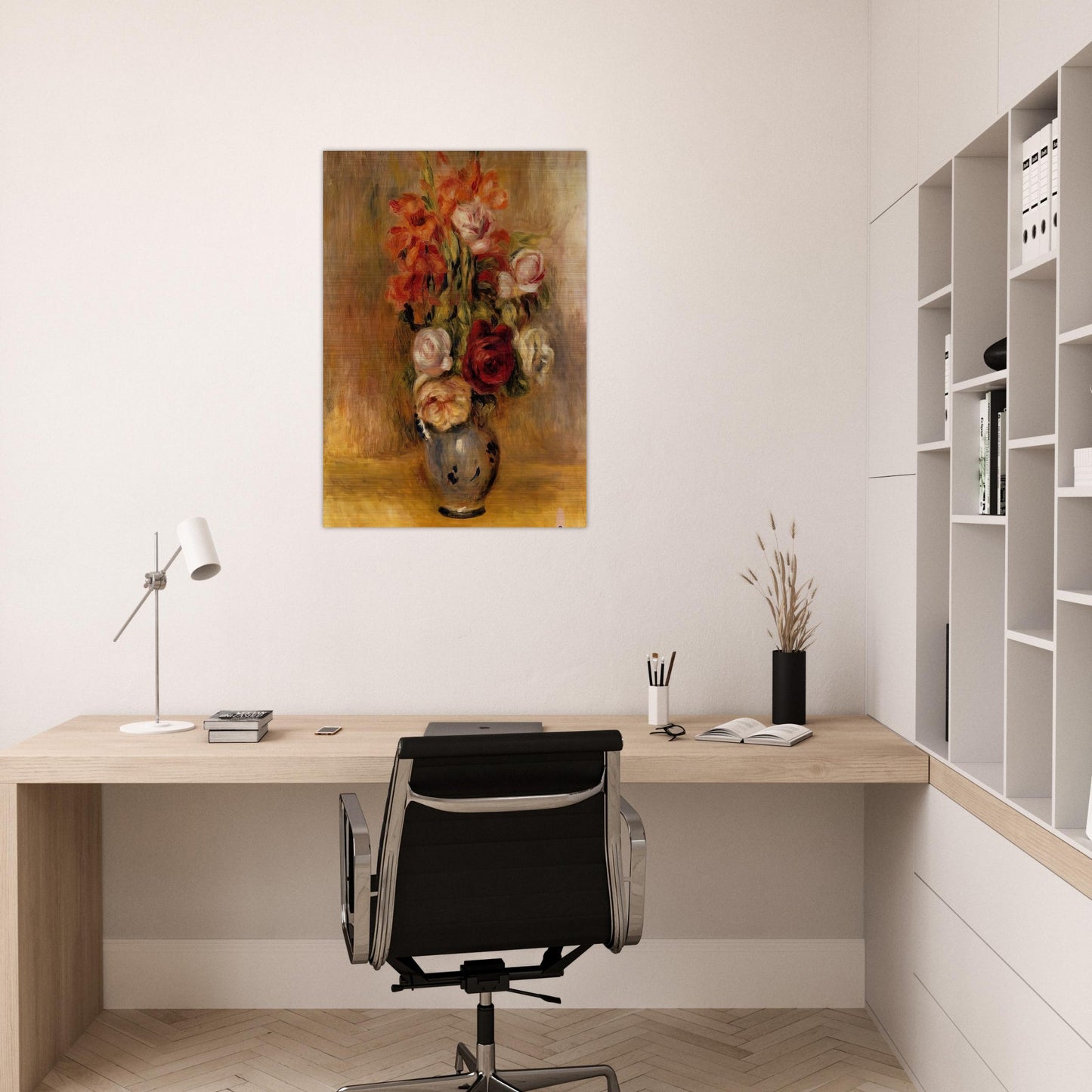
Vase mit Gladiolen und Rosen – Pierre-Auguste Renoir Aluminiumdruck in gebürstetem Aluminium
Tauchen Sie Ihren Raum in die strahlende Schönheit von Pierre-Auguste Renoirs Vase mit Gladiolen und Rosen, einem quintessentiellen Meisterwerk des Impressionismus, das nun als museumreife Reproduktion von RedKalion erhältlich ist. Dieser hochwertige Kunstdruck fängt Renoirs charakteristische Pinselführung und lebendige Farbpalette ein und feiert die vergängliche Schönheit üppiger Blumenarrangements mit einer freudvollen, sonnendurchfluteten Energie, die sein späteres Schaffen prägte.
Renoir, einer der Gründerväter des Impressionismus, verband Farbe und Licht meisterhaft, um sinnliche Freude zu evozieren. In diesem Werk schaffen seine lockeren, fließenden Pinselstriche und die reichen Farbtöne Rosa, Rot und Grün eine dynamische Komposition, die sowohl spontan als auch harmonisch wirkt. Unsere archivbeständige Reproduktion stellt jedes zarte Blütenblatt und jeden subtilen Schatten präzise dar und ehrt so die Technik des Künstlers sowie den revolutionären Ansatz seiner Epoche, alltägliche Momente einzufangen.
Dieser hochwertige Aluminium DIBOND®-Druck in gebürstetem Silber misst 70x100 cm (28x40 Zoll) und verfügt über eine 3 mm starke, stabile Trägerplatte, die Eleganz ausstrahlt. Der Direktdruck auf AluDibond liefert lebendige, farbbeständige Farben mit matter, blendfreier Oberfläche, während unbeschichtete Bereiche einen markanten metallischen Silbereffekt offenbaren, der die Leuchtkraft des Kunstwerks verstärkt. Komplett mit Montageset kommt er bereit, jeden Innenraum mit zeitloser Eleganz zu bereichern.
Bei RedKalion spezialisieren wir uns darauf, weltklasse Reproduktionen zu kuratieren, die Kunstgeschichte und modernes Wohnen verbinden. Vertrauen Sie auf unsere Expertise, um dieses archivwürdige Meisterwerk in Ihr Zuhause oder Büro zu bringen, wo es als Zeugnis von Renoirs bleibendem Vermächtnis bestehen wird.
```


Discover Unlimited Art Possibilities
At RedKalion, you can find virtually any artwork from any artist, available in a wide range of sizes to perfectly match your space.
If you didn’t find what you’re looking for, contact us at support@redkalion.com . We will source any artwork and produce it in any size and format you need, including art prints, posters, canvas, framed pieces, framed canvas, and more.
For dedicated art enthusiasts, we also offer handcrafted replicas of any artwork, carefully painted by highly skilled artists using traditional techniques.
For custom requests, contact us at support@redkalion.com .
What are the dimensions and material of this Pierre-Auguste Renoir print?
This fine art print measures 70x100 cm (28x40 inches) and is crafted from brushed silver Aluminum DIBOND® with a 3mm thickness, offering a durable, museum-quality reproduction with a metallic finish.
How does the printing process enhance the artwork's colors?
The direct print on AluDibond ensures vivid, fade-resistant colors and a matte finish, while unprinted white areas reveal a dynamic brushed silver effect for a premium Impressionist art print.
Is a hanging kit included with this aluminum art print?
Yes, a hanging kit is included; specific components may vary by fulfillment country to ensure secure installation of your Renoir reproduction.
What makes this a museum-quality reproduction?
Our archival-grade printing on Aluminum DIBOND® captures Renoir's brushwork and palette with precision, using high-end materials for longevity, making it a trusted fine art print.
How should I care for this brushed aluminum print?
Gently dust with a soft, dry cloth; avoid harsh chemicals. The matte, glare-free finish and durable 3mm base ensure easy maintenance for your Renoir artwork.
What is the historical significance of Vase of Gladiolas and Roses?
Created in Renoir's later period, this work exemplifies Impressionist techniques with vibrant colors and loose brushstrokes, celebrating floral beauty and sensory joy in everyday life.
Why did Renoir focus on floral still lifes like this one?
Renoir often painted flowers to explore light and color dynamics, reflecting his belief in art as a source of pleasure and his mastery in capturing natural luminosity.