


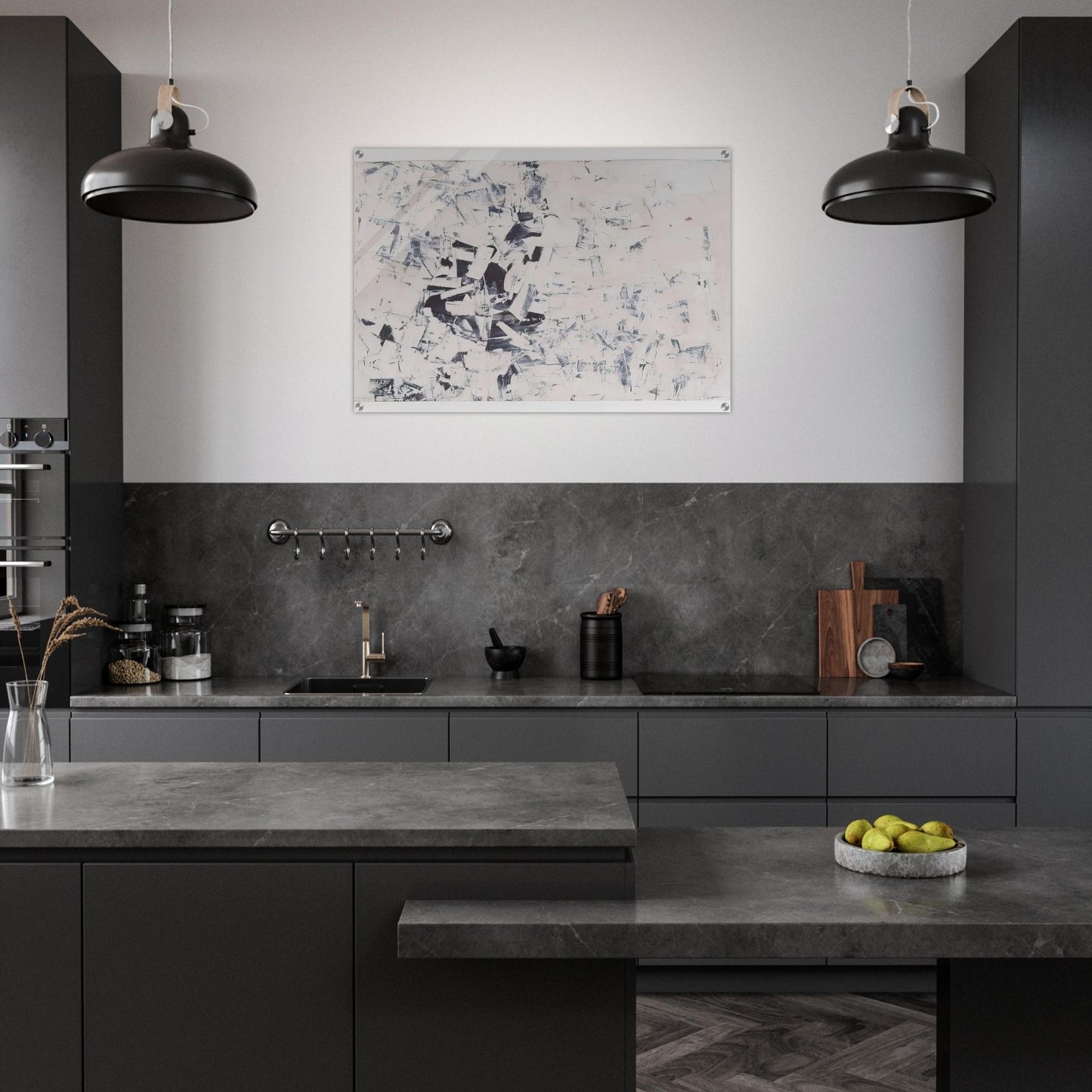
Unbenannte Freie Strukturen - 1960 - Charlotte Posenenske Acryl-Druck - 70x100 cm / 28x40″ Zoll
Unbenannte Freie Strukturen - 1960 - Charlotte Posenenske Acryl-Druck - 70x100 cm / 28x40″ Zoll
Verfügbarkeit für Abholungen konnte nicht geladen werden
Unbetitelte Freie Strukturen - 1960 von Charlotte Posenenske
Erleben Sie den radikalen Minimalismus von Charlotte Posenenskes Unbetitelten Freien Strukturen (1960), jetzt als museumreife Acryl-Drucke von RedKalion erhältlich. Dieses ikonische Werk der deutschen Konzeptkünstlerin stellt traditionelle Kunstformen mit ihrer geometrischen Abstraktion und industriellen Ästhetik infrage und spiegelt ihre Pionierrolle in der avantgardistischen Bewegung der 1960er Jahre wider. Das Werk vermittelt ein Gefühl von Ordnung, Präzision und demokratischer Zugänglichkeit und ist damit eine zeitlose Ergänzung für moderne Innenräume.
Unsere Premium-Reproduktion erfasst jedes Detail von Posenenskes ursprünglicher Vision in einem Format von 70x100 cm (28x40 Zoll), gedruckt mit archivbeständigen Tinten für lebendige, farbbeständige Farben. Das Kunstwerk ist auf 4 mm (0,15") Acryl montiert und bietet einen schlanken, strapazierfähigen Finish, der Tiefe und Leuchtkraft verstärkt. Mit geraden Schnittkanten für ein zeitgemäßes Aussehen und transparenten Hintergründen in Weiß für optimalen Kontrast ist dieses Werk darauf ausgelegt, jeden Raum mit seiner zurückhaltenden Eleganz aufzuwerten.
Jeder Druck enthält ein vollständiges Aufhängeset mit Hardware, Schrauben und vorgebohrten Schraubenlöchern (positioniert 14 mm/0,55" vom Rand entfernt, mit einem 8-mm/0,31"-Loch und 15-mm/0,6"-Schraubenkopf) für eine einfache und sichere Installation. Als vertrauenswürdiger Kurator von hochwertigen Kunstreproduktionen stellt RedKalion sicher, dass dieses archivierte Meisterwerk nicht nur Posenenskes Vermächtnis ehrt, sondern auch als Statement anspruchsvollen Designs Bestand hat.
```


Discover Unlimited Art Possibilities
At RedKalion, you can find virtually any artwork from any artist, available in a wide range of sizes to perfectly match your space.
If you didn’t find what you’re looking for, contact us at support@redkalion.com . We will source any artwork and produce it in any size and format you need, including art prints, posters, canvas, framed pieces, framed canvas, and more.
For dedicated art enthusiasts, we also offer handcrafted replicas of any artwork, carefully painted by highly skilled artists using traditional techniques.
For custom requests, contact us at support@redkalion.com .
What is the historical significance of Charlotte Posenenske's Untitled Free Structures (1960)?
This work is a key example of Posenenske's minimalist and conceptual art from the 1960s, challenging traditional aesthetics with geometric forms and industrial materials, reflecting her influence on avant-garde movements.
How does the acrylic print enhance the artwork's visual impact?
The 4mm acrylic mounting provides a sleek, vibrant finish that adds depth and luminosity, making colors pop and ensuring durability for a museum-quality display in your home or office.
What are the specifications of the acrylic print and hanging kit?
The print measures 70x100 cm (28x40 inches) on 4mm acrylic with straight-cut corners. The hanging kit includes hardware, screws, and pre-drilled holes (14mm from edge, 8mm diameter, 15mm screw head) for easy installation.
How is shipping handled for this fine art reproduction?
We ship worldwide with secure, protective packaging to ensure your archival print arrives in perfect condition, ready to hang and enjoy as a premium art piece.
What makes this a long-lasting, archival-quality print?
Printed with fade-resistant inks on durable acrylic, this reproduction is designed to maintain its vibrant colors and structural integrity for years, offering a trustworthy investment in art.
Why did Posenenske use geometric forms in her 1960s works?
Posenenske employed geometric abstraction to democratize art, focusing on serial production and industrial aesthetics to critique traditional art markets and emphasize functionality.
How does the white background optimize presentation for this print?
Transparent backgrounds are defaulted to white to enhance contrast and clarity, ensuring the geometric structures stand out vividly for a modern, clean display in any setting.