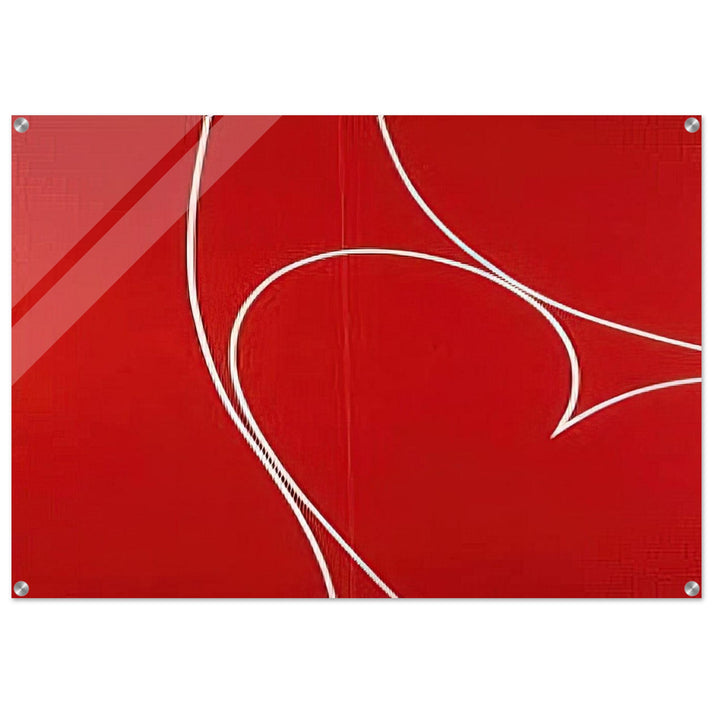


Ohne Titel - 1966 - Lorser Feitelson Acryl-Druck - 70x100 cm / 28x40″ Zoll | Lorser Feitelson Wandkunst | Lorser Feitelson Drucke
Ohne Titel - 1966 - Lorser Feitelson Acryl-Druck - 70x100 cm / 28x40″ Zoll | Lorser Feitelson Wandkunst | Lorser Feitelson Drucke
Verfügbarkeit für Abholungen konnte nicht geladen werden
Ohne Titel - 1966 - Acrylbild von Lorser Feitelson
Tauchen Sie ein in die kühne geometrische Abstraktion von Lorser Feitelson mit dieser museumswürdigen Reproduktion seines Meisterwerks von 1966. Als eine Schlüsselfigur der Hard-Edge-Malerei zeigt Feitelsons Werk aus dieser Zeit präzise Formen, lebendige Farbfelder und ein dynamisches Zusammenspiel von Formen, das die Wahrnehmung herausfordert. Dieses während des Höhepunkts seiner Erforschung der gegenstandslosen Kunst entstandene Werk spiegelt seine Meisterschaft in Balance und räumlicher Spannung wider und bietet eine zeitlose Aussage des Mid-Century Modernismus.
RedKalion präsentiert diesen archivtauglichen Acryldruck auf einer 4 mm (0,15 Zoll) starken Acrylplatte, die eine schlanke, lebendige und strapazierfähige Oberfläche gewährleistet, die jede Nuance von Feitelsons Originalkomposition einfängt. Mit geraden Schnittkanten für einen modernen Look und transparenten Hintergründen, die für Klarheit auf Weiß optimiert sind, ist diese Reproduktion in den Maßen 70x100 cm / 28x40 Zoll darauf ausgelegt, jeden zeitgenössischen Raum zu bereichern. Jedes Stück enthält ein vollständiges Aufhängeset mit Hardware, Schrauben und vorgebohrten Löchern (14 mm vom Rand, 8 mm Durchmesser) für eine mühelose Installation.
Als vertrauenswürdiger Kurator von hochwertigen Kunstdrucken garantiert RedKalion, dass dieses Lorser Feitelson Wandbild unter Verwendung archivtauglicher Materialien hergestellt wird und so die Integrität von Feitelsons Vision für Generationen bewahrt. Bereichern Sie Ihr Zuhause oder Büro mit einem Werk, das die Innovation der abstrakten Kunst der 1960er Jahre verkörpert – unterstützt durch unser Engagement für Exzellenz.
```


Discover Unlimited Art Possibilities
At RedKalion, you can find virtually any artwork from any artist, available in a wide range of sizes to perfectly match your space.
If you didn’t find what you’re looking for, contact us at support@redkalion.com . We will source any artwork and produce it in any size and format you need, including art prints, posters, canvas, framed pieces, framed canvas, and more.
For dedicated art enthusiasts, we also offer handcrafted replicas of any artwork, carefully painted by highly skilled artists using traditional techniques.
For custom requests, contact us at support@redkalion.com .
What are the dimensions of this Lorser Feitelson acrylic print?
This museum-quality reproduction measures 70x100 cm or 28x40 inches, ideal for making a bold statement in any room with its large-scale format.
What material is used for this fine art print?
It features a 4mm (0.15") acrylic panel for a sleek, vibrant, and durable finish that enhances the colors and details of Feitelson’s geometric abstraction.
How is this archival print shipped and installed?
We ship it securely with a complete hanging kit, including hardware and screws, and pre-drilled holes (14mm from the edge) for easy wall mounting.
Is this a limited edition or open edition reproduction?
This is an open edition reproduction, allowing more art lovers to own a high-quality piece of Lorser Feitelson’s iconic 1966 artwork.
How does RedKalion ensure the longevity of this acrylic print?
We use archival-grade materials and printing techniques to ensure this museum-quality reproduction resists fading and maintains its vibrancy over time.
What artistic movement is Lorser Feitelson associated with?
Lorser Feitelson was a key figure in the Hard-edge painting movement, known for his precise geometric forms and bold color contrasts in mid-century modern art.
Why is the 1966 Untitled piece significant in Feitelson’s career?
Created during his peak exploration of non-objective art, this 1966 work exemplifies his mastery of spatial tension and balance in abstract compositions.