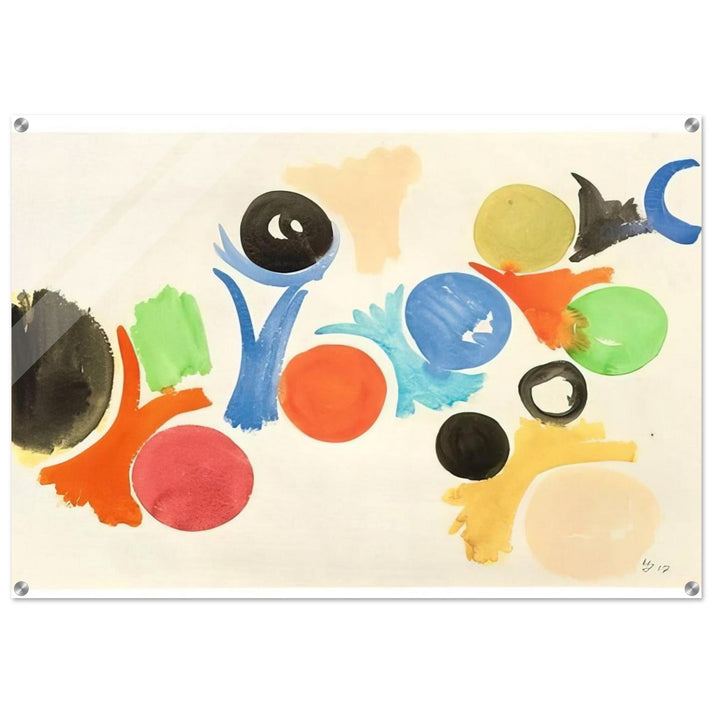


Ohne Titel - 1957 - Ernst Wilhelm Nay Acryl-Druck - 70x100 cm / 28x40″ Zoll
Ohne Titel - 1957 - Ernst Wilhelm Nay Acryl-Druck - 70x100 cm / 28x40″ Zoll
Verfügbarkeit für Abholungen konnte nicht geladen werden
Ohne Titel - 1957 - Ernst Wilhelm Nay Acryl-Druck
Tauchen Sie Ihren Raum in die lebendige Abstraktion von Ernst Wilhelm Nays Ohne Titel - 1957, einem museumswürdigen Kunst-Druck, der die bahnbrechende Erforschung von Farbe und Form des Künstlers einfängt. Diese archivbeständige Reproduktion, präsentiert auf einer schlanken 4-mm-(0,15-Zoll-)Acryloberfläche, lässt Nays dynamische Komposition mit atemberaubender Klarheit und Haltbarkeit lebendig werden. Mit den Maßen 70 x 100 cm (28 x 40 Zoll) bietet dieses Werk eine mutige Aussage für moderne Innenräume und zeichnet sich durch gerade geschnittene Ecken und einen weißen Hintergrund aus, um seinen zeitgenössischen ästhetischen Reiz zu unterstreichen.
Ernst Wilhelm Nay (1902–1968) war eine prägende Figur der deutschen Abstraktion nach dem Krieg, bekannt für seine Scheibenbilder (Scheibenbilder), die sich zu rhythmischen, nichtgegenständlichen Werken entwickelten. In diesem Werk von 1957 gelingt es Nay meisterhaft, Acrylfarben zu schichten und so ein Gefühl von Bewegung und Tiefe zu erzeugen, das seine Überzeugung widerspiegelt, dass Farbe eine autonome emotionale Kraft ist. Diese Epoche markierte seinen Wandel hin zur reinen Abstraktion, beeinflusst von Künstlern wie Kandinsky und den existenziellen Themen seiner Zeit.
Veredeln Sie Ihr Zuhause oder Büro mit diesem hochwertigen Kunstdruck von RedKalion, wo fachkundige Auswahl auf handwerkliche Archivqualität trifft. Jedes Stück enthält ein vollständiges Aufhängeset mit Befestigungselementen, Schrauben und vorgebohrten Löchern (14 mm vom Rand, 8 mm Durchmesser) für eine mühelose Installation und garantiert eine galeriefertige Präsentation, die lange hält.
```


Discover Unlimited Art Possibilities
At RedKalion, you can find virtually any artwork from any artist, available in a wide range of sizes to perfectly match your space.
If you didn’t find what you’re looking for, contact us at support@redkalion.com . We will source any artwork and produce it in any size and format you need, including art prints, posters, canvas, framed pieces, framed canvas, and more.
For dedicated art enthusiasts, we also offer handcrafted replicas of any artwork, carefully painted by highly skilled artists using traditional techniques.
For custom requests, contact us at support@redkalion.com .
What are the dimensions and materials of this Ernst Wilhelm Nay acrylic print?
This fine art print measures 70x100 cm (28x40 inches) and is crafted on 4mm (0.15") acrylic for a vibrant, durable finish with straight-cut corners and a white background.
How is the acrylic print mounted and hung?
It includes a hanging kit with hardware, screws, and pre-drilled holes at each corner (14mm from edge, 8mm diameter) for easy installation of your museum-quality reproduction.
What is the historical significance of Ernst Wilhelm Nay's Untitled - 1957?
This artwork reflects Nay's post-war abstraction, showcasing his mastery of color and form during his shift to pure non-representational art in the 1950s.
How does RedKalion ensure the quality of this archival art print?
We use premium materials and expert techniques to produce archival-grade reproductions that capture the original's vibrancy and detail for long-lasting display.
What is the shipping and return policy for this product?
We offer secure shipping with tracking and a satisfaction guarantee; contact our support for details on returns for your acrylic fine art print.
Why did Ernst Wilhelm Nay use abstraction in his 1957 works?
Nay embraced abstraction to explore color as an emotional force, moving away from figurative art to express deeper existential themes post-World War II.
How do I care for and clean this acrylic print?
Gently wipe with a soft, dry cloth to maintain its sleek finish; avoid harsh chemicals to preserve the archival quality of your art print.