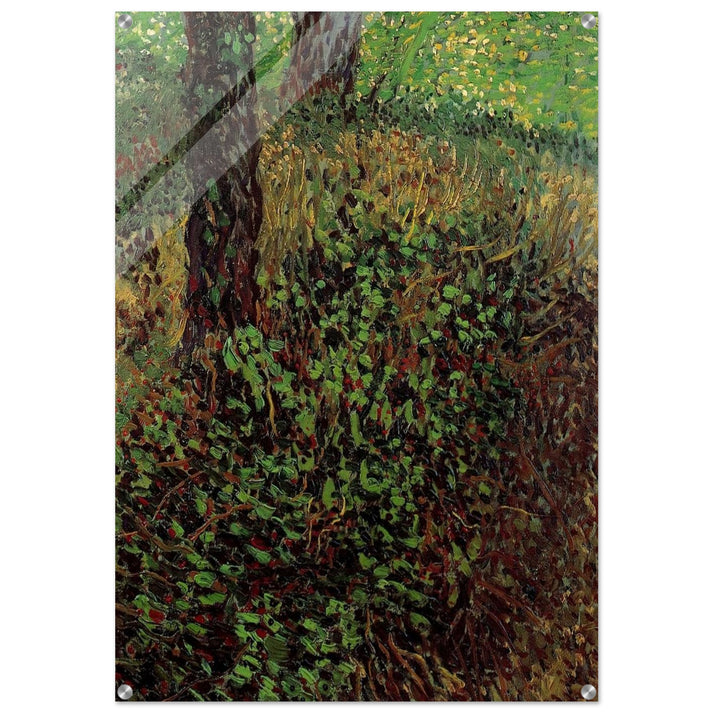
Unterholz - Vincent van Gogh Acrylbild - 70x100 cm / 28x40″ Zoll | Vincent van Gogh Wandkunst | Vincent van Gogh Drucke
Unterholz - Vincent van Gogh Acrylbild - 70x100 cm / 28x40″ Zoll | Vincent van Gogh Wandkunst | Vincent van Gogh Drucke
Verfügbarkeit für Abholungen konnte nicht geladen werden
Unterholz von Vincent van Gogh: Ein museumreifes Acrylbild
Tauchen Sie ein in die lebendige, strukturierte Welt von Vincent van Gogh mit diesem hochwertigen Acrylbild von Unterholz. 1889 während seiner produktiven Zeit in der Anstalt Saint-Paul-de-Mausole in Saint-Rémy geschaffen, fängt dieses Meisterwerk die tiefe Verbindung des Künstlers zur Natur durch seine charakteristischen expressiven Pinselstriche und intensive Farbpalette ein. Van Goghs Technik hier – das Auftragen dicker, wirbelnder Impasto-Schichten – vermittelt ein Gefühl von dynamischer Bewegung und emotionaler Tiefe und macht es zu einem quintessentiellen Beispiel für postimpressionistische Kunst.
RedKalion präsentiert diese archivtaugliche Reproduktion auf einer 4 mm (0,15 Zoll) starken Acrylplatte, die einen schlanken, lebendigen und strapazierfähigen Finish garantiert, der mit Galerieausstellungen mithalten kann. Die geraden Ecken bieten eine moderne Ästhetik, während transparente Hintergründe für eine optimale Darstellung auf Weiß optimiert sind. Jedes Bild enthält ein vollständiges Aufhängeset mit Hardware, Schrauben und vorgebohrten Löchern (14 mm vom Rand, 8 mm Durchmesser) für eine mühelose Installation. Veredeln Sie Ihren Raum mit einem 70x100 cm / 28x40"-Meisterwerk, das als Zeugnis künstlerischen Genies Bestand hat.
- Künstler: Vincent van Gogh
- Titel: Unterholz
- Maße: 70x100 cm / 28x40" Zoll
- Material: 4 mm Acryl für lebendige Farben und Langlebigkeit
- Enthalten: Aufhängeset mit Schrauben und vorgebohrten Löchern
Discover Unlimited Art Possibilities
At RedKalion, you can find virtually any artwork from any artist, available in a wide range of sizes to perfectly match your space.
If you didn’t find what you’re looking for, contact us at support@redkalion.com . We will source any artwork and produce it in any size and format you need, including art prints, posters, canvas, framed pieces, framed canvas, and more.
For dedicated art enthusiasts, we also offer handcrafted replicas of any artwork, carefully painted by highly skilled artists using traditional techniques.
For custom requests, contact us at support@redkalion.com .
What is the historical significance of Undergrowth by Vincent van Gogh?
Undergrowth was painted in 1889 during van Gogh's stay at the Saint-Paul-de-Mausole asylum, showcasing his intense focus on nature and innovative Post-Impressionist techniques with thick, swirling brushstrokes.
How does the acrylic material enhance this fine art print?
The 4mm acrylic panel provides a sleek, vibrant finish with deep color saturation and durability, making this museum-quality reproduction ideal for long-lasting wall art.
What are the dimensions and hanging details for this Vincent van Gogh print?
This print measures 70x100 cm / 28x40" inches and includes a hanging kit with screws and pre-drilled holes (14mm from edge, 8mm diameter) for easy installation.
Is the background of this acrylic print customizable?
Transparent backgrounds default to white for optimal presentation, ensuring the vibrant colors of van Gogh's Undergrowth stand out in any setting.
How durable and archival is this acrylic wall art?
Crafted with 4mm acrylic, this print resists fading and damage, offering an archival-quality reproduction that maintains its vibrancy for years.
What makes van Gogh's brushwork in Undergrowth unique?
Van Gogh used impasto technique with thick, layered paint to create dynamic texture and emotional depth, reflecting his innovative approach to capturing nature's energy.
Where was Undergrowth painted, and how does it fit into van Gogh's oeuvre?
Painted in Saint-Rémy in 1889, it exemplifies his late-period focus on natural scenes, contributing to his legacy as a master of Post-Impressionist art.