
Umber Blue - 1987 - Yun Hyong-keun Acryl-Druck - 70x100 cm / 28x40″ Zoll | Yun Hyong-keun Wandkunst | Yun Hyong-keun Drucke
Umber Blue - 1987 - Yun Hyong-keun Acryl-Druck - 70x100 cm / 28x40″ Zoll | Yun Hyong-keun Wandkunst | Yun Hyong-keun Drucke
Verfügbarkeit für Abholungen konnte nicht geladen werden
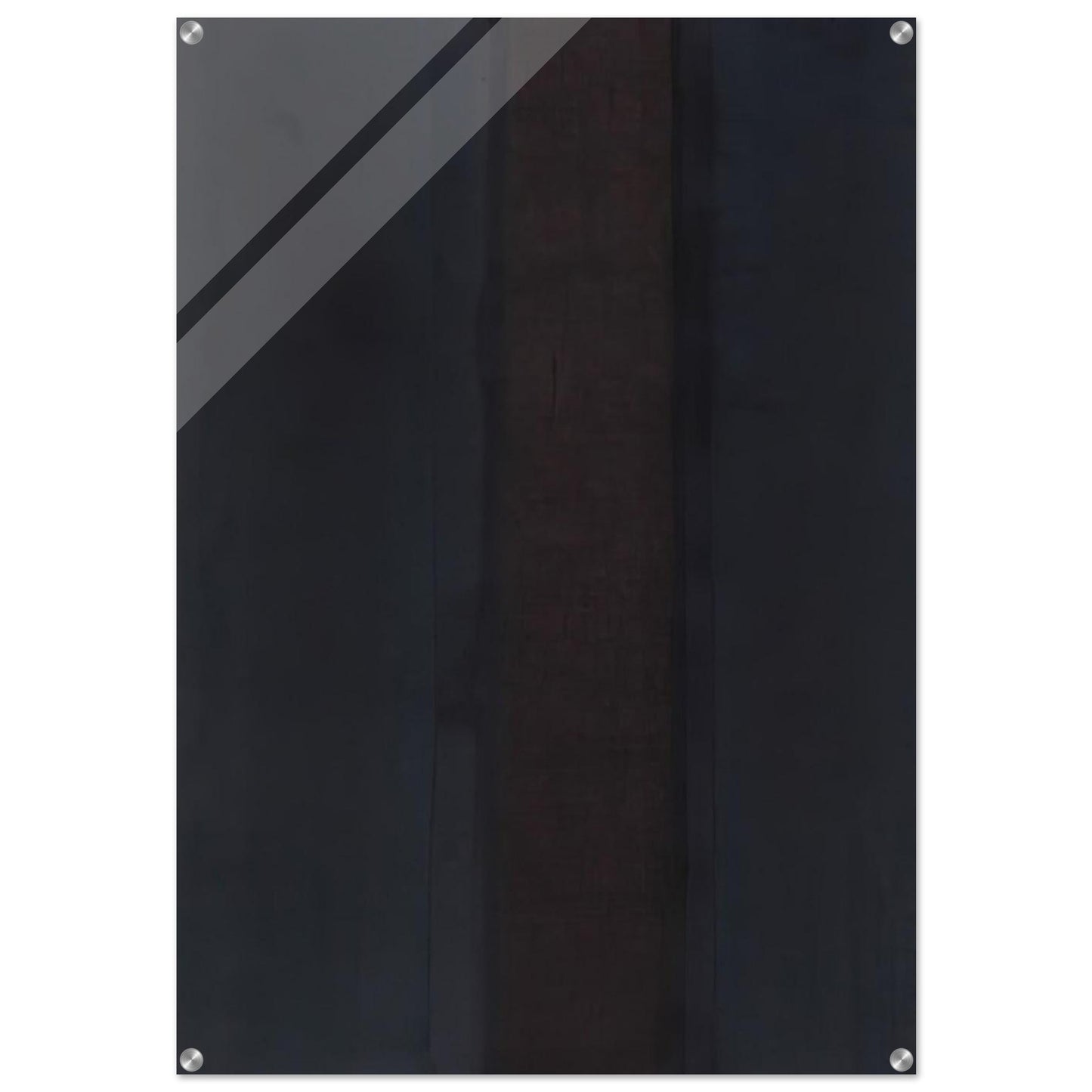
Umber Blue - 1987 - Yun Hyong-keun Acryl-Druck
Tauchen Sie ein in den tiefgründigen Minimalismus von Yun Hyong-keun mit dieser museumswürdigen Reproduktion seines Meisterwerks von 1987, "Umber Blue". Dieser Acryldruck fängt die charakteristische Dansaekhwa (koreanische monochrome Malerei)-Ästhetik des Künstlers ein, bei der zurückhaltende Erdtöne und tiefes Blau eine meditative, zeitlose Gelassenheit vermitteln. Yun's Technik des Auftragens verdünnter Pigmente auf roher Leinwand schafft eine texturierte, fast geologische Tiefe, die seine philosophische Auseinandersetzung mit Natur und Existenz widerspiegelt.
RedKalion präsentiert diesen archivtauglichen Fine-Art-Druck auf hochwertigem 4 mm (0,15") Acryl, der eine lebendige Farbtreue und eine elegante, strapazierfähige Oberfläche gewährleistet, die vor Ausbleichen schützt. Die geraden Ecken und das moderne Design ergänzen jeden zeitgenössischen Raum, während der transparente Hintergrund standardmäßig weiß ist, um eine optimale visuelle Präsentation zu gewährleisten. Jedes Stück enthält ein vollständiges Aufhängeset mit Befestigungselementen, Schrauben und vorgebohrten Schraubenlöchern (14 mm vom Rand, 8 mm Durchmesser) für eine mühelose Installation.
Veredeln Sie Ihr Zuhause oder Büro mit einem Yun Hyong-keun-Wandkunstwerk, das die stille Kraft der koreanischen Abstraktion verkörpert. Diese 70 x 100 cm / 28 x 40"-Reproduktion ist für Langlebigkeit gefertigt und bietet einen anspruchsvollen Blickfang, der zur Kontemplation und Verfeinerung anregt.
```
Discover Unlimited Art Possibilities
At RedKalion, you can find virtually any artwork from any artist, available in a wide range of sizes to perfectly match your space.
If you didn’t find what you’re looking for, contact us at support@redkalion.com . We will source any artwork and produce it in any size and format you need, including art prints, posters, canvas, framed pieces, framed canvas, and more.
For dedicated art enthusiasts, we also offer handcrafted replicas of any artwork, carefully painted by highly skilled artists using traditional techniques.
For custom requests, contact us at support@redkalion.com .
What is the historical significance of Yun Hyong-keun's "Umber Blue" from 1987?
"Umber Blue" (1987) is a key work in Yun Hyong-keun's Dansaekhwa series, showcasing his minimalist use of umber and blue pigments to explore nature, time, and Korean spiritual traditions through layered, meditative abstraction.
How does Yun Hyong-keun's technique influence the texture and depth of this print?
Yun applied diluted pigments repeatedly on raw canvas, creating subtle, geological textures that our museum-quality acrylic print reproduces with high fidelity, capturing the artwork's tactile and visual depth.
What are the specifications of this acrylic print?
This Yun Hyong-keun print measures 70x100 cm / 28x40" inches, features 4mm (0.15") acrylic for vibrant durability, straight-cut corners, and includes a hanging kit with pre-drilled screw holes (14mm from edge, 8mm diameter).
Is the acrylic print archival and fade-resistant?
Yes, our premium acrylic prints are archival-grade, offering excellent fade resistance and color stability to ensure your Yun Hyong-keun wall art remains vibrant for decades.
How is the print shipped and installed?
We ship securely packaged with a complete hanging kit (hardware, screws). Installation is easy using the pre-drilled screw holes at each corner for a sleek, modern display.
What does the Dansaekhwa movement represent in Korean art?
Dansaekhwa, or Korean monochrome painting, emerged in the 1970s, emphasizing meditative processes, natural materials, and subdued colors to express spiritual and philosophical concepts, with Yun Hyong-keun as a leading figure.
Why does the transparent background default to white in this print?
The transparent background defaults to white to enhance contrast and presentation, ensuring Yun Hyong-keun's umber and blue hues stand out vividly in any lighting condition.