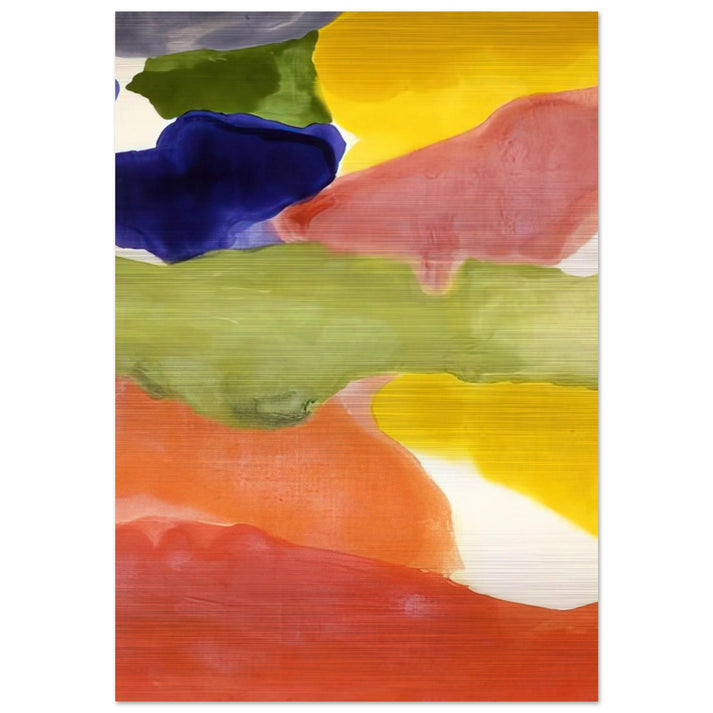


Tutti-Fruitti - 1966 - Helen Frankenthaler Aluminiumdruck - 70x100 cm / 28x40 Zoll | Helen Frankenthaler Aluminiumdruck | Helen Frankenthaler Drucke
Tutti-Fruitti - 1966 - Helen Frankenthaler Aluminiumdruck - 70x100 cm / 28x40 Zoll | Helen Frankenthaler Aluminiumdruck | Helen Frankenthaler Drucke
Verfügbarkeit für Abholungen konnte nicht geladen werden
Tutti-Fruitti - 1966 - Helen Frankenthaler Aluminium-Druck auf gebürstetem Aluminium
Tauchen Sie ein in den lebendigen, abstrakten Expressionismus von Helen Frankenthalers Tutti-Fruitti (1966), jetzt als museumreifer Aluminiumdruck von RedKalion erhältlich. Dieses ikonische Werk zeigt Frankenthalers revolutionäre „Soak-Stain“-Technik, bei der verdünnte Acrylfarbe auf grundierte Leinwand gegossen wurde, wodurch leuchtende, fließende Formen entstanden, die eine organische Spontaneität und emotionale Tiefe vermitteln. Das Jahr 1966 markiert eine Phase der ausgereiften künstlerischen Erforschung, in der sie Farbfeldmalerei mit lyrischer Abstraktion verband und Werke schuf, die sowohl zeitlos als auch dynamisch modern wirken.
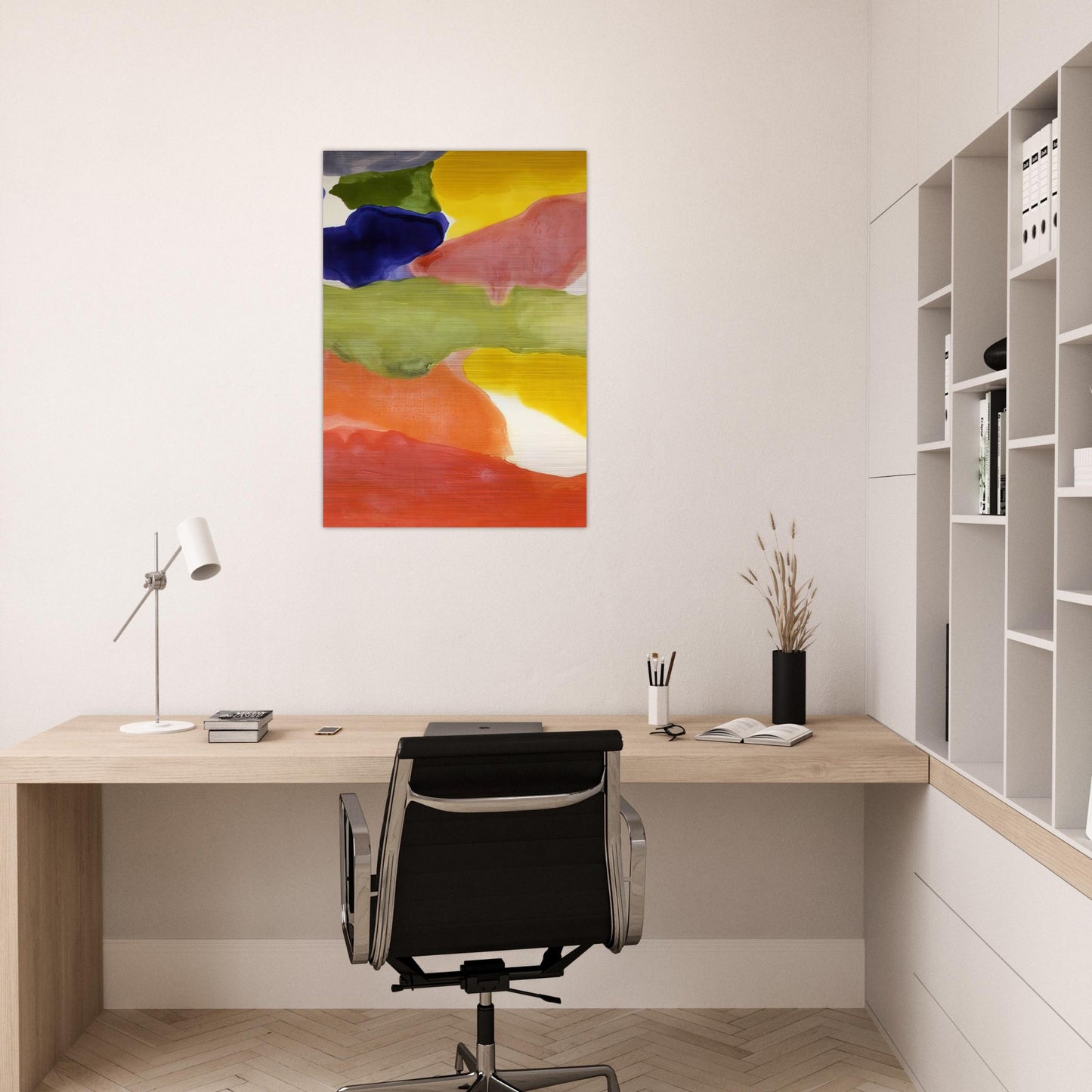
Der hochwertige Abdruck von RedKalion erfasst jede Nuance von Frankenthalers Original-Meisterwerk auf einer gebürsteten silbernen Aluminium-DIBOND®-Platte mit den Maßen 70x100 cm (28x40 Zoll). Der Direktdruck auf AluDibond garantiert lebendige, archivbeständige Farben mit matter, blendfreier Oberfläche, während unbeschichtete Bereiche einen markanten metallisch-silbernen Effekt zeigen, der den zeitgenössischen Charme des Kunstwerks unterstreicht. Mit einer robusten Dicke von 3 mm (0,12 Zoll) und einem mitgelieferten Aufhängeset ist dieses Stück für langlebige Eleganz und einfache Präsentation in jeder Umgebung konzipiert.
Verleihen Sie Ihrem Zuhause oder Büro mit diesem archivwürdigen Meisterwerk, das Kunstgeschichte und modernes Design verbindet, einen besonderen Akzent. Vertrauen Sie RedKalion für fachkundig kuratierte Fine-Art-Drucke, die das Erbe von Pionierinnen wie Helen Frankenthaler ehren.
```


Discover Unlimited Art Possibilities
At RedKalion, you can find virtually any artwork from any artist, available in a wide range of sizes to perfectly match your space.
If you didn’t find what you’re looking for, contact us at support@redkalion.com . We will source any artwork and produce it in any size and format you need, including art prints, posters, canvas, framed pieces, framed canvas, and more.
For dedicated art enthusiasts, we also offer handcrafted replicas of any artwork, carefully painted by highly skilled artists using traditional techniques.
For custom requests, contact us at support@redkalion.com .
What are the dimensions and material of this Helen Frankenthaler aluminum print?
This fine art print measures 70x100 cm (28x40 inches) and is made from brushed silver Aluminum DIBOND® with a 3mm thickness, offering a durable, museum-quality reproduction with a metallic finish.
How does the printing process enhance the artwork's colors and finish?
The direct print on AluDibond ensures vivid, archival colors with a matte, glare-free finish, ideal for showcasing Frankenthaler's abstract expressionism, while unprinted areas reveal a dynamic silver effect.
Yes, a hanging kit is included for easy installation, though specific components may vary by fulfillment country to ensure secure display.
What makes this a museum-quality reproduction of Tutti-Fruitti?
RedKalion uses archival-grade materials and precise printing techniques to capture Frankenthaler's soak-stain method, ensuring a long-lasting, high-fidelity fine art print that honors the original 1966 artwork.
How should I care for and clean this brushed aluminum print?
Gently dust with a soft, dry cloth; avoid harsh chemicals. The matte finish and aluminum base provide durability, making it a low-maintenance addition to your space.
What is the significance of Helen Frankenthaler's "soak-stain" technique in Tutti-Fruitti?
Frankenthaler's soak-stain technique, developed in the 1950s, involved pouring thinned paint onto raw canvas, creating fluid, translucent layers that influenced color field painting and added a lyrical quality to abstract expressionism in works like Tutti-Fruitti from 1966.
Why is 1966 an important year in Helen Frankenthaler's career?
By 1966, Frankenthaler had fully mastered her innovative techniques, producing mature works like Tutti-Fruitti that blend emotional depth with bold color exploration, solidifying her role as a key figure in post-war American art.