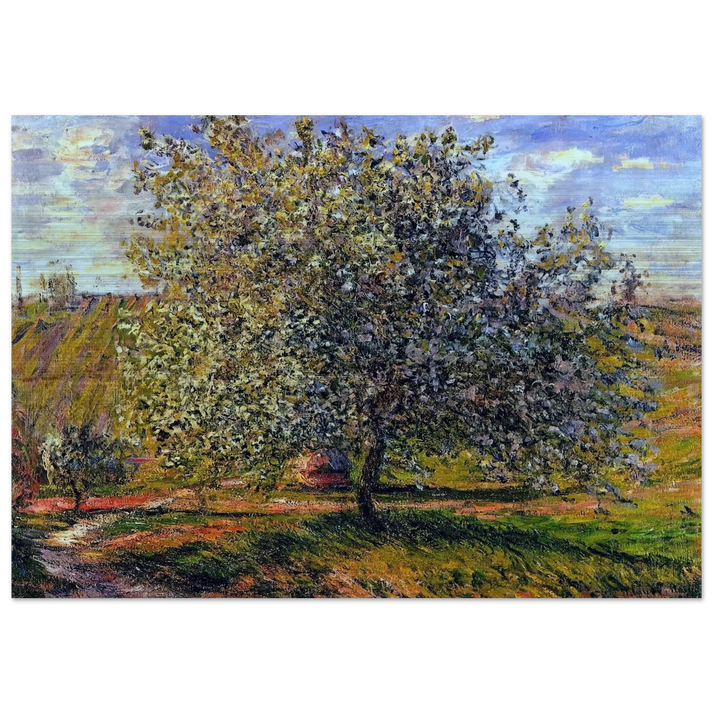


Baum in Blüte bei Vétheuil - Claude Monet Aluminiumdruck - 70x100 cm / 28x40 Zoll | Claude Monet Aluminiumdruck | Claude Monet Drucke
Baum in Blüte bei Vétheuil - Claude Monet Aluminiumdruck - 70x100 cm / 28x40 Zoll | Claude Monet Aluminiumdruck | Claude Monet Drucke
Verfügbarkeit für Abholungen konnte nicht geladen werden
Claude Monets „Baum in Blüte bei Vétheuil“ – Ein Meisterwerk des impressionistischen Frühlings
Tauchen Sie ein in die flüchtige Schönheit des Frühlings mit Claude Monets „Baum in Blüte bei Vétheuil“, jetzt als exklusiver museumsqualitativer Aluminiumdruck mit gebürsteter Oberfläche von RedKalion erhältlich. Dieses ikonische Werk fängt die tiefe Verbindung des Künstlers zur französischen Landschaft während seiner Zeit in Vétheuil ein, wo er das flüchtige Licht und die lebendigen Blüten meisterhaft in eine Farb- und Textursymphonie übersetzte. Unsere Premium-Reproduktion bewahrt jeden zarten Pinselstrich und jeden nuancierten Farbton, sodass Sie die Essenz des Impressionismus in Ihren modernen Raum bringen können.
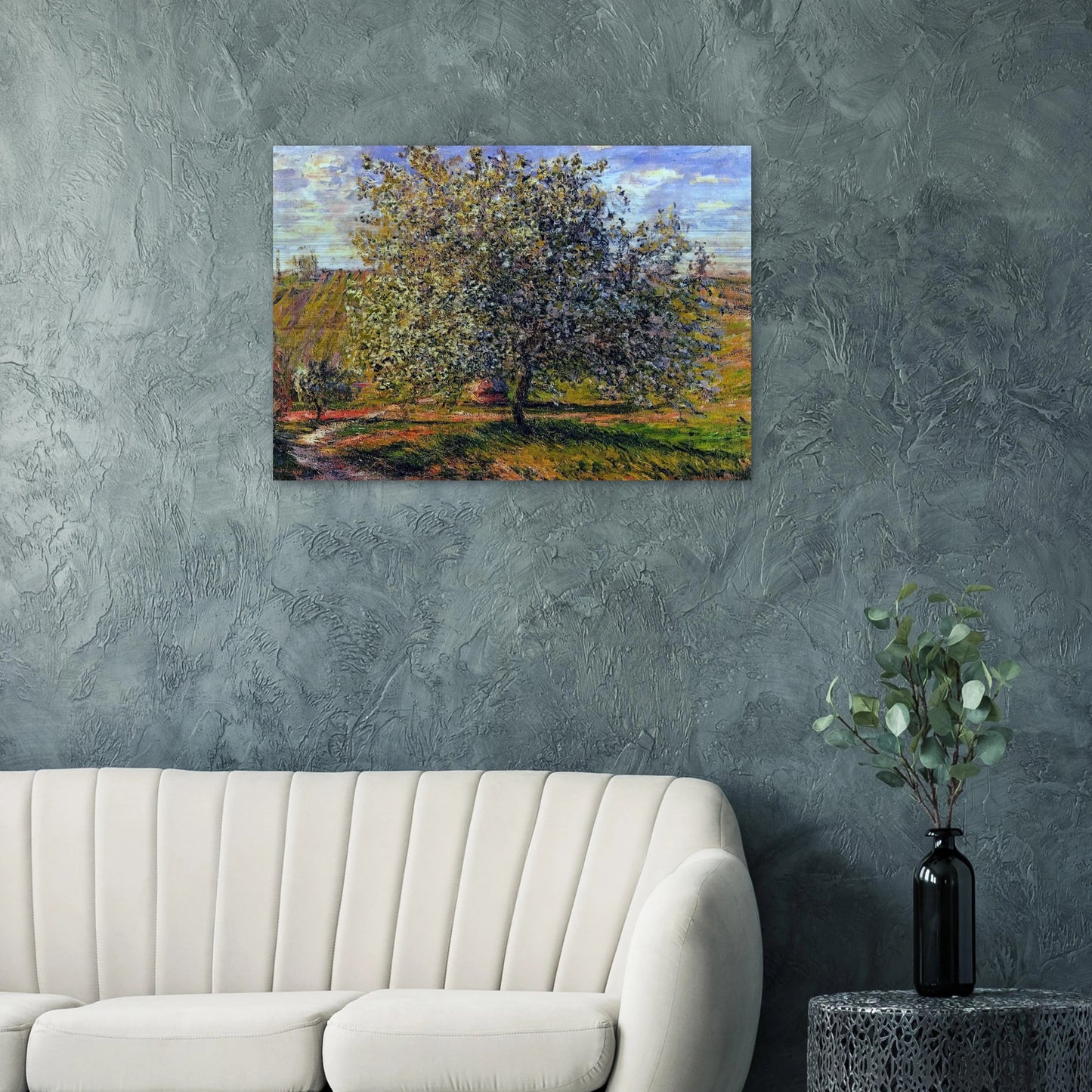
Hochwertig gefertigt auf 3 mm dickem, gebürstetem silbernem Aluminium DIBOND®, zeichnet sich dieser Druck durch eine dynamische horizontale Maserung und einen metallischen Glanz aus, der Monets lebendige Komposition unterstreicht. Die Direktdrucktechnologie liefert lebendige, archivbeständige Farben mit matter, blendfreier Oberfläche, während unbedruckte Bereiche einen markanten metallischen Silbereffekt zeigen, der Tiefe und zeitgenössische Eleganz verleiht. Mit den Maßen 70x100 cm (28x40 Zoll) wird er inklusive Aufhängeset geliefert und ist damit eine nahtlose Ergänzung für jedes Interieur.
Bei RedKalion verbinden wir kunsthistorisches Fachwissen mit modernsten Reproduktionstechniken. Monets Einsatz von schnellen, gebrochenen Pinselstrichen in diesem Werk zeigt nicht nur die blühende Energie des Baumes, sondern spiegelt auch seinen innovativen Ansatz zur Erfassung des natürlichen Lichts wider – ein Markenzeichen der impressionistischen Bewegung. Veredeln Sie Ihre Umgebung mit diesem langlebigen, archivbeständigen Meisterwerk, das die Kunst des 19. Jahrhunderts mit dem Design des 21. Jahrhunderts verbindet und für anspruchsvolle Sammler weltweit kuratiert wurde.
```


Discover Unlimited Art Possibilities
At RedKalion, you can find virtually any artwork from any artist, available in a wide range of sizes to perfectly match your space.
If you didn’t find what you’re looking for, contact us at support@redkalion.com . We will source any artwork and produce it in any size and format you need, including art prints, posters, canvas, framed pieces, framed canvas, and more.
For dedicated art enthusiasts, we also offer handcrafted replicas of any artwork, carefully painted by highly skilled artists using traditional techniques.
For custom requests, contact us at support@redkalion.com .
What are the specifications of this Claude Monet aluminum print?
This print measures 70x100 cm (28x40 inches), is made from 3mm thick brushed silver Aluminum DIBOND® with a metallic finish and horizontal grain, features direct printing for vivid colors and a matte surface, and includes a hanging kit for easy display.
How does the brushed aluminum enhance the artwork's appearance?
The brushed silver aluminum provides a dynamic, metallic effect that complements Monet's vibrant palette, with unprinted areas revealing a striking silver finish, adding depth and a contemporary touch to this fine art reproduction.
Yes, it uses archival-grade printing on rigid Aluminum DIBOND® for long-lasting color fidelity and resistance to fading, ensuring your museum-quality print endures for years.
What is included with shipping for this Monet print?
We include a hanging kit that varies by fulfillment country, with secure packaging to protect your premium brushed aluminum print during transit.
Can I learn more about the history of 'Tree in Flower near Vetheuil'?
Painted around 1880, this work reflects Monet's time in Vetheuil, France, showcasing his focus on seasonal changes and innovative Impressionist techniques to capture light and nature's transient beauty.
Why did Monet choose this scene for his artwork?
Monet was inspired by the rural landscapes of Vetheuil, using this flowering tree to explore themes of renewal and the interplay of light, which defined his contributions to fine art history.