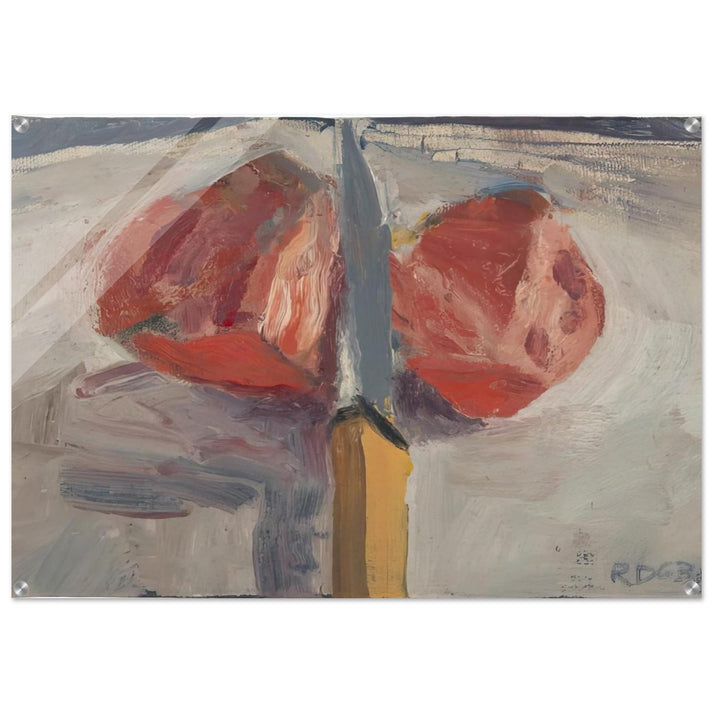


Tomato and Knife - Richard Diebenkorn Acryl-Druck - 70x100 cm / 28x40″ Zoll
Tomato and Knife - Richard Diebenkorn Acryl-Druck - 70x100 cm / 28x40″ Zoll
Verfügbarkeit für Abholungen konnte nicht geladen werden
Tomate und Messer – Ein Acryldruck von Richard Diebenkorn
Veredeln Sie Ihren Raum mit Tomate und Messer, einer museumsqualitativen Reproduktion von Richard Diebenkorns ikonischem Werk, jetzt als hochwertiger Kunstdruck auf Premium-Acryl erhältlich. Dieses 70x100 cm / 28x40" Zoll große Stück fängt die Essenz von Diebenkorns abstrakten Expressionismus ein und verbindet kühne Formen mit subtilen Farbharmonien, um eine Stimmung kontemplativer Modernität zu evozieren.
Diebenkorn, ein Meister der Bay Area Figurative Movement, erkundete oft Alltagsgegenstände durch die Linse der geometrischen Abstraktion. In Tomate und Messer verwandelt er einfache Küchenutensilien in eine dynamische Komposition und nutzt Acryl, um Schichten aus Textur und Tiefe aufzubauen. Diese archivbeständige Reproduktion repliziert seine Technik originalgetreu und bewahrt jeden Pinselstrich und Farbton für eine nachhaltige Wirkung.
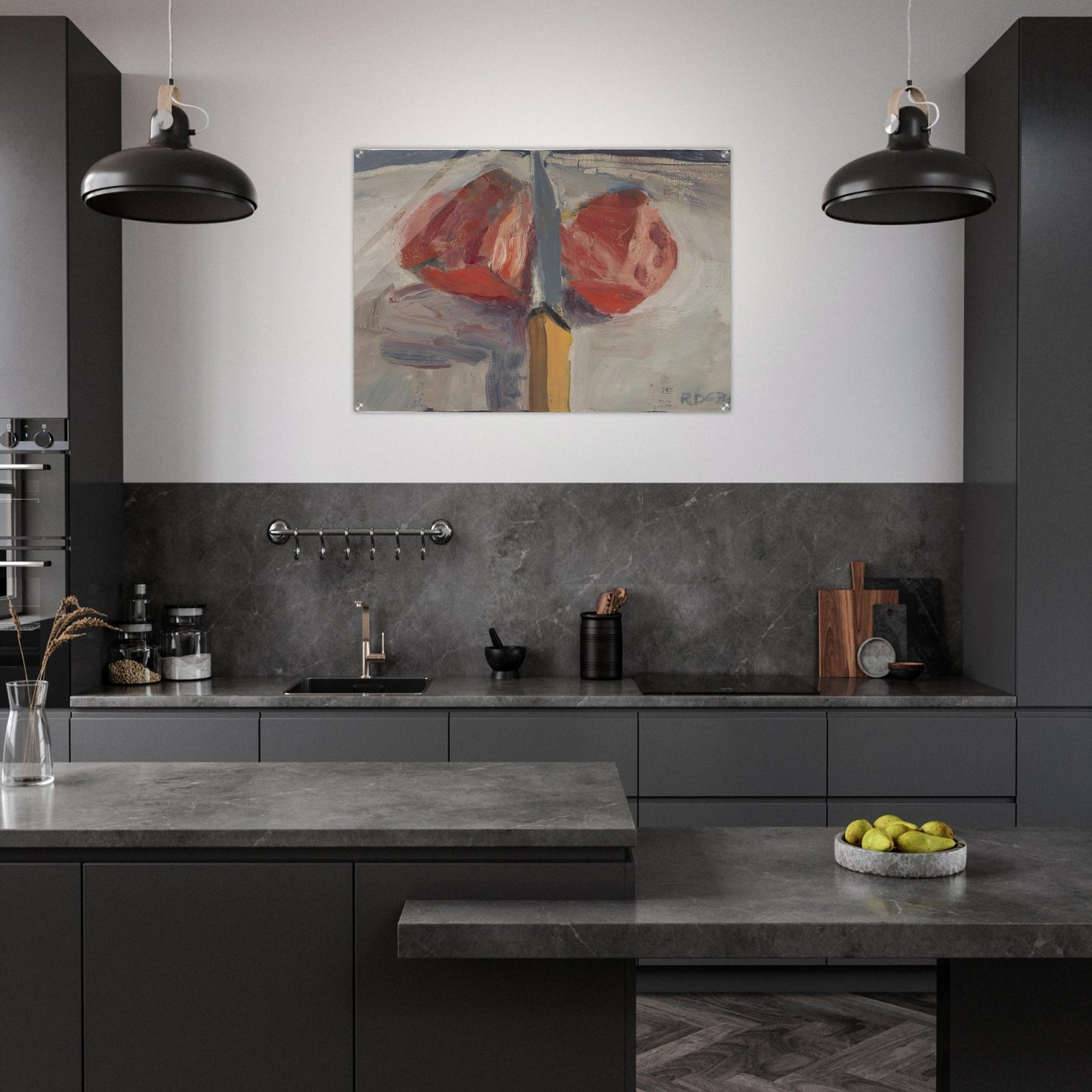
Unser RedKalion-Druck wird mit einer 4 mm (0,15") starken Acryloberfläche gefertigt und bietet einen schlanken, lebendigen und strapazierfähigen Finish, der die Farbsättigung verstärkt und vor dem Ausbleichen schützt. Mit geraden Schnittkanten für einen modernen Look enthält dieses Stück ein vollständiges Aufhängeset mit Hardware, Schrauben und vorgebohrten Schraublöchern an jeder Ecke (14 mm vom Rand, 8 mm Durchmesser, 15 mm Schraubenkopf), was eine einfache Installation gewährleistet. Transparente Hintergründe werden standardmäßig weiß dargestellt, um eine optimale Präsentation in jeder Umgebung zu gewährleisten.
Vertrauen Sie RedKalion, um diese hochwertige Kunstreproduktion in Ihr Zuhause oder Büro zu bringen, wo sie als Zeugnis von Diebenkorns Vermächtnis und Ihrem anspruchsvollen Geschmack dient. Verleihen Sie Ihrem Raum mit diesem zeitlosen Meisterwerk einen Hauch künstlerischer Eleganz.
```


Discover Unlimited Art Possibilities
At RedKalion, you can find virtually any artwork from any artist, available in a wide range of sizes to perfectly match your space.
If you didn’t find what you’re looking for, contact us at support@redkalion.com . We will source any artwork and produce it in any size and format you need, including art prints, posters, canvas, framed pieces, framed canvas, and more.
For dedicated art enthusiasts, we also offer handcrafted replicas of any artwork, carefully painted by highly skilled artists using traditional techniques.
For custom requests, contact us at support@redkalion.com .
What are the dimensions of this Richard Diebenkorn acrylic print?
This fine art print measures 70x100 cm or 28x40 inches, making it a striking centerpiece for any room with its museum-quality reproduction on acrylic.
What material is used for this Tomato and Knife print?
It features a 4mm (0.15") acrylic surface for a sleek, vibrant, and durable finish, ensuring long-lasting color and protection in this archival-grade reproduction.
How is this acrylic print shipped and installed?
We include a hanging kit with hardware and screws; screw holes are pre-drilled 14mm from the edge for easy mounting, with straight-cut corners for a modern look.
Is this print archival and fade-resistant?
Yes, this premium art reproduction uses high-quality acrylic to resist fading, offering durable longevity as part of our museum-quality standards.
What is the historical significance of Tomato and Knife by Richard Diebenkorn?
Tomato and Knife reflects Diebenkorn's Bay Area Figurative Movement style, using abstract expressionism to transform everyday objects into geometric compositions with layered acrylic textures.
How does the background appear in this print?
Transparent backgrounds default to white for optimal presentation, enhancing the vibrant colors and modern aesthetic of this fine art print on acrylic.
What era does Richard Diebenkorn's Tomato and Knife represent?
This work is from the mid-20th century, showcasing Diebenkorn's exploration of abstract forms during the post-war American art scene, captured in this archival reproduction.