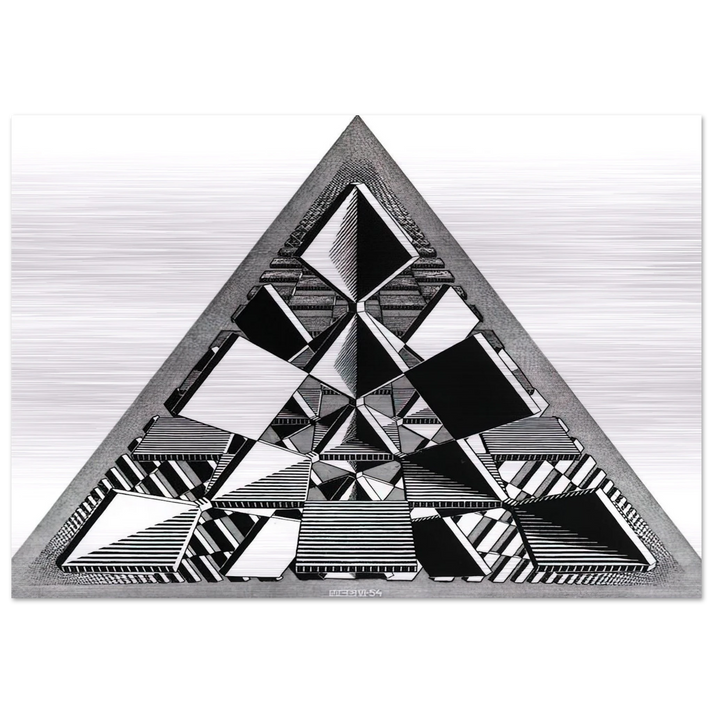


DREI SICH SCHNEIDENDE EBENEN - MC Escher Aluminiumdruck - 70x100 cm / 28x40 Zoll | MC Escher Aluminiumdruck | MC Escher Drucke | Maurits Cornelis Escher Drucke
DREI SICH SCHNEIDENDE EBENEN - MC Escher Aluminiumdruck - 70x100 cm / 28x40 Zoll | MC Escher Aluminiumdruck | MC Escher Drucke | Maurits Cornelis Escher Drucke
Verfügbarkeit für Abholungen konnte nicht geladen werden
Drei sich schneidende Ebenen von M.C. Escher – Ein Aluminiumdruck mit gebürsteter Oberfläche
Erleben Sie die faszinierende Illusion von M.C. Eschers Drei sich schneidenden Ebenen, eine meisterhafte Erkundung von Geometrie und Perspektive, jetzt als museumstauglicher Aluminiumdruck mit gebürsteter Oberfläche von RedKalion erhältlich. Dieser Lithografie aus dem Jahr 1948 zeigt Eschers Genie bei der Schaffung unmöglicher, aber visuell fesselnder räumlicher Beziehungen, bei denen sich drei Ebenen in einem paradoxen Tanz von Tiefe und Dimension schneiden. Als führende Online-Galerie bringt RedKalion dieses ikonische Werk mit archivierungsgerechter Präzision zum Leben und stellt sicher, dass jede Linie und jeder Schatten mit der Treue des Originals eingefangen wird.
Künstlerische Bedeutung & Stimmung
M.C. Escher, der niederländische Grafikkünstler, der für seine mathematisch inspirierten Parkettierungen und optischen Täuschungen bekannt ist, schuf Drei sich schneidende Ebenen während seiner Hochphase der Erforschung von Unendlichkeit und unmöglichen Konstruktionen. Dieses Werk weckt ein Gefühl von intellektueller Faszination und visueller Intrige und lädt Betrachter ein, über die Grenzen der Wahrnehmung nachzudenken. Seine Schwarz-Weiß-Palette, verstärkt durch unseren gebürsteten silbernen Aluminium-Finish, schafft einen auffälligen Kontrast, der jedem Raum – von minimalistischen Interieurs bis hin zu kreativen Studios – eine moderne, dynamische Note verleiht.
Premium-Produktspezifikationen
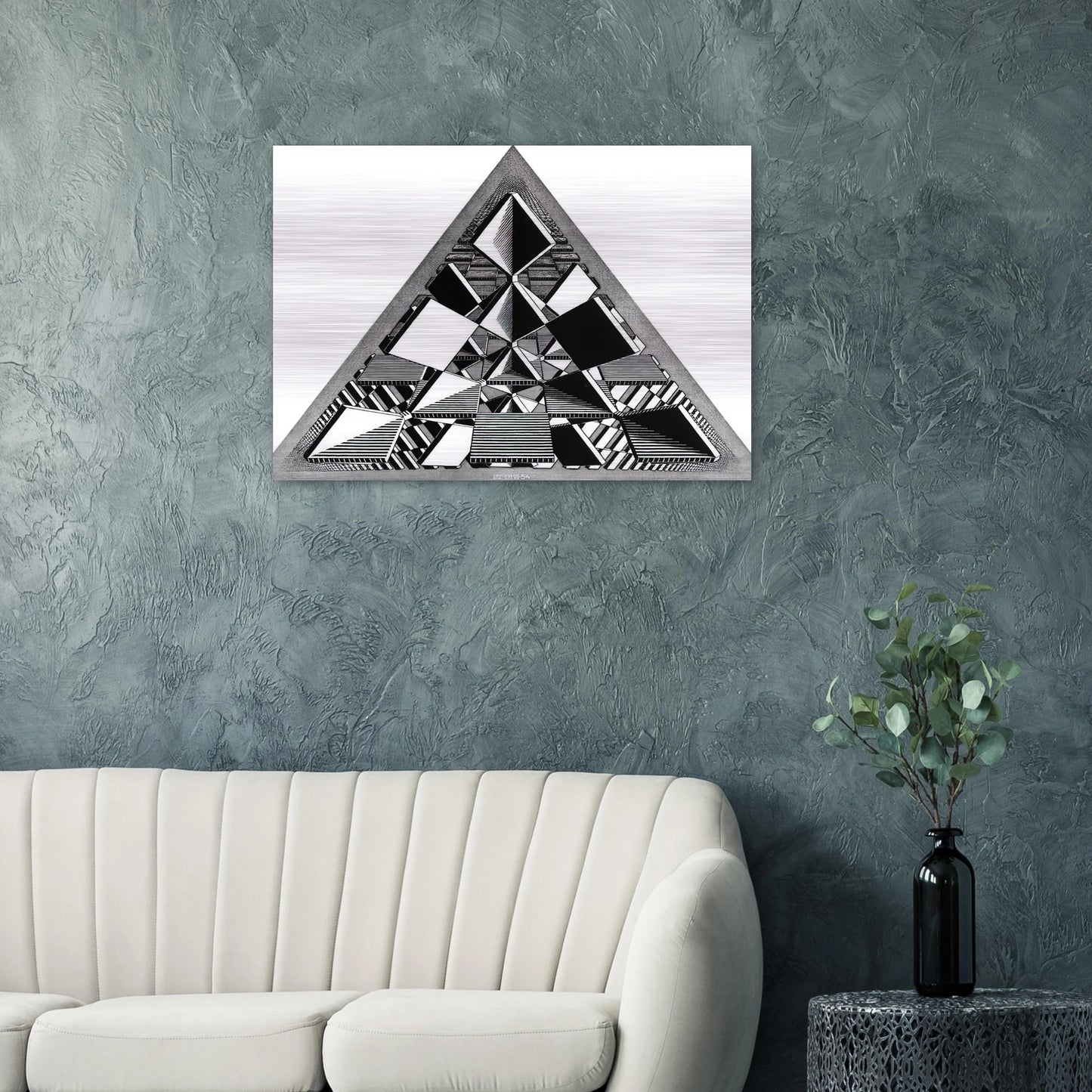
Unser 70x100 cm (28x40 Zoll) großer Druck wird sorgfältig auf 3 mm dickem, gebürstetem silbernem Aluminium DIBOND® reproduziert und bietet eine robuste, starre Basis mit metallischer Oberfläche und horizontaler Maserung für einen dynamischen Look. Der Direktdruck auf AluDibond sorgt für lebendige Farben und eine matte, blendfreie Oberfläche, während unbedruckte weiße Bereiche einen subtilen metallischen Silbereffekt zeigen – perfekt, um Eschers komplexe Schwarz-Weiß-Designs hervorzuheben. Jeder Druck enthält ein Aufhängeset zur einfachen Installation, angepasst an Ihr Lieferland.
Veredeln Sie Ihre Umgebung mit einem archivierungswürdigen Meisterwerk, das Bestand hat, unterstützt durch RedKalions Engagement, Weltklasse-Reproduktionen zu kuratieren, die das künstlerische Erbe ehren.
```


Discover Unlimited Art Possibilities
At RedKalion, you can find virtually any artwork from any artist, available in a wide range of sizes to perfectly match your space.
If you didn’t find what you’re looking for, contact us at support@redkalion.com . We will source any artwork and produce it in any size and format you need, including art prints, posters, canvas, framed pieces, framed canvas, and more.
For dedicated art enthusiasts, we also offer handcrafted replicas of any artwork, carefully painted by highly skilled artists using traditional techniques.
For custom requests, contact us at support@redkalion.com .
What are the dimensions and material of this M.C. Escher print?
This fine art print measures 70x100 cm (28x40 inches) and is crafted on 3mm thick brushed silver Aluminum DIBOND® with a metallic finish and horizontal grain for a dynamic look, ideal for museum-quality reproductions.
How does the printing process enhance the artwork's details?
We use direct print on AluDibond for vivid colors and a matte, glare-free finish, with unprinted white areas revealing a metallic silver effect to highlight M.C. Escher's intricate black-and-white designs in this archival-grade print.
Is a hanging kit included with the aluminum print?
Yes, a hanging kit is included with every order; it varies by fulfillment country to ensure secure installation for your premium M.C. Escher brushed aluminum print.
What makes this print archival and durable?
The 3mm thick Aluminum DIBOND® base provides a rigid, durable foundation resistant to warping, and the direct print technology ensures long-lasting color fidelity for a timeless M.C. Escher reproduction.
How does the brushed silver finish affect the artwork's appearance?
The brushed silver finish adds a modern, dynamic edge with a metallic effect that enhances the contrast in Escher's geometric designs, creating a striking visual impact in any lighting.
What is the historical context of Three Intersecting Planes by M.C. Escher?
Created in 1948, this lithograph reflects Escher's fascination with impossible constructions and spatial paradoxes, part of his exploration of infinity during his most prolific artistic period.
How does this artwork demonstrate M.C. Escher's unique technique?
Escher used precise lithography to craft intricate geometric illusions, with Three Intersecting Planes showcasing his mastery of perspective and mathematical principles to create visually compelling, impossible spaces.