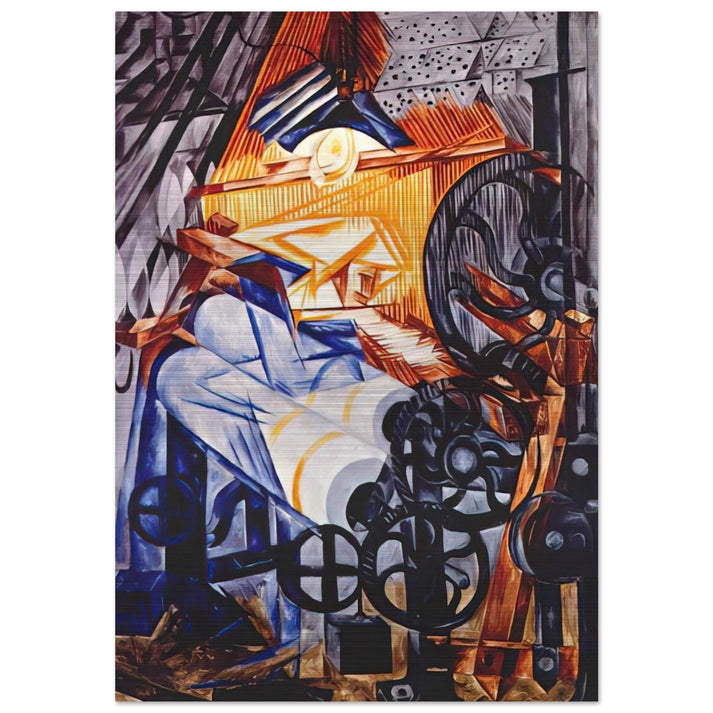


Die Weberin - 1913 - Natalia Goncharova Aluminiumdruck - 70x100 cm / 28x40 Zoll | Natalia Goncharova Aluminiumdruck | Natalia Goncharova Drucke
Die Weberin - 1913 - Natalia Goncharova Aluminiumdruck - 70x100 cm / 28x40 Zoll | Natalia Goncharova Aluminiumdruck | Natalia Goncharova Drucke
Verfügbarkeit für Abholungen konnte nicht geladen werden
Die Webmeisterin (1913) von Natalia Goncharova
Tauchen Sie ein in die kühne Dynamik der russischen Avantgarde-Kunst mit diesem museumswürdigen Aluminiumdruck im gebürsteten Aluminium von Natalia Goncharovas „Die Webmeisterin“ (1913). Dieses ikonische Werk fängt das Wesen von Goncharovas Rayonismus-Periode ein, in der gebrochene Lichter und geometrische Formen den rhythmischen Arbeitsprozess einer Weberin darstellen, indem es kubistische Fragmentierung mit futuristischer Energie verbindet. Als Pionierin der modernen Kunst herausforderte Goncharova traditionelle Ästhetik, und dieses Stück verkörpert ihren innovativen Ansatz zum Modernismus – ein tiefgründiges Statement für jeden Kunstliebhaber.
RedKalion präsentiert dieses archivarische Meisterwerk auf hochwertigem gebürstetem silbernem Aluminium DIBOND®, das eine strapazierfähige, starre 3-mm-Basis bietet und die lebendigen Farben des Kunstwerks mit einer matten, blendfreien Oberfläche zur Geltung bringt. Der Direktdruck auf AluDibond lässt unbeschichtete weiße Bereiche als markanten metallischen Silbereffekt erscheinen, was Tiefe und einen zeitgenössischen Touch zu Goncharovas Schwarz-Weiß-Design hinzufügt. Veredeln Sie Ihren Raum mit einer hochwertigen Kunstreproduktion, die historische Bedeutung mit moderner Haltbarkeit vereint und für Generationen geschaffen wurde.
- Material: Gebürstetes silbernes Aluminium DIBOND® mit metallischer Oberfläche und horizontaler Maserung für einen dynamischen Look.
- Dicke: 3 mm (0,12 Zoll) für eine strapazierfähige, starre Basis.
- Druck: Direktdruck auf AluDibond für lebendige Farben und eine matte Oberfläche. Unbedruckte weiße Bereiche zeigen einen metallischen Silbereffekt.
- Oberfläche: Matt, blendfrei, ideal für Schwarz-Weiß-Designs mit markantem gebürstetem Silbereffekt.
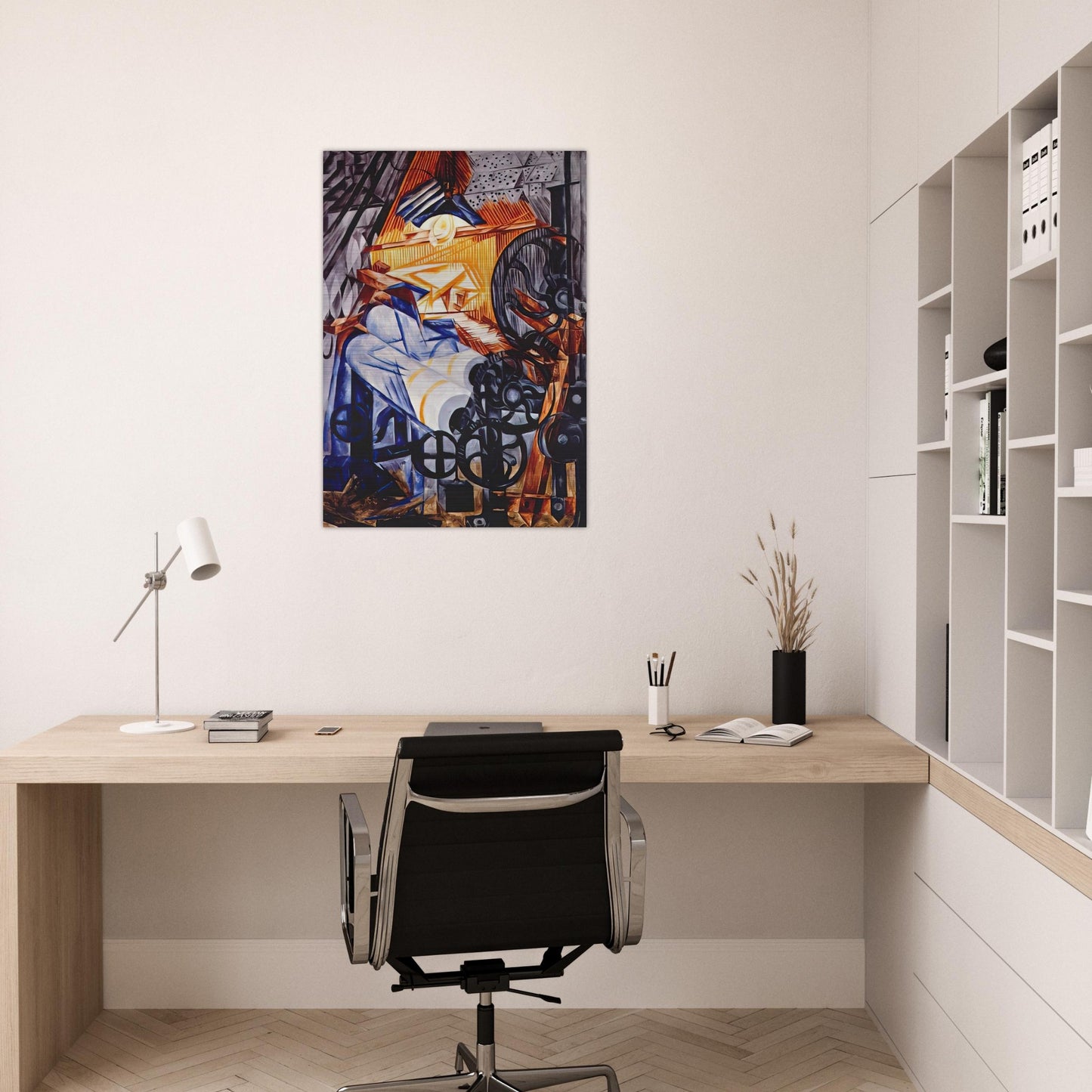
- Größe: 70 x 100 cm / 28 x 40 Zoll, perfekt für eine prominente Präsentation in Wohnräumen oder Büros.
- Aufhängeset: Enthalten; variiert je nach Lieferland für einfache Installation.


Discover Unlimited Art Possibilities
At RedKalion, you can find virtually any artwork from any artist, available in a wide range of sizes to perfectly match your space.
If you didn’t find what you’re looking for, contact us at support@redkalion.com . We will source any artwork and produce it in any size and format you need, including art prints, posters, canvas, framed pieces, framed canvas, and more.
For dedicated art enthusiasts, we also offer handcrafted replicas of any artwork, carefully painted by highly skilled artists using traditional techniques.
For custom requests, contact us at support@redkalion.com .
What is the historical significance of 'The Weaver Loomwoman' by Natalia Goncharova?
Created in 1913, this artwork is a key example of Goncharova's Rayonist style, blending Cubist and Futurist elements to depict modern labor, reflecting her role as a trailblazing female artist in the Russian avant-garde movement.
How does the brushed aluminum print enhance Goncharova's black-and-white design?
The matte, glare-free finish on brushed silver Aluminum DIBOND® highlights the contrast in this fine art print, with unprinted areas revealing a metallic silver effect that adds depth to the museum-quality reproduction.
What are the specifications of the aluminum print material?
This archival print uses 3mm thick brushed silver Aluminum DIBOND® with a direct print for vivid colors, ensuring a durable, rigid base ideal for long-lasting display.
Is a hanging kit included with the Natalia Goncharova aluminum print?
Yes, a hanging kit is included and varies by fulfillment country, making installation easy for this 70x100 cm premium art reproduction.
How durable and archival is this brushed aluminum print?
Made with high-quality Aluminum DIBOND®, this print is resistant to fading and damage, offering an archival masterpiece that endures for years with minimal maintenance.
What inspired Natalia Goncharova's Rayonist technique in this artwork?
Goncharova's Rayonism, developed around 1912-1914, focused on depicting rays of light intersecting objects, influenced by scientific theories and avant-garde movements to create dynamic, abstracted forms like in 'The Weaver Loomwoman'.
Why is 'The Weaver Loomwoman' considered a symbol of modernism?
This piece symbolizes modernism through its fragmented composition and industrial subject matter, challenging traditional art norms and highlighting Goncharova's innovative approach to capturing the energy of early 20th-century life.