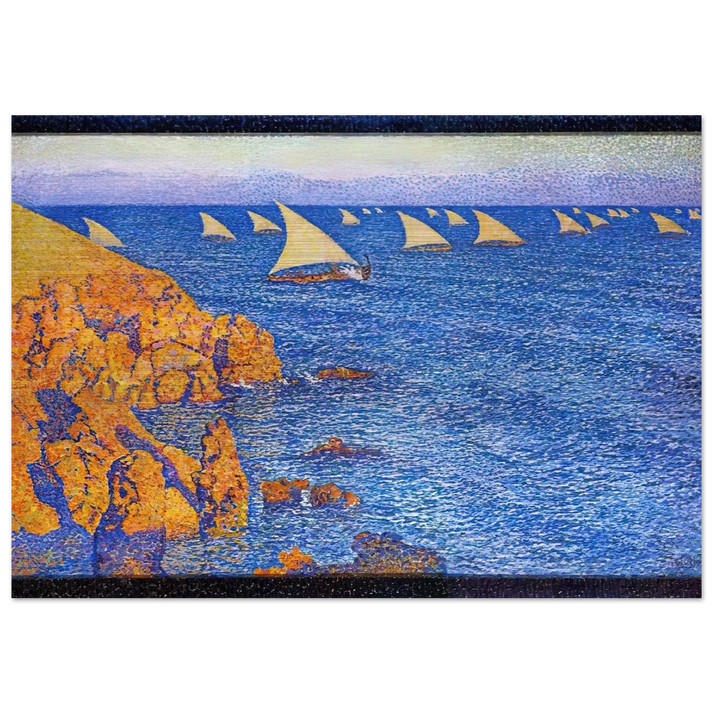


DIE REGATTA 1892 - Theo van Rysselberghe Aluminiumdruck - 70x100 cm / 28x40 Zoll | Theo van Rysselberghe Aluminiumdruck | Theo van Rysselberghe Drucke
DIE REGATTA 1892 - Theo van Rysselberghe Aluminiumdruck - 70x100 cm / 28x40 Zoll | Theo van Rysselberghe Aluminiumdruck | Theo van Rysselberghe Drucke
Verfügbarkeit für Abholungen konnte nicht geladen werden
Die Regatta 1892 von Theo van Rysselberghe: Ein neimpressionistisches Meisterwerk auf gebürstetem Aluminium
Tauchen Sie ein in die leuchtende Energie von Theo van Rysselberghes Die Regatta 1892, jetzt als museumreife gebürstete Aluminiumdruck von RedKalion erhältlich. Dieses ikonische Werk fängt eine lebendige Segelszene an der belgischen Küste ein und zeigt van Rysselberghes Meisterschaft in der Pointillismus-Technik. Durch sorgfältig platzierte Punkte reiner Farbe schafft er einen schimmernden, atmosphärischen Effekt, der die belebte Regatta mit unvergleichlicher Lebendigkeit und Licht zum Leben erweckt.
Als führende Persönlichkeit der neimpressionistischen Bewegung stellt van Rysselberghes Die Regatta 1892 einen entscheidenden Moment der Kunstgeschichte dar, der wissenschaftliche Farbtheorie mit poetischer Beobachtung verbindet. Dieser hochwertige Kunstdruck ermöglicht es Ihnen, ein Stück dieses Erbes zu besitzen, das mit archivierungsgerechter Präzision reproduziert wurde, um jedes Detail der ursprünglichen Komposition zu ehren.
Spezifikationen des Premium-Gebürsteten Aluminiumdrucks
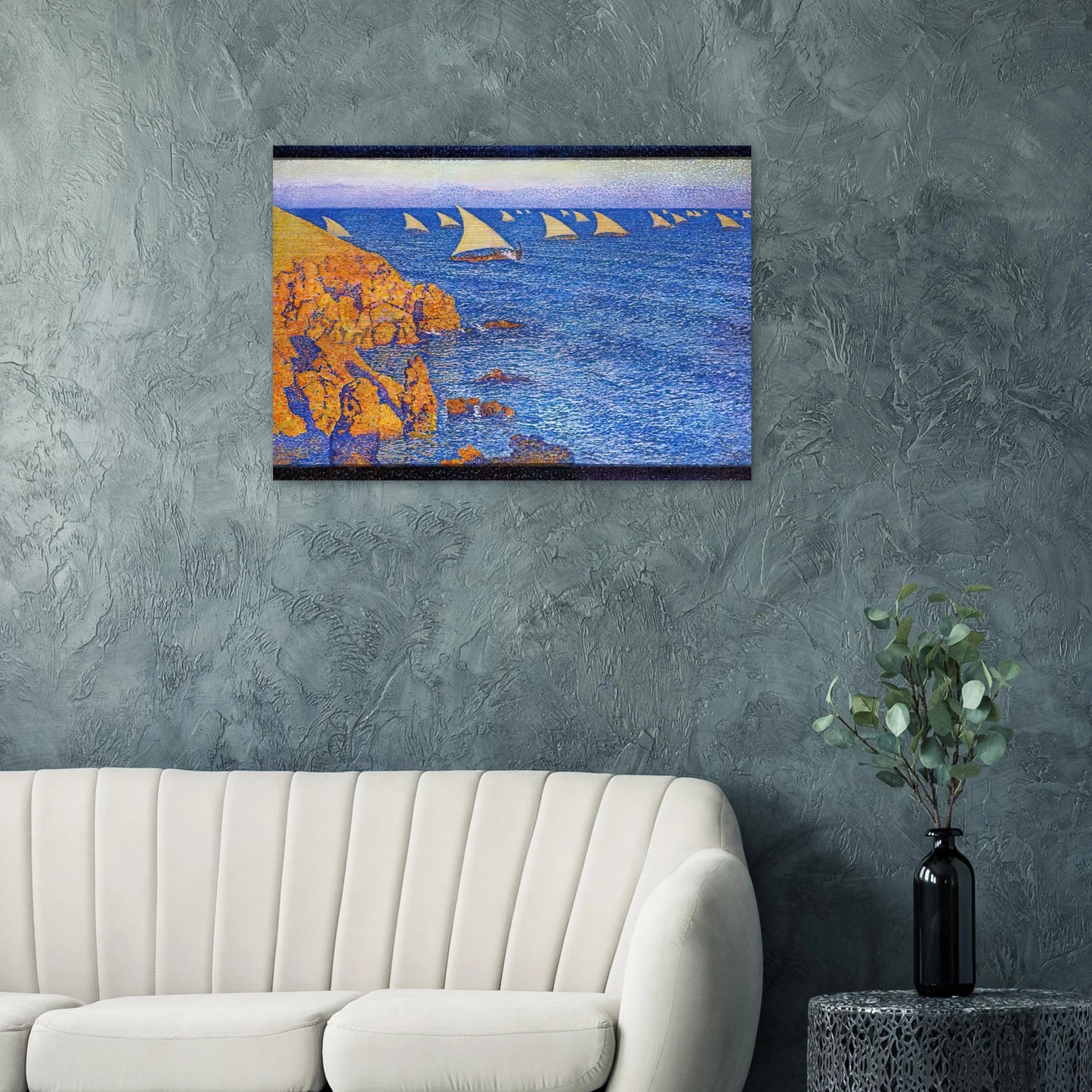
RedKalions exklusiver gebürsteter Aluminiumdruck hebt dieses Meisterwerk durch moderne Haltbarkeit und beeindruckende visuelle Wirkung hervor. Hergestellt auf 3 mm dickem Aluminium DIBOND®, bietet er einen Direktdruck für lebendige, farbechthe Farben und eine matte, blendfreie Oberfläche. Die horizontale Struktur der gebürsteten Silberoberfläche verleiht dem Druck eine dynamische Textur, während unbedruckte Bereiche einen subtilen metallischen Silbereffekt zeigen, der die Leuchtkraft des Kunstwerks verstärkt. Jeder Druck enthält ein vollständiges Aufhängeset für eine mühelose Präsentation und ist damit ein sofort einsatzbereiter Blickfang für jeden Raum.
Veredeln Sie Ihr Zuhause oder Büro mit dieser archivierungsgerechten Reproduktion in den Maßen 70x100 cm (28x40 Zoll). Vertrauen Sie RedKalion für einen hochwertigen Kunstdruck, der historische Bedeutung mit zeitgenössischer Handwerkskunst verbindet und so eine zeitlose Bereicherung für Ihre Sammlung darstellt.
```


Discover Unlimited Art Possibilities
At RedKalion, you can find virtually any artwork from any artist, available in a wide range of sizes to perfectly match your space.
If you didn’t find what you’re looking for, contact us at support@redkalion.com . We will source any artwork and produce it in any size and format you need, including art prints, posters, canvas, framed pieces, framed canvas, and more.
For dedicated art enthusiasts, we also offer handcrafted replicas of any artwork, carefully painted by highly skilled artists using traditional techniques.
For custom requests, contact us at support@redkalion.com .
What is the historical significance of The Regatta 1892 by Theo van Rysselberghe?
The Regatta 1892 is a key Neo-Impressionist work by Theo van Rysselberghe, showcasing Pointillist technique to capture light and movement in a Belgian coastal scene, reflecting late 19th-century artistic innovation.
What materials are used in this brushed aluminum print?
This museum-quality print uses brushed silver Aluminum DIBOND® with a 3mm thickness, direct printing for vivid colors, a matte finish, and a metallic silver effect in unprinted areas.
How does the brushed aluminum enhance this fine art print?
The horizontal grain and metallic finish add dynamic texture and luminosity, making it ideal for black-and-white designs and ensuring a striking, glare-free display.
Is a hanging kit included with this Theo van Rysselberghe aluminum print?
Yes, a complete hanging kit is included with every order, though specific components may vary by fulfillment country for optimal installation.
What are the dimensions of this archival reproduction?
This premium art print measures 70x100 cm or 28x40 inches, offering a substantial presence for home or office decor.
How durable and long-lasting is this brushed aluminum print?
Crafted on 3mm Aluminum DIBOND®, it features fade-resistant direct printing and a rigid base, ensuring archival longevity and resistance to damage.
What makes Theo van Rysselberghe's technique unique in The Regatta 1892?
Van Rysselberghe employed Pointillism, using small dots of pure color to create optical blending and vibrant light effects, characteristic of Neo-Impressionist mastery.