


DAS ROHR 1927 - Rene Magritte Aluminiumdruck - 70x100 cm / 28x40 Zoll | Rene Magritte Aluminiumdruck | Rene Magritte Drucke
DAS ROHR 1927 - Rene Magritte Aluminiumdruck - 70x100 cm / 28x40 Zoll | Rene Magritte Aluminiumdruck | Rene Magritte Drucke
Verfügbarkeit für Abholungen konnte nicht geladen werden
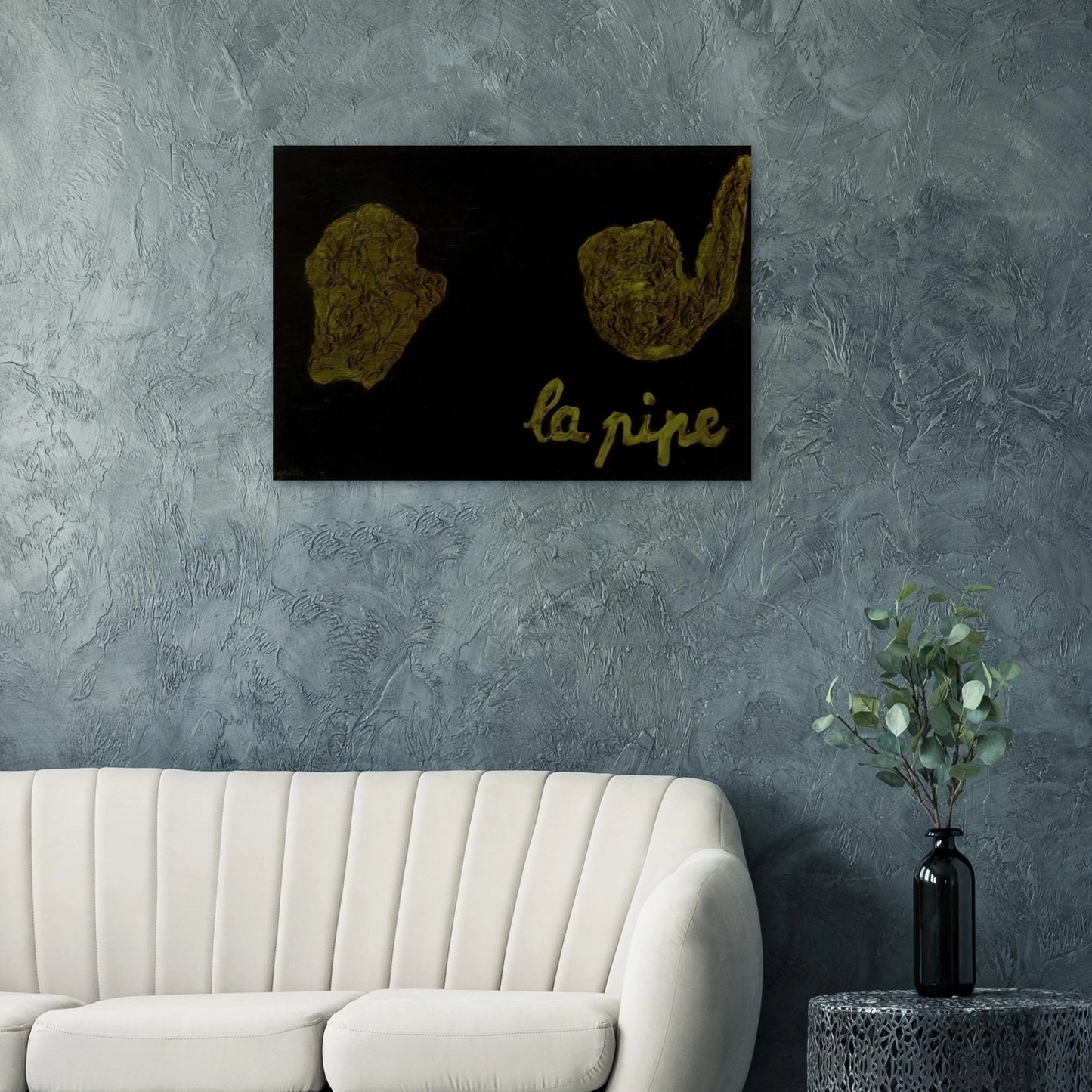
Das Pfeifenbild 1927 - Rene Magritte Aluminiumdruck mit gebürsteter Oberfläche
Besitzen Sie eine museumswürdige Reproduktion von Rene Magrittes ikonischem Meisterwerk aus dem Jahr 1927, Das Pfeifenbild. Dieses surrealistische Gemälde mit der berühmten Inschrift „Ceci n'est pas une pipe“ („Dies ist keine Pfeife“) fordert die Wahrnehmung von Realität und Kunst heraus und macht es zu einem tiefgründigen Statement-Stück für jedes moderne Interieur. Magrittes präzise, traumhafte Bildsprache lädt zum Nachdenken ein und verbindet philosophische Tiefe mit visueller Faszination.
RedKalion präsentiert diesen hochwertigen Fine-Art-Druck auf Premium-Aluminium DIBOND® mit gebürsteter silberner Oberfläche, gefertigt in den Maßen 70x100 cm (28x40 Zoll). Die 3 mm starke Basis sorgt für Langlebigkeit, während der direkte Druck auf AluDibond lebendige Farben und eine matte, blendfreie Oberfläche bietet. Unbedruckte Bereiche zeigen einen dynamischen metallischen Silbereffekt, der den auffälligen Kontrast des Kunstwerks verstärkt. Veredeln Sie Ihren Raum mit einer Reproduktion, die Magrittes Vermächtnis ehrt und als zeitloses Gesprächsthema Bestand hat.
- Material: Gebürstetes silbernes Aluminium DIBOND® mit horizontaler Maserung für einen dynamischen Look.
- Dicke: 3 mm (0,12 Zoll) für stabile Haltbarkeit.
- Druck: Direkter Druck auf AluDibond mit lebendigen Farben und matter Oberfläche.
- Oberfläche: Matt, blendfrei, ideal für Schwarz-Weiß-Designs mit gebürstetem Silbereffekt.
- Aufhängeset: Enthalten; variiert je nach Lieferland.


Discover Unlimited Art Possibilities
At RedKalion, you can find virtually any artwork from any artist, available in a wide range of sizes to perfectly match your space.
If you didn’t find what you’re looking for, contact us at support@redkalion.com . We will source any artwork and produce it in any size and format you need, including art prints, posters, canvas, framed pieces, framed canvas, and more.
For dedicated art enthusiasts, we also offer handcrafted replicas of any artwork, carefully painted by highly skilled artists using traditional techniques.
For custom requests, contact us at support@redkalion.com .
What are the dimensions of this Rene Magritte aluminum print?
This fine art print measures 70x100 cm (28x40 inches), offering a substantial presence for display in homes or offices as a museum-quality reproduction.
What material is used for this Magritte print?
It's crafted on brushed silver Aluminum DIBOND® with a 3mm thickness, providing a durable, rigid base with a metallic finish and horizontal grain for dynamic visual appeal.
How is the print applied to the aluminum?
We use direct printing on AluDibond, ensuring vivid colors and a matte finish, with unprinted white areas revealing a striking metallic silver effect for enhanced artwork detail.
Is a hanging kit included with this aluminum art print?
Yes, a hanging kit is included; specifics may vary by fulfillment country to ensure secure installation for your premium reproduction.
How durable is this brushed aluminum print?
With a 3mm thick Aluminum DIBOND® base and archival-grade printing, it's designed for long-lasting display, resistant to fading and suitable for various environments.
What is the historical significance of The Pipe by Magritte?
Created in 1927, this surrealist painting challenges reality with its inscription "Ceci n'est pas une pipe," exploring the gap between representation and object, making it a key work in modern art.
Why does Magritte use a pipe in this artwork?
Magritte uses the pipe to question perception and language, highlighting how images and words can mislead, a central theme in his philosophical approach to surrealism.