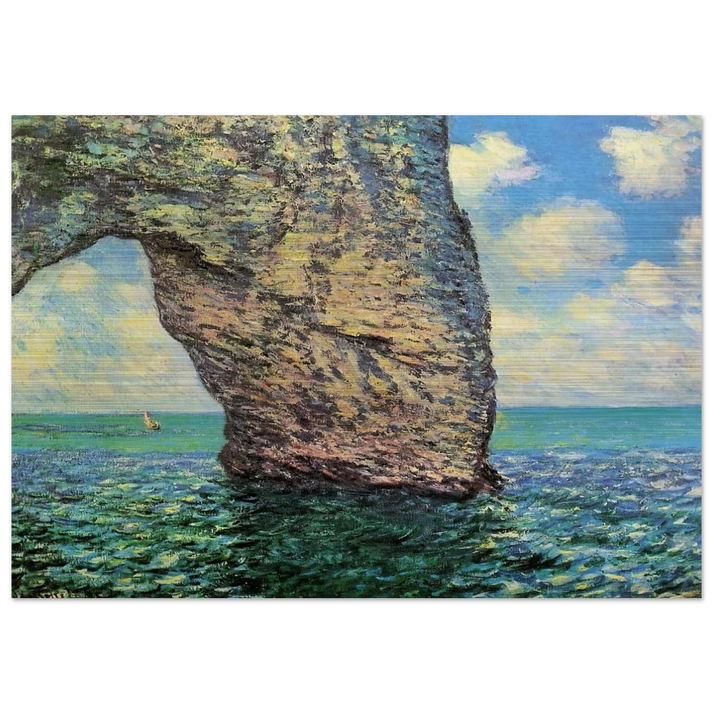


Die Manneport bei Flut - Claude Monet Aluminiumdruck - 70x100 cm / 28x40 Zoll | Claude Monet Aluminiumdruck | Claude Monet Drucke
Die Manneport bei Flut - Claude Monet Aluminiumdruck - 70x100 cm / 28x40 Zoll | Claude Monet Aluminiumdruck | Claude Monet Drucke
Verfügbarkeit für Abholungen konnte nicht geladen werden
Der Manneport bei Flut - Claude Monet
Tauchen Sie ein in die rohe, elementare Kraft der normannischen Küste mit Claude Monets Der Manneport bei Flut. Dieses Meisterwerk aus dem Jahr 1885 fängt die dramatische Kollision von Meer und Stein am ikonischen Bogen von Étretat ein, dargestellt im unverwechselbaren impressionistischen Stil Monets. Die stürmischen Wellen, mit lebendigen, ausdrucksstarken Pinselstrichen gemalt, vermitteln die erhabene Kraft der Natur, während das Spiel von Licht auf Wasser und Klippen Monets revolutionären Ansatz zur Erfassung flüchtiger atmosphärischer Effekte zeigt. Dieses bedeutende Werk aus seiner Étretat-Serie markiert eine mutige Erforschung von Textur und Bewegung und verbindet seine früheren Seestücke mit den abstrakteren späteren Werken.
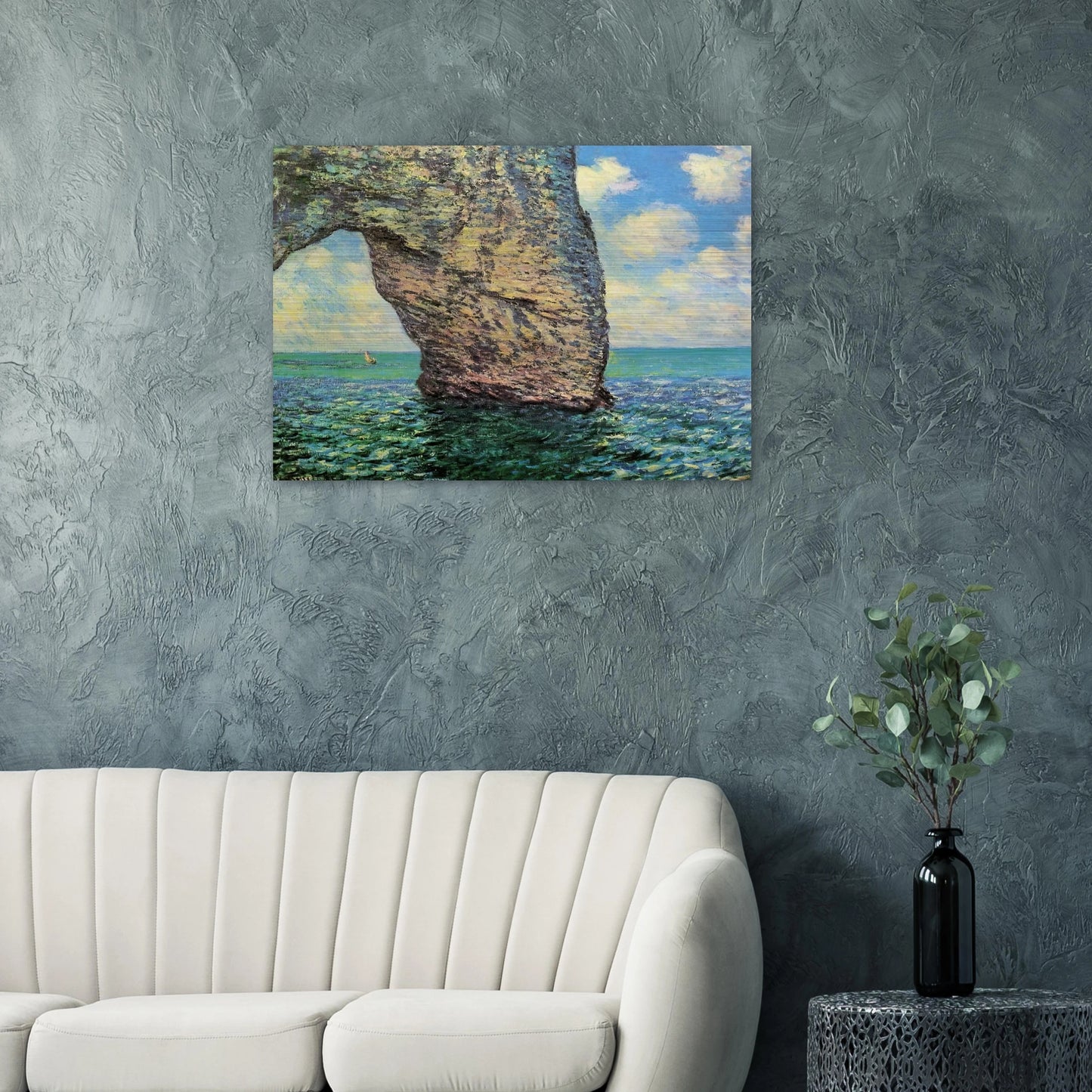
RedKalion präsentiert diese ikonische Szene als museumreife Reproduktion, sorgfältig gefertigt auf hochwertigem gebürstetem silbernem Aluminium DIBOND®. Die 3 mm dicke, stabile Basis gewährleistet Langlebigkeit, während die Direktdrucktechnologie Monets lebendige Blautöne und Grauschattierungen mit beeindruckender Klarheit wiedergibt. Die mattierte, blendfreie Oberfläche verstärkt die Tiefe des Kunstwerks, und die horizontale Maserung des Aluminiums verleiht eine dynamische, zeitgenössische Textur. Unbedruckte Bereiche zeigen einen subtilen metallischen Silbereffekt und schaffen einen anspruchsvollen Kontrast, der jeden Raum aufwerten kann.
Dieser Fine-Art-Druck misst 70x100 cm (28x40 Zoll) und ist damit ein beeindruckender Blickfang für moderne Innenräume. Jedes Stück enthält ein vollständiges Aufhängeset für eine mühelose Installation. Wählen Sie RedKalion für eine archivierbare Reproduktion, die Monets Vermächtnis mit unübertroffener Qualität und zeitloser Schönheit ehrt.
```


Discover Unlimited Art Possibilities
At RedKalion, you can find virtually any artwork from any artist, available in a wide range of sizes to perfectly match your space.
If you didn’t find what you’re looking for, contact us at support@redkalion.com . We will source any artwork and produce it in any size and format you need, including art prints, posters, canvas, framed pieces, framed canvas, and more.
For dedicated art enthusiasts, we also offer handcrafted replicas of any artwork, carefully painted by highly skilled artists using traditional techniques.
For custom requests, contact us at support@redkalion.com .
What are the dimensions and material of this Claude Monet print?
This fine art print measures 70x100 cm (28x40 inches) and is crafted on brushed silver Aluminum DIBOND® with a 3mm thickness for a durable, museum-quality reproduction.
How does the aluminum print enhance Monet's The Manneport at High Tide?
The direct print on aluminum ensures vivid colors and a matte finish, while the metallic silver effect in unprinted areas adds dynamic texture, ideal for this Impressionist seascape.
Is the hanging kit included with this brushed aluminum print?
Yes, a complete hanging kit is included with every order, though specific components may vary by fulfillment country for easy installation.
What makes this a museum-quality reproduction of Monet's artwork?
It uses archival-grade Aluminum DIBOND® with a glare-free matte finish and precise color matching, ensuring longevity and fidelity to Monet's original brushstrokes.
How should I care for my Claude Monet aluminum print?
Dust gently with a soft, dry cloth; avoid harsh chemicals. The aluminum material is resistant to fading and moisture, making it low-maintenance.
Why did Monet paint The Manneport at High Tide in Étretat?
Monet was captivated by Étretat's dramatic cliffs and changing light, using this site to explore natural forces and Impressionist techniques in his 1880s seascapes.
What artistic techniques define Monet's style in this artwork?
Monet employed vigorous brushstrokes and a focus on light effects to capture the turbulent sea and stone, showcasing his innovative Impressionist approach.