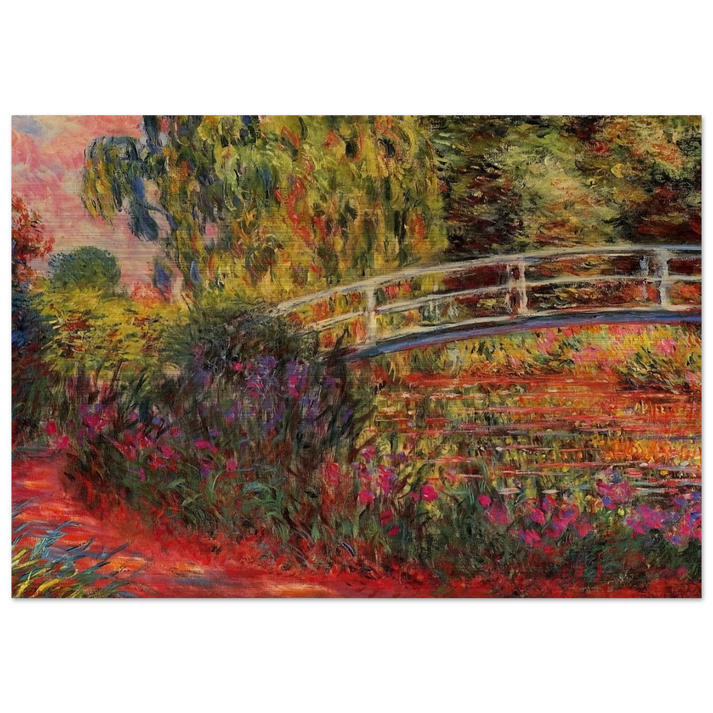


Die Japanische Brücke Der Seerosen-Teich, Wasser-Irisen - claude monet Aluminium-Druck - 70x100 cm / 28x40 Zoll | claude monet Aluminium-Druck | claude monet Drucke
Die Japanische Brücke Der Seerosen-Teich, Wasser-Irisen - claude monet Aluminium-Druck - 70x100 cm / 28x40 Zoll | claude monet Aluminium-Druck | claude monet Drucke
Verfügbarkeit für Abholungen konnte nicht geladen werden
Claude Monets „Die japanische Brücke, Der Seerosen-Teich, Wasser-Iris“ – Ein museales Aluminiumbild in Pinselstrich-Qualität
Tauchen Sie ein in die friedvolle Schönheit von Claude Monets ikonischem Meisterwerk „Die japanische Brücke, Der Seerosen-Teich, Wasser-Iris“, das nun exklusiv als museale Reproduktion von RedKalion erhältlich ist. Dieses hochwertige Kunstdruck fängt das Wesen von Monets impressionistischer Vision ein, in der Licht, Farbe und Natur in einem harmonischen Tanz verschmelzen. Gegen Ende der 1890er Jahre in seinem Garten in Giverny gemalt, verkörpert dieses Werk Monets revolutionäre Technik, flüchtige Momente mit lebendigen, geschichteten Pinselstrichen einzufangen. Die Szene vermittelt eine ruhige, meditative Stimmung und lädt den Betrachter in eine Welt aus spiegelnden Teichen und üppigen Wasser-Iris ein.
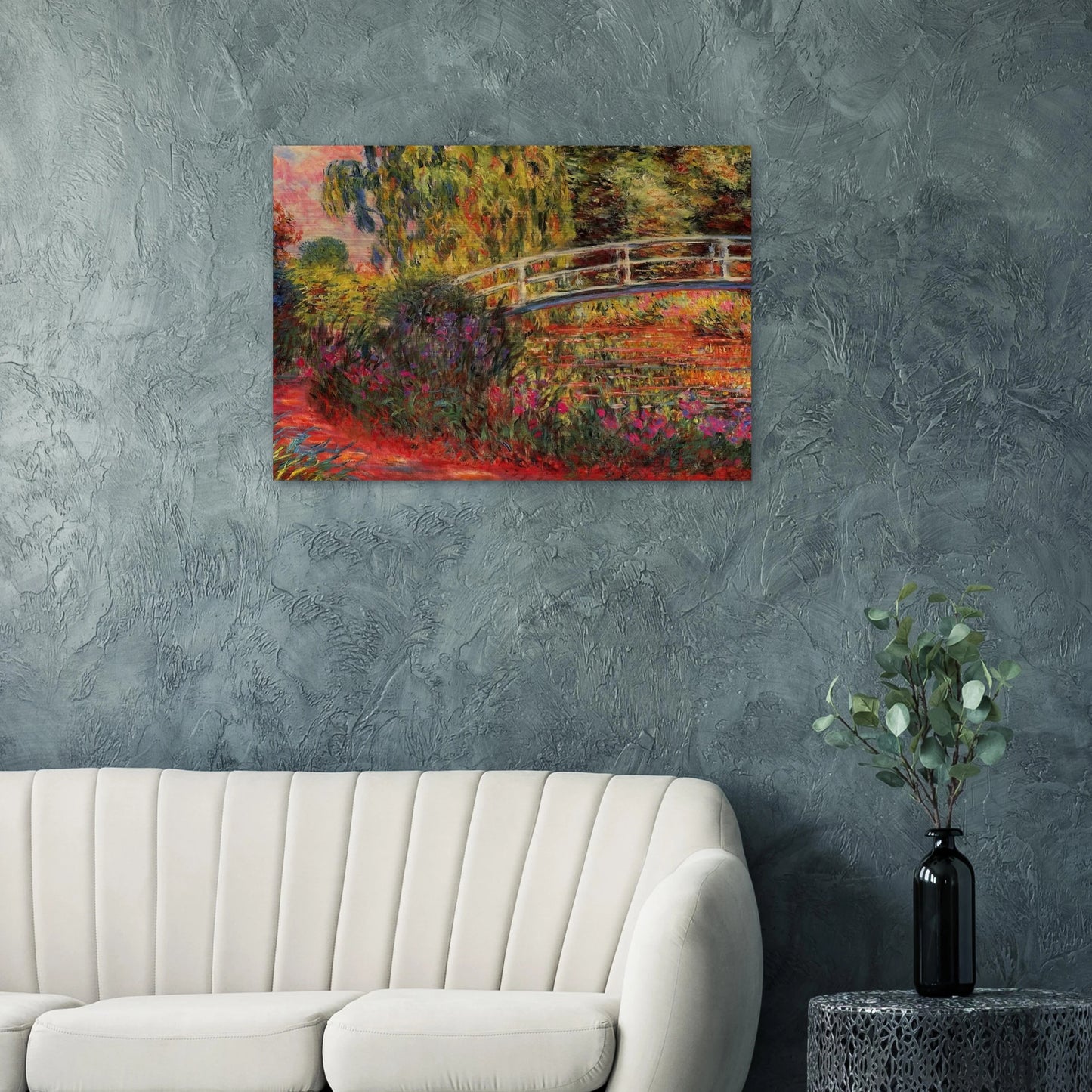
RedKalion präsentiert dieses Meisterwerk auf hochwertigem gebürstetem silbernem Aluminium DIBOND®, einer 3 mm dicken, stabilen Unterlage, die Haltbarkeit und einen zeitgemäßen ästhetischen Eindruck garantiert. Die Direktdrucktechnologie liefert lebendige, archivbeständige Farben mit matter, blendfreier Oberfläche, während unbedruckte Bereiche einen markanten metallischen Silbereffekt offenbaren, der die dynamische Wirkung des Kunstwerks verstärkt. Jeder Druck enthält ein vollständiges Aufhängeset für eine mühelose Präsentation und ist damit das perfekte Highlight für jeden Raum, der nach Eleganz und zeitloser Schönheit strebt.
Als führende Online-Galerie kuratiert RedKalion ausschließlich hochwertige Reproduktionen und setzt dabei präzises kunsthistorisches Fachwissen ein, um Klassiker wie Monets „Die japanische Brücke“ zum Leben zu erwecken. Verleihen Sie Ihrem Zuhause oder Büro mit diesem archivbeständigen Meisterwerk einen Hauch von historischem Gewicht und moderner Handwerkskunst – eine bleibende Hommage an einen der größten Innovatoren der Kunstgeschichte.
```


Discover Unlimited Art Possibilities
At RedKalion, you can find virtually any artwork from any artist, available in a wide range of sizes to perfectly match your space.
If you didn’t find what you’re looking for, contact us at support@redkalion.com . We will source any artwork and produce it in any size and format you need, including art prints, posters, canvas, framed pieces, framed canvas, and more.
For dedicated art enthusiasts, we also offer handcrafted replicas of any artwork, carefully painted by highly skilled artists using traditional techniques.
For custom requests, contact us at support@redkalion.com .
What are the dimensions of this Claude Monet aluminum print?
This fine art print measures 70x100 cm (28x40 inches), perfect for creating a statement piece in any room with its museum-quality reproduction on brushed aluminum.
What material is used for this Monet 'The Japanese Bridge' print?
It's crafted from brushed silver Aluminum DIBOND® with a 3mm thickness, offering a durable, rigid base and a metallic finish that enhances the artwork's vivid colors and matte effect.
How is the print applied to the aluminum surface?
We use direct printing on AluDibond, ensuring vibrant, long-lasting colors and a glare-free matte finish, with unprinted areas showcasing a dynamic silver effect for added visual interest.
Is a hanging kit included with this Claude Monet print?
Yes, a complete hanging kit is included; specific components may vary by fulfillment country to ensure easy and secure installation of your premium art piece.
How durable and archival is this brushed aluminum print?
This archival-grade reproduction features fade-resistant inks and a sturdy 3mm Aluminum DIBOND® base, designed to maintain its museum-quality appearance for years without yellowing or degradation.
What inspired Monet's 'The Japanese Bridge, The Water-Lily Pond, Water Irises'?
Painted in the late 1890s, it reflects Monet's obsession with his Giverny garden, capturing the interplay of light and water in his Impressionist style, focusing on serene, natural beauty.
Why did Monet choose water lilies and irises for this artwork?
Monet used water lilies and irises to explore color reflections and atmospheric effects, symbolizing tranquility and his innovative approach to capturing fleeting moments in nature.