
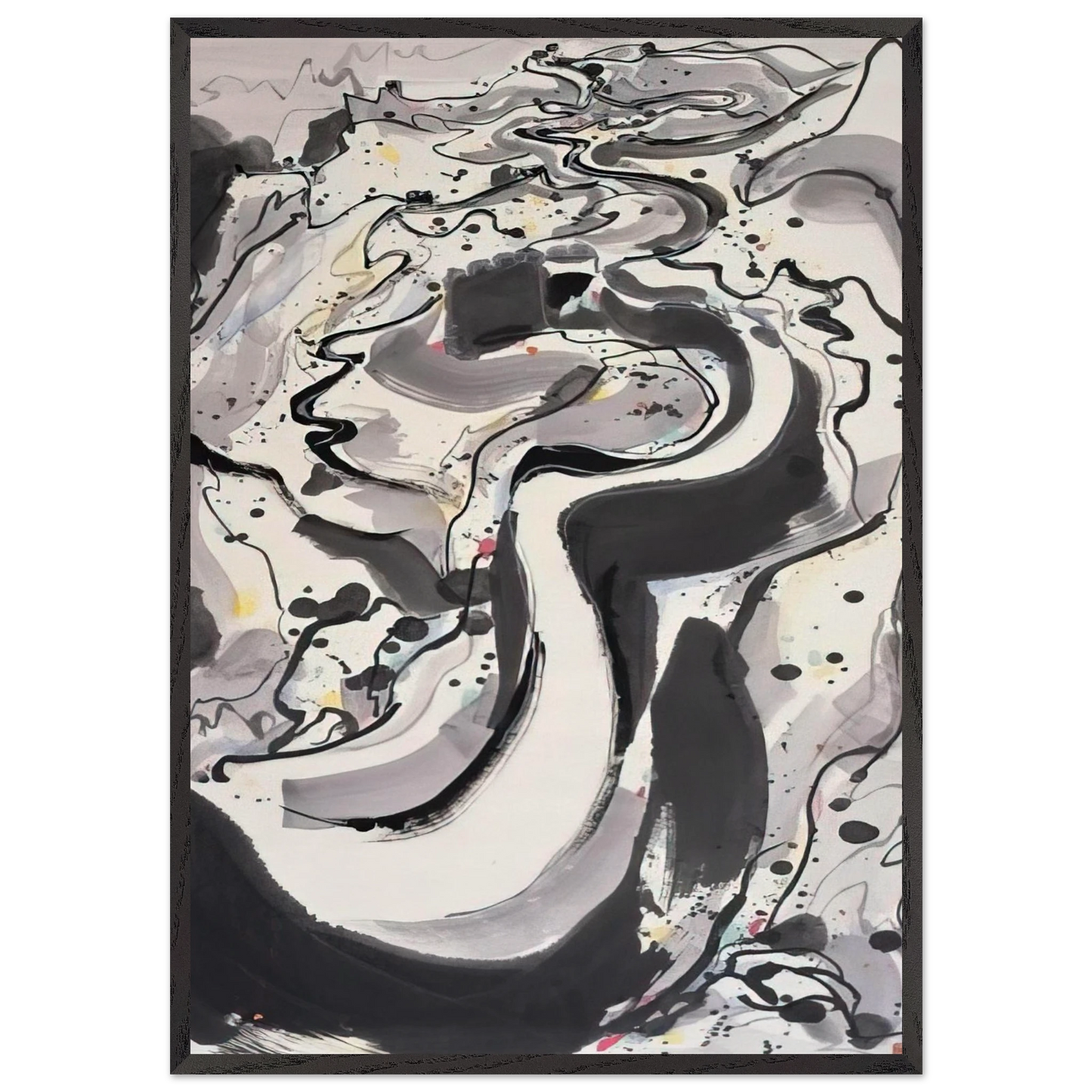
Die Chinesische Mauer I – 1986 – Wu Guanzhong, 70 x 100 cm / 28 x 40 Zoll, gerahmter Kunstdruck – schwarzer Holzrahmen
Die Chinesische Mauer I – 1986 – Wu Guanzhong, 70 x 100 cm / 28 x 40 Zoll, gerahmter Kunstdruck – schwarzer Holzrahmen
Verfügbarkeit für Abholungen konnte nicht geladen werden
Unsere hochwertigen Holzrahmen, gefertigt aus verantwortungsvoll angebautem Eichen- oder Eschenholz, zeichnen sich durch eine einzigartige Maserung aus, die ihnen zusätzlichen Charakter verleiht. Die Poster werden auf hochwertigem, ungestrichenem Papier in Museumsqualität gedruckt – cremefarben und ideal für alle, die höchste Qualität suchen.
- Sofort aufhängefertig: Inklusive Aufhängevorrichtung, kann direkt an der Wand aufgehängt werden.
- Rahmenmaterial: Verantwortungsvoll beschafftes Eichen- und Eschenholz.
- Rahmenmaße: 20 mm (0,79") dick und breit, breiter als der klassische 14 mm (0,55") Rahmen.
- Papiergewicht: 250 g/m² (110 lb), Dicke: 0,29 mm (11,4 mils), ideal für Kunstwerke.
- Papierveredelung: Mattes, ungestrichenes, naturweißes Archivpapier in Museumsqualität.
- Schutz: Das Poster ist durch bruchsicheres Plexiglas geschützt.
- Nachhaltiges Papier: FSC-zertifizierte Materialien oder gleichwertige Materialien.
- Verfügbare Größen: 15 Größen in Zoll (USA & Kanada) und cm (Rest der Welt).
Keine Mindestbestellmenge, Druck und Versand auf Bestellung.
Weitere Kunstwerke von WU GUANZHONG
Guilin-Landschaft – 1973 – Kunstdruck von Wu Guanzhong (gerahmt) – Schwarzer Holzrahmen
Entfremdung – 1992 – Wu Guanzhong, gerahmter Kunstdruck – schwarzer Holzrahmen
Blossom Out – 1986 – Gerahmter Kunstdruck von Wu Guanzhong – Schwarzer Holzrahmen
Blume – 2000 – Gerahmter Kunstdruck von Wu Guanzhong – Schwarzer Holzrahmen
Frühlingsbrise – 2001 – Kunstdruck von Wu Guanzhong mit Rahmen – Schwarzer Holzrahmen
Heimat des Menschen – 1999 – Wu Guanzhong, gerahmter Kunstdruck – schwarzer Holzrahmen
Ein großes Herrenhaus – 2001 – Kunstdruck von Wu Guanzhong mit Rahmen – Schwarzer Holzrahmen
Hohe Berge und ewige Bäche – 1986 – Wu Guanzhong, gerahmter Kunstdruck – schwarzer Holzrahmen
Häuser des Südens – 2007 – Wu Guanzhong, gerahmter Kunstdruck – schwarzer Holzrahmen
Tokio bei Nacht – 1990 – Wu Guanzhong, gerahmter Kunstdruck – schwarzer Holzrahmen
Fische – 1986 – Wu Guanzhong, gerahmter Kunstdruck – schwarzer Holzrahmen
Lotus unter der Sonne – 2001 – Wu Guanzhong, gerahmter Kunstdruck – schwarzer Holzrahmen
Drachen wiedergesehen – 2003 – Wu Guanzhong, gerahmter Kunstdruck – schwarzer Holzrahmen
Fackel – 2008 – Gerahmter Kunstdruck von Wu Guanzhong – Schwarzer Holzrahmen
Liebe in Fangzhuang – 2002 – Kunstdruck von Wu Guanzhong mit Rahmen – Schwarzer Holzrahmen
Die Chinesische Mauer I – 1986 – Wu Guanzhong, gerahmter Kunstdruck – schwarzer Holzrahmen
Hongkong – 1997 – Gerahmter Kunstdruck von Wu Guanzhong – Schwarzer Holzrahmen
Duftende rote Blätter – 2001 – Wu Guanzhong, gerahmter Kunstdruck – schwarzer Holzrahmen
Discover Unlimited Art Possibilities
At RedKalion, you can find virtually any artwork from any artist, available in a wide range of sizes to perfectly match your space.
If you didn’t find what you’re looking for, contact us at support@redkalion.com . We will source any artwork and produce it in any size and format you need, including art prints, posters, canvas, framed pieces, framed canvas, and more.
For dedicated art enthusiasts, we also offer handcrafted replicas of any artwork, carefully painted by highly skilled artists using traditional techniques.
For custom requests, contact us at support@redkalion.com .
What are the dimensions of this framed art print?
The framed print measures 70x100 cm (28x40 inches), with a black wooden frame that is 20mm (0.79") thick and wide, offering a substantial, gallery-style presence.
What type of paper is used for this fine art print?
It uses archival museum-quality paper: 250 gsm (110 lb) weight, 0.29 mm thick, matte, uncoated, and natural white, made from FSC-certified sustainable materials for longevity and eco-friendliness.
Is this framed print ready to hang?
Yes, it includes a hanging kit and is ready-to-hang directly on your wall, ensuring easy installation and immediate display.
How does the frame protect the print?
The frame features shatterproof plexiglass that safeguards the print from damage, while the responsibly sourced oak and ash wood provides durable, elegant framing.
Is this a limited edition or open edition reproduction?
This is an open edition museum-quality reproduction, allowing art lovers to own a faithful copy of Wu Guanzhong's iconic work without rarity constraints.
What artistic style does Wu Guanzhong use in The Great Wall I?
Wu Guanzhong blends traditional Chinese ink-wash techniques with Western abstraction, creating a dynamic, flowing depiction that captures the Great Wall's grandeur in a modernist style.
Why is The Great Wall I significant in art history?
Painted in 1986, it represents Wu Guanzhong's innovative fusion of Eastern and Western art, marking a key moment in modern Chinese art's global dialogue and cultural expression.