

Die Frying Pan - 1946 - William Scott Brushed Aluminum Print - 70x100 cm / 28x40 Zoll | William Scott Aluminum Print | William Scott Prints
Die Frying Pan - 1946 - William Scott Brushed Aluminum Print - 70x100 cm / 28x40 Zoll | William Scott Aluminum Print | William Scott Prints
Verfügbarkeit für Abholungen konnte nicht geladen werden
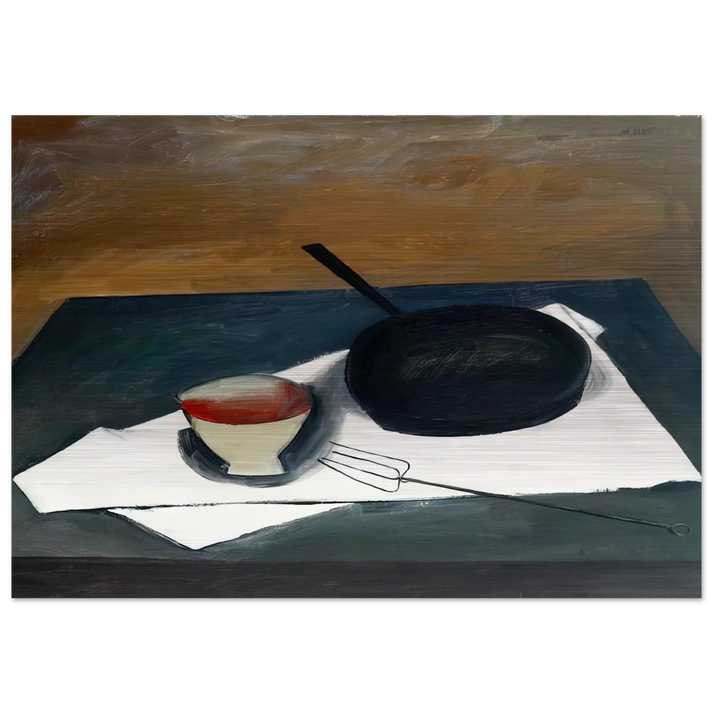
Die Bratpfanne (1946) von William Scott: Ein modernistisches Meisterwerk auf gebürstetem Aluminium
RedKalion präsentiert eine museumswürdige Reproduktion von William Scotts ikonischem Gemälde „Die Bratpfanne“ aus dem Jahr 1946, das sorgfältig auf hochwertigem gebürstetem silbernem Aluminium DIBOND® gedruckt ist. Dieser archivierungsfähige Druck fängt das Wesen von Scotts Nachkriegsmodernismus ein, in dem alltägliche Haushaltsgegenstände in kraftvolle geometrische Abstraktionen verwandelt werden. Die Komposition – mit einer schlichten, vereinfachten Bratpfanne vor einem minimalistischen Hintergrund – vermittelt eine Stimmung der stillen Kontemplation und industriellen Eleganz und verbindet das Alltägliche mit dem Erhabenen.
Unser Fine-Art-Druck veredelt dieses historische Kunstwerk mit modernsten Materialien. Die 3 mm dicke Aluminium-DIBOND®-Platte bietet eine stabile, feste Grundlage, während die Direktdrucktechnologie für lebendige Farbtreue und eine matte, blendfreie Oberfläche sorgt. Unbedruckte Bereiche zeigen einen dynamischen metallischen Silbereffekt, der dem Werk mit einem zeitgenössischen Twist eine modernistische Ästhetik verleiht. Diese Aluminium-Reproduktion von William Scott ist nicht nur eine Reproduktion; sie ist ein Statement-Piece, das für Langlebigkeit konzipiert ist und mit den Maßen 70 x 100 cm (28 x 40 Zoll) jeden Raum mit seiner archivbeständigen Qualität bereichert.
Als führende Online-Galerie spezialisiert sich RedKalion auf die kuratierte Präsentation weltklasse Reproduktionen, die das künstlerische Erbe ehren. „Die Bratpfanne“ verkörpert Scotts innovative Technik, Formen auf ihre wesentlichen Strukturen zu reduzieren – ein Markenzeichen der britischen Abstraktion des mittleren 20. Jahrhunderts. Veredeln Sie Ihr Zuhause oder Büro mit diesem gebürsteten Silberdruck, bei dem Kunstgeschichte auf modernes Handwerk trifft und zeitlose Eleganz zur Schau stellt.
```


Discover Unlimited Art Possibilities
At RedKalion, you can find virtually any artwork from any artist, available in a wide range of sizes to perfectly match your space.
If you didn’t find what you’re looking for, contact us at support@redkalion.com . We will source any artwork and produce it in any size and format you need, including art prints, posters, canvas, framed pieces, framed canvas, and more.
For dedicated art enthusiasts, we also offer handcrafted replicas of any artwork, carefully painted by highly skilled artists using traditional techniques.
For custom requests, contact us at support@redkalion.com .
What are the dimensions of this William Scott aluminum print?
This fine art print measures 70x100 cm (28x40 inches), making it a striking centerpiece for any room with its museum-quality reproduction on durable Aluminum DIBOND®.
What material is used for this brushed silver print?
It features a brushed silver Aluminum DIBOND® with a metallic finish and horizontal grain, offering a dynamic look and a rigid 3mm thickness for long-lasting durability.
Does the print include a hanging kit?
Yes, a hanging kit is included with your order; specific components may vary by fulfillment country to ensure secure installation.
How is the print finished to prevent glare?
The print has a matte, glare-free finish, ideal for black-and-white designs and enhancing the brushed silver effect with vivid colors from direct printing.
Is this print archival and fade-resistant?
Yes, our archival-grade reproduction uses direct print on Aluminum DIBOND® for fade resistance, ensuring this William Scott artwork endures for years.
What is the historical significance of "The Frying Pan" by William Scott?
Created in 1946, it reflects post-war modernism, transforming a domestic object into geometric abstraction, showcasing Scott's innovative reduction of forms.
How does the metallic effect enhance the artwork?
Unprinted white areas reveal a metallic silver effect, adding depth and a contemporary dynamic look to Scott's minimalist composition.