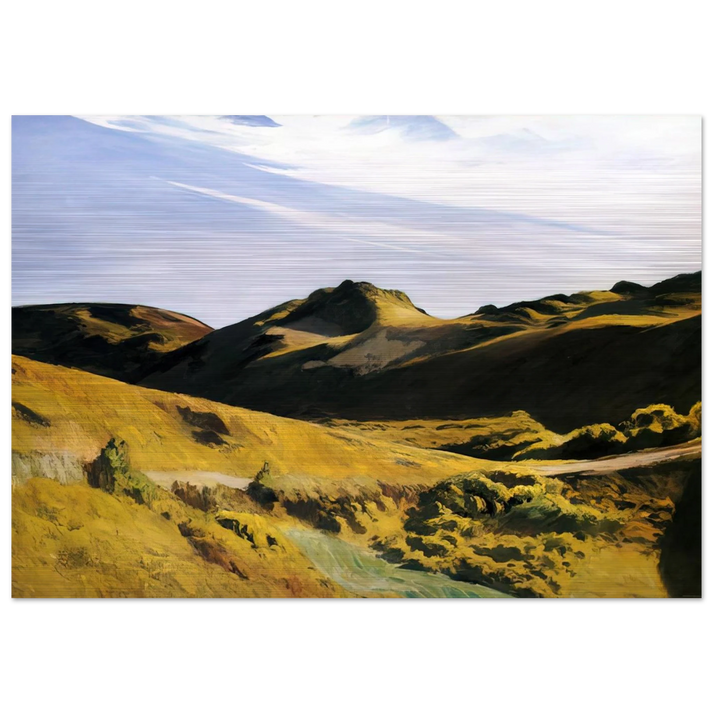


Die Kamelrücken - Edward Hopper Aluminiumdruck - 70x100 cm / 28x40 Zoll | Edward Hopper Aluminiumdruck | Edward Hopper Drucke
Die Kamelrücken - Edward Hopper Aluminiumdruck - 70x100 cm / 28x40 Zoll | Edward Hopper Aluminiumdruck | Edward Hopper Drucke
Verfügbarkeit für Abholungen konnte nicht geladen werden
Der Höcker des Kamels - Edward Hopper Aluminiumdruck auf gebürstetem Aluminium
Veredeln Sie Ihren Raum mit dieser museumswürdigen Reproduktion von Edward Hoppers Der Höcker des Kamels, einem Meisterwerk des amerikanischen Realismus. Dieser hochwertige Kunstdruck fängt die schroffe, eindringliche Schönheit von Hoppers Ölgemälde aus dem Jahr 1931 ein, das eine einsame Landschaft Neuenglands unter einem bedrohlichen Himmel zeigt. Bekannt für seine Erforschung von Isolation und Licht verwandelt Hopper hier eine bescheidene ländliche Szene in eine tiefgründige Meditation über Einsamkeit und das amerikanische Erleben.
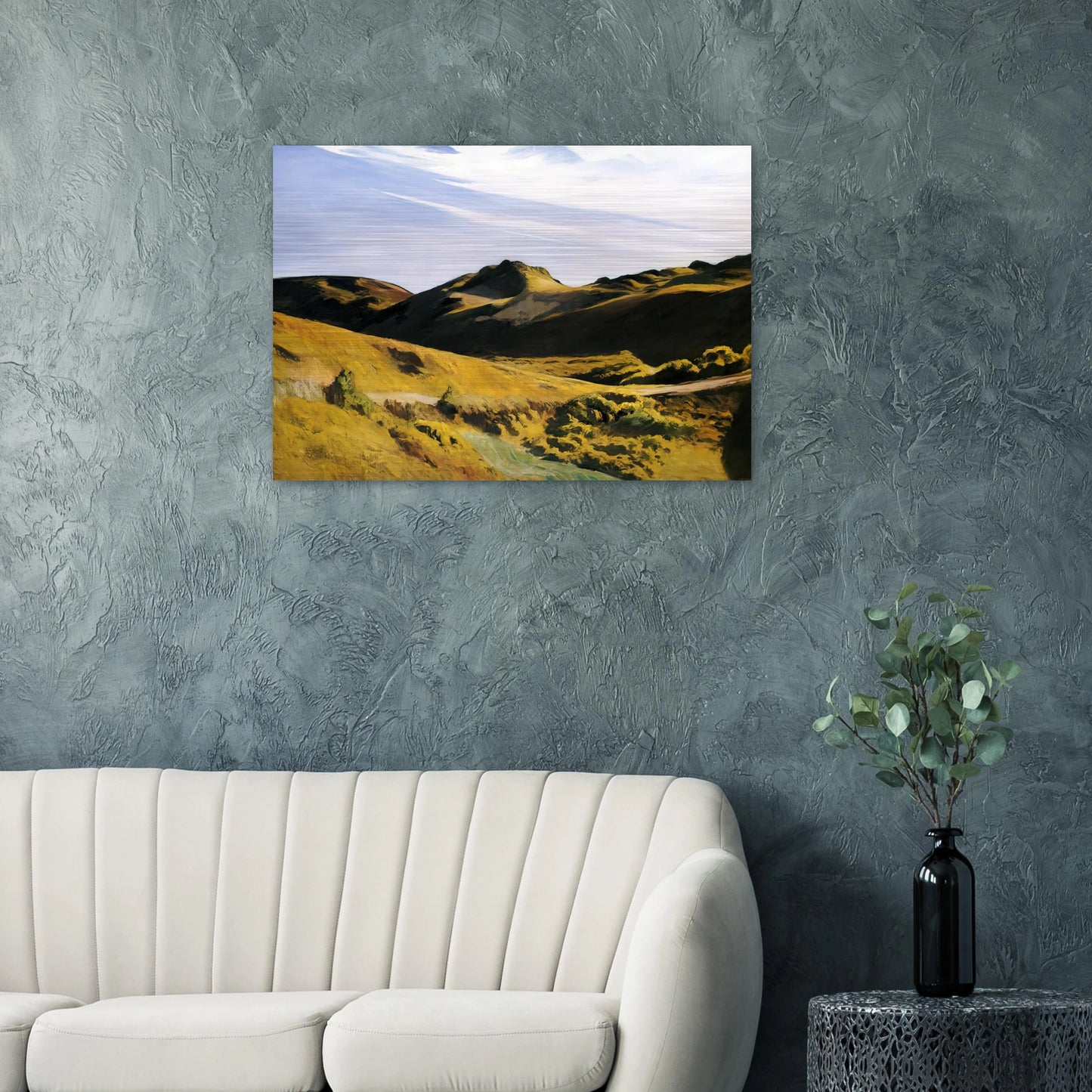
RedKalion präsentiert diesen archivtauglichen Druck auf hochwertigem gebürstetem silbernem Aluminium DIBOND® in den Maßen 70x100 cm / 28x40 Zoll. Die 3 mm (0,12 Zoll) Dicke sorgt für eine stabile, verwindungsfreie Basis, während der Direktdruck auf AluDibond lebendige Farben und eine matte Oberfläche bietet. Unbedruckte weiße Bereiche zeigen einen auffälligen metallischen Silbereffekt, der durch eine horizontale Maserung den dynamischen Look des Werks verstärkt. Diese blendfreie Oberfläche eignet sich ideal für Schwarz-Weiß-Designs und ist eine anspruchsvolle Bereicherung für jedes Zuhause oder Büro.
Als vertrauenswürdiger Kurator weltklasse Reproduktionen stellt RedKalion sicher, dass jeder Druck höchsten Ansprüchen an Langlebigkeit und visueller Wirkung gerecht wird. Dieser Aluminiumdruck von Edward Hopper ist mehr als nur Dekoration – er ist eine Investition in bleibende Kunstfertigkeit, die zum Nachdenken anregt und Ihre Umgebung mit zeitloser Eleganz bereichert.
```


Discover Unlimited Art Possibilities
At RedKalion, you can find virtually any artwork from any artist, available in a wide range of sizes to perfectly match your space.
If you didn’t find what you’re looking for, contact us at support@redkalion.com . We will source any artwork and produce it in any size and format you need, including art prints, posters, canvas, framed pieces, framed canvas, and more.
For dedicated art enthusiasts, we also offer handcrafted replicas of any artwork, carefully painted by highly skilled artists using traditional techniques.
For custom requests, contact us at support@redkalion.com .
What are the dimensions and material of this Edward Hopper print?
This fine art print measures 70x100 cm / 28x40 inches and is crafted from brushed silver Aluminum DIBOND® with a 3mm thickness for durability and a museum-quality metallic finish.
How is the print applied to the aluminum surface?
It features direct printing on AluDibond, ensuring vivid colors and a matte finish, with unprinted areas revealing a striking brushed silver effect for a dynamic look.
Is a hanging kit included with this aluminum art print?
Yes, a hanging kit is included; specific components may vary by fulfillment country to ensure secure installation of your Edward Hopper reproduction.
What makes this print archival and long-lasting?
The Aluminum DIBOND® base and direct printing technique provide excellent resistance to fading and damage, making it a durable, archival-grade fine art print.
How does the finish enhance black-and-white designs like Hopper's work?
The matte, glare-free finish minimizes reflections, ideal for showcasing the contrast and detail in Edward Hopper's black-and-white masterpiece, The Camel's Hump.
What is the historical significance of The Camel's Hump by Edward Hopper?
Painted in 1931, it reflects Hopper's mastery of American realism, capturing solitude and light in a New England landscape during the Great Depression era.
Why did Edward Hopper choose this subject for The Camel's Hump?
Hopper often depicted rural scenes to explore themes of isolation and the American experience, using stark compositions to evoke emotional depth and quiet reflection.