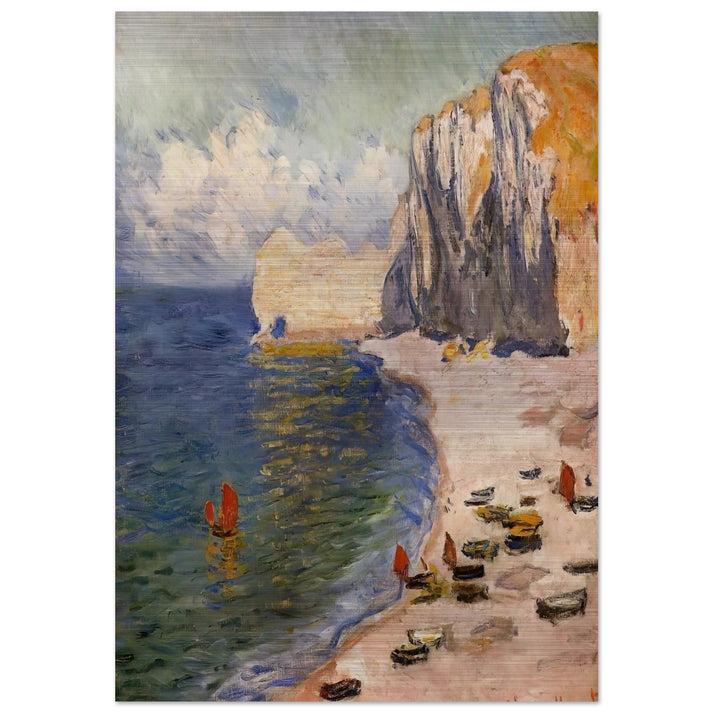


Die Küste und die Falaise d'Amont - Claude Monet Aluminiumdruck - 70x100 cm / 28x40 Zoll | Claude Monet Aluminiumdruck | Claude Monet Drucke
Die Küste und die Falaise d'Amont - Claude Monet Aluminiumdruck - 70x100 cm / 28x40 Zoll | Claude Monet Aluminiumdruck | Claude Monet Drucke
Verfügbarkeit für Abholungen konnte nicht geladen werden
Claude Monets Der Strand und die Falaise d'Amont: Ein Meisterwerk aus Licht und Atmosphäre
Tauchen Sie ein in die strahlende Schönheit der normannischen Küste mit Claude Monets Der Strand und die Falaise d'Amont. Das 1882 entstandene, ikonische Werk fängt die flüchtigen Lichteffekte auf den zerklüfteten Klippen und dem ruhigen Strand von Étretat ein und zeigt Monets revolutionäre impressionistische Technik. Die geschickten Pinselstriche und die nuancierte Farbpalette des Künstlers vermitteln ein Gefühl von ruhiger Erhabenheit – dieses hochwertige Kunstdruck ist eine zeitlose Bereicherung für jeden Raum, der nach Eleganz und natürlicher Inspiration sucht.
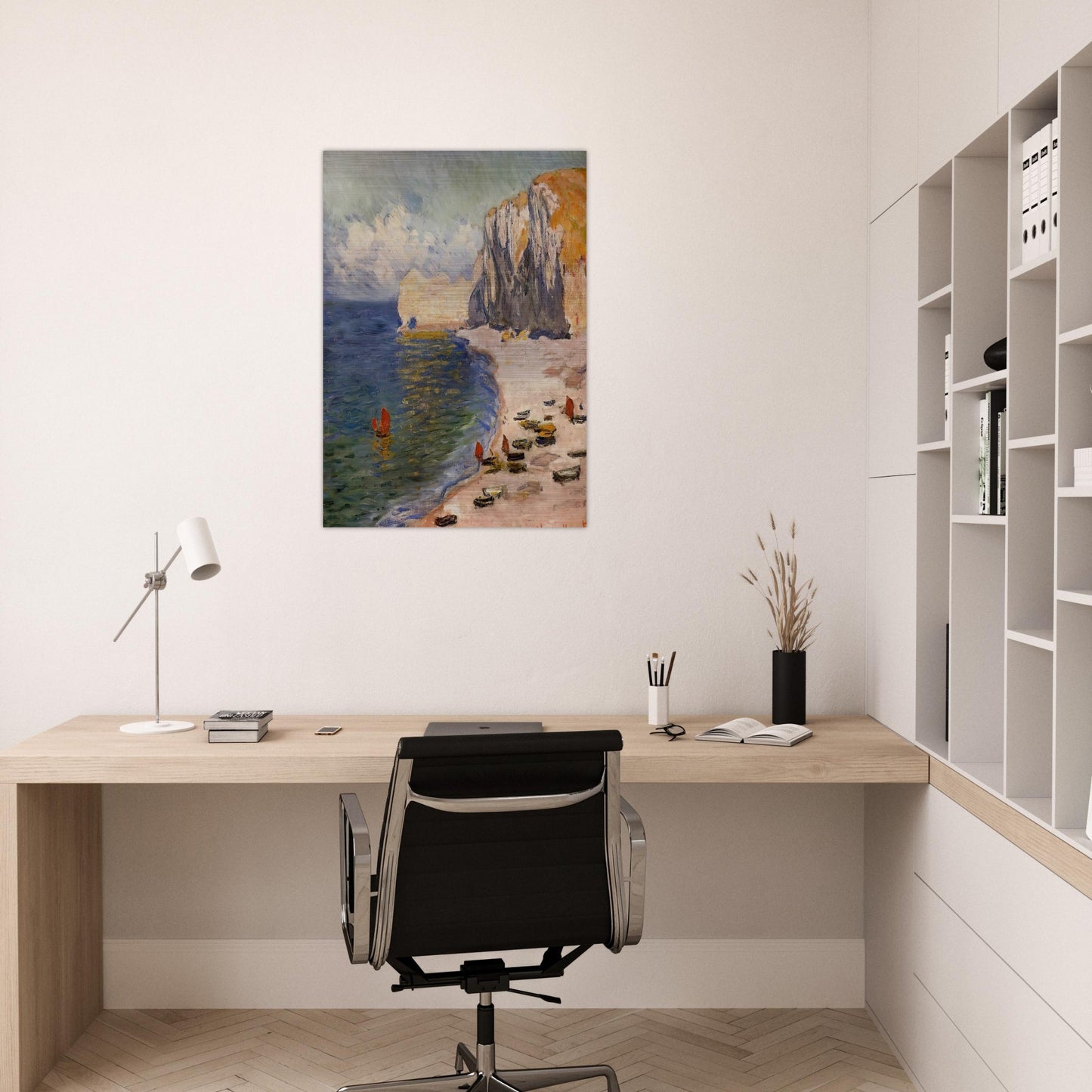
RedKalion präsentiert diese museumswürdige Reproduktion auf hochwertigem gebürstetem silbernem Aluminium DIBOND® mit den Maßen 70x100 cm (28x40 Zoll). Die 3 mm Dicke sorgt für eine stabile, starre Basis, die die Wirkung des Kunstwerks verstärkt. Durch den direkten Druck auf AluDibond bleiben die leuchtenden Farben und die matte Oberfläche erhalten, während unbedruckte weiße Bereiche einen auffälligen metallisch-silbernen Effekt für zusätzliche Tiefe freilegen. Die horizontale Struktur des gebürsteten Finishs unterstreicht die dynamische Küstenlandschaft und schafft eine blendfreie Präsentation, ideal für moderne Innenräume.
Als führender Anbieter von archivbeständigen Reproduktionen vereint RedKalion kunsthistorisches Fachwissen mit modernsten Materialien. Monets Erforschung des Lichts in diesem Werk spiegelt seine Hingabe wider, flüchtige Momente einzufangen – eine Philosophie, der wir mit Drucken gerecht werden, die für die Ewigkeit gemacht sind. Veredeln Sie Ihr Zuhause oder Büro mit diesem archivwürdigen Meisterwerk, in dem Kunstgeschichte auf zeitgenössisches Handwerk trifft.
```


Discover Unlimited Art Possibilities
At RedKalion, you can find virtually any artwork from any artist, available in a wide range of sizes to perfectly match your space.
If you didn’t find what you’re looking for, contact us at support@redkalion.com . We will source any artwork and produce it in any size and format you need, including art prints, posters, canvas, framed pieces, framed canvas, and more.
For dedicated art enthusiasts, we also offer handcrafted replicas of any artwork, carefully painted by highly skilled artists using traditional techniques.
For custom requests, contact us at support@redkalion.com .
What are the dimensions of this Claude Monet aluminum print?
This fine art print measures 70x100 cm (28x40 inches), offering a substantial presence for displaying Monet's coastal masterpiece in your space.
What material is used for this museum-quality reproduction?
It's printed on brushed silver Aluminum DIBOND® with a 3mm thickness, ensuring durability and a dynamic metallic finish that enhances the artwork's vivid colors.
How is the print finished to prevent glare?
The print features a matte, glare-free finish, ideal for showcasing Monet's Impressionist details without reflections, with unprinted areas revealing a brushed silver effect.
Is a hanging kit included with this Claude Monet print?
Yes, a hanging kit is included; specific components may vary by fulfillment country to ensure secure installation for your aluminum art print.
How does the printing process preserve Monet's colors?
Direct print on AluDibond ensures vivid, archival-quality colors and a matte finish, capturing the luminosity of Monet's original brushwork for long-lasting beauty.
What historical significance does The Beach and the Falaise d'Amont hold?
Painted in 1882, this work exemplifies Monet's Impressionist focus on light and atmosphere at Étretat, marking a key moment in his exploration of coastal landscapes.
Why did Monet choose the Falaise d'Amont as a subject?
Monet was drawn to Étretat's dramatic cliffs for their changing light effects, using rapid brushstrokes to capture the natural beauty and mood of the Normandy coast.