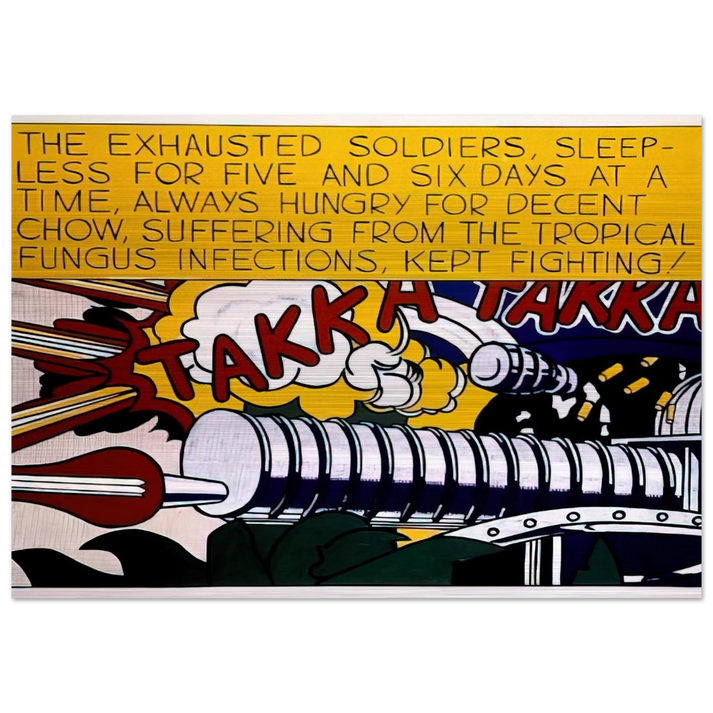


TAKKA TAKKA 1962 - Roy Lichtenstein Aluminium-Druck - 70x100 cm / 28x40 Zoll | Roy Lichtenstein Aluminium-Druck | Roy Lichtenstein Drucke
TAKKA TAKKA 1962 - Roy Lichtenstein Aluminium-Druck - 70x100 cm / 28x40 Zoll | Roy Lichtenstein Aluminium-Druck | Roy Lichtenstein Drucke
Verfügbarkeit für Abholungen konnte nicht geladen werden
TAKKA TAKKA 1962 - Roy Lichtenstein Aluminium-Druck mit gebürsteter Oberfläche
Verleihen Sie Ihrem Raum eine immersive, ikonische Vision der Pop-Art-Pionierin Roy Lichtenstein mit dieser museumswürdigen Reproduktion von "Takka Takka" (1962). Dieses Meisterwerk fängt Lichtensteins charakteristische Comic-Ästhetik ein und verbindet mechanische Präzision mit emotionaler Tiefe durch seine berühmten Ben-Day-Punkte und grafischen Linien. Der spielerische, lautmalerische Titel des Kunstwerks ruft die rhythmische Energie der amerikanischen Kultur der 1950er Jahre wach und macht es zu einem zeitlosen Statement-Stück für moderne Innenräume.
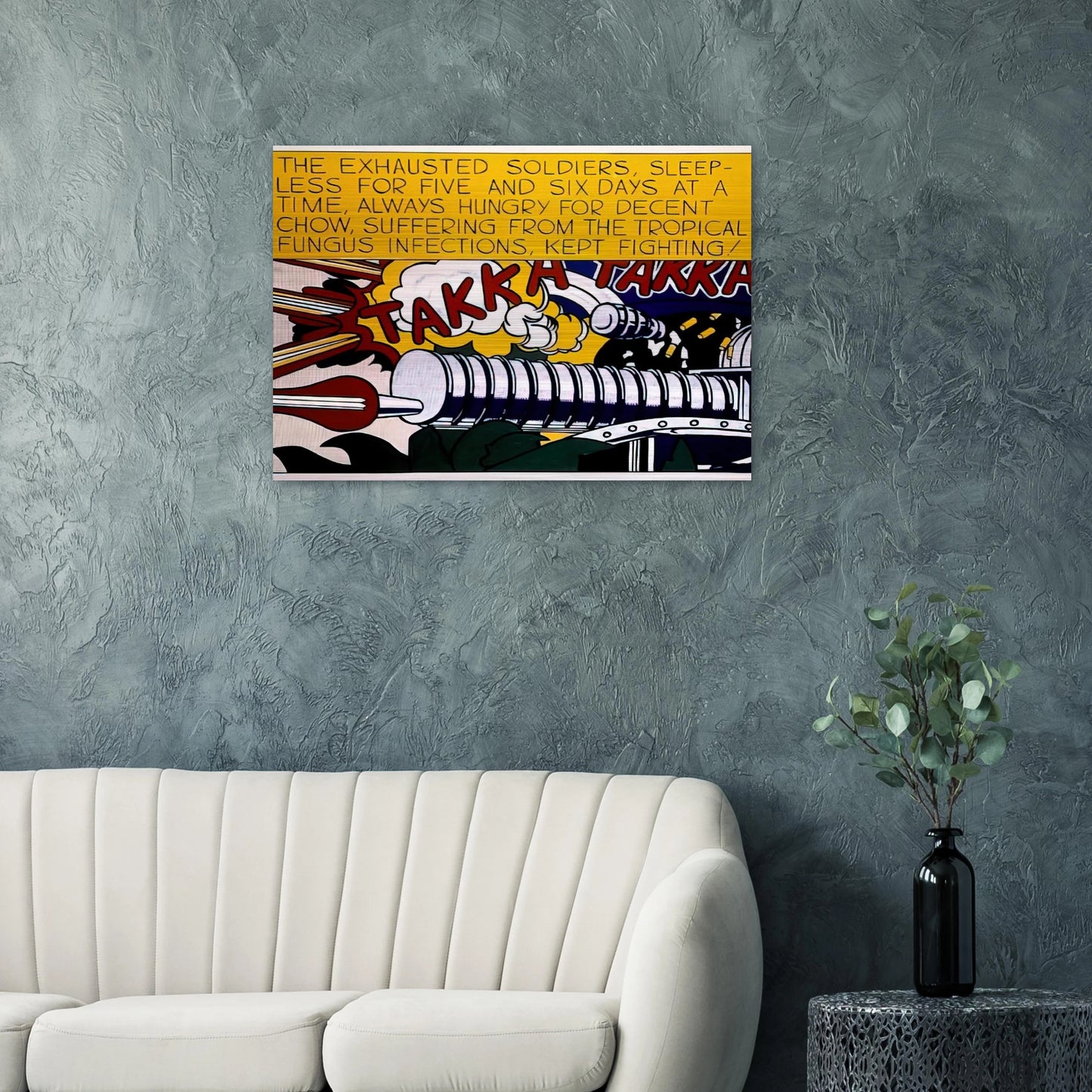
RedKalion präsentiert diesen archivtauglichen Druck auf gebürstetem silbernem Aluminium DIBOND®, einem Premium-Material, das den dynamischen Reiz des Kunstwerks unterstreicht. Die 3 mm (0,12 Zoll) dicke Basis sorgt für Haltbarkeit und Steifigkeit, während der Direktdruck auf AluDibond lebendige, farbechthe Farben mit matter, blendfreier Oberfläche liefert. Unbedruckte weiße Bereiche zeigen einen markanten metallisch-silbernen Effekt, der Lichtensteins Schwarz-Weiß-Design zusätzliche Tiefe und einen zeitgenössischen Touch verleiht.
Mit den Maßen 70x100 cm / 28x40 Zoll ist dieser hochwertige Kunstdruck bereit, jeden Raum mit seiner anspruchsvollen Präsenz zu bereichern. Jedes Stück enthält ein Aufhängeset für mühelose Installation, angepasst an Ihr Lieferland. Vertrauen Sie RedKalion für fachkundig kuratierte Reproduktionen, die historische Bedeutung mit modernster Handwerkskunst verbinden.
```


Discover Unlimited Art Possibilities
At RedKalion, you can find virtually any artwork from any artist, available in a wide range of sizes to perfectly match your space.
If you didn’t find what you’re looking for, contact us at support@redkalion.com . We will source any artwork and produce it in any size and format you need, including art prints, posters, canvas, framed pieces, framed canvas, and more.
For dedicated art enthusiasts, we also offer handcrafted replicas of any artwork, carefully painted by highly skilled artists using traditional techniques.
For custom requests, contact us at support@redkalion.com .
What is the significance of Roy Lichtenstein's "Takka Takka" (1962)?
"Takka Takka" (1962) is a classic Pop Art piece by Roy Lichtenstein, known for its comic-strip style, Ben-Day dots, and onomatopoeic title reflecting 1960s American culture. It showcases his critique of mass media and artistic innovation.
How does the brushed aluminum material enhance this print?
The brushed silver Aluminum DIBOND® adds a dynamic, metallic finish with a horizontal grain, making colors vivid and unprinted areas shine with a silver effect, perfect for this black-and-white design.
What are the specifications of this aluminum print?
This print measures 70x100 cm (28x40 inches), uses 3mm thick Aluminum DIBOND® for durability, and features a matte, glare-free finish with direct printing for archival quality.
Is a hanging kit included with this fine art print?
Yes, a hanging kit is included and varies by fulfillment country to ensure secure and easy installation for your museum-quality reproduction.
How durable and fade-resistant is this aluminum print?
Made with archival-grade materials, this print offers excellent fade resistance and longevity, thanks to direct printing on Aluminum DIBOND® and a protective matte finish.
Why did Lichtenstein use onomatopoeia like "Takka Takka" in his art?
Lichtenstein used onomatopoeia to mimic comic book sound effects, blending pop culture with fine art to comment on consumerism and media in the 1960s.
What makes this print ideal for black-and-white designs?
The matte, glare-free finish and metallic silver effect in unprinted areas create striking contrast, enhancing the graphic impact of Lichtenstein's black-and-white artwork.