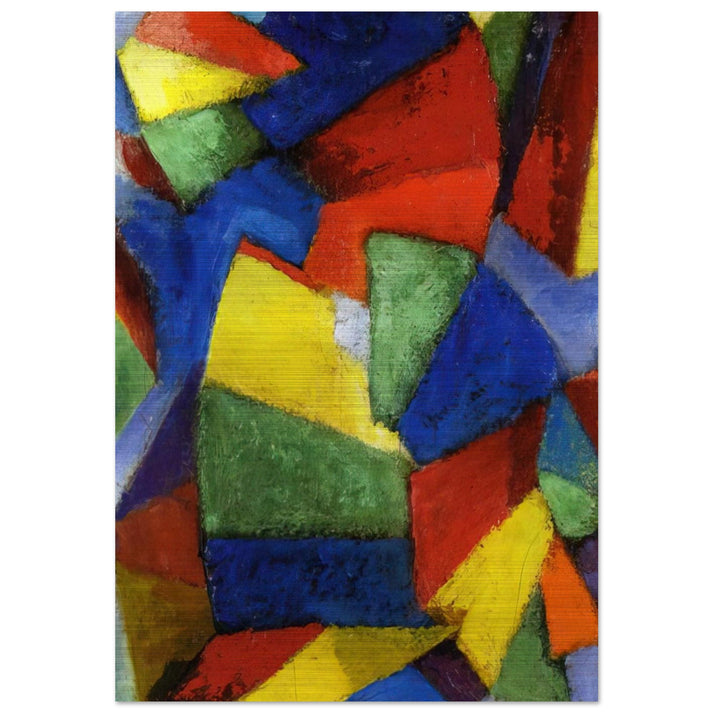


Synchromie in Blau-Violett - 1912 - Morgan Russell Aluminiumdruck - 70x100 cm / 28x40 Zoll | Morgan Russell Aluminiumdruck | Morgan Russell Drucke
Synchromie in Blau-Violett - 1912 - Morgan Russell Aluminiumdruck - 70x100 cm / 28x40 Zoll | Morgan Russell Aluminiumdruck | Morgan Russell Drucke
Verfügbarkeit für Abholungen konnte nicht geladen werden
Synchromy in Blue-Violet (1912) von Morgan Russell
Tauchen Sie ein in die bahnbrechende Vision des amerikanischen Modernisten Morgan Russell mit diesem museumswürdigen Aluminiumdruck von Synchromy in Blue-Violet. Das 1912 entstandene Werk ist ein Meilenstein der Synchromismus-Bewegung, die Russell gemeinsam mit Stanton Macdonald-Wright gründete, um Farbe als primäres Mittel für Form und Emotion zu erforschen – eine Bewegung, die die abstrakte Expressionismus vorwegnahm und beeinflusste. Die Komposition inszeniert eine Symphonie aus blauen und violetten Farbtönen, die eine kosmische Harmonie und einen dynamischen Rhythmus vermitteln und so zu einem faszinierenden Blickfang für zeitgenössische Innenräume wird.
RedKalion präsentiert dieses archivierte Meisterwerk auf hochwertigem gebürstetem silbernem Aluminium DIBOND®, einer 3 mm (0,12 Zoll) starken, stabilen Basis, die Haltbarkeit und ein schlankes, modernes Profil gewährleistet. Die Direktdrucktechnologie liefert lebendige, farbechthe Farben mit matter, blendfreier Oberfläche, während unbedruckte Bereiche einen auffälligen metallischen Silbereffekt freilegen, der die leuchtende Qualität des Kunstwerks unterstreicht. Jeder Druck enthält ein vollständiges Aufhängeset für eine mühelose Installation und ermöglicht es Ihnen, Ihren Raum mit einem Werk zu bereichern, das frühe Innovationen des 20. Jahrhunderts mit zeitloser Eleganz verbindet.
- Material: Gebürstetes silbernes Aluminium DIBOND® mit metallischer Oberfläche und horizontaler Maserung für einen dynamischen Look.
- Dicke: 3 mm (0,12 Zoll) für eine stabile, feste Basis.
- Druck: Direktdruck auf AluDibond für lebendige Farben und eine matte Oberfläche. Unbedruckte weiße Bereiche zeigen einen metallischen Silbereffekt.
- Oberfläche: Matt, blendfrei, ideal für Designs mit auffälligem gebürstetem Silbereffekt.
- Größe: 70 x 100 cm / 28 x 40 Zoll.
- Aufhängeset: Enthalten; variiert je nach Lieferland.
Besitzen Sie ein Stück Kunstgeschichte mit diesem hochwertigen Kunstdruck, der archivische Langlebigkeit mit anspruchvollem Design verbindet – kuratiert von RedKalion für anspruchsvolle Sammler.
```


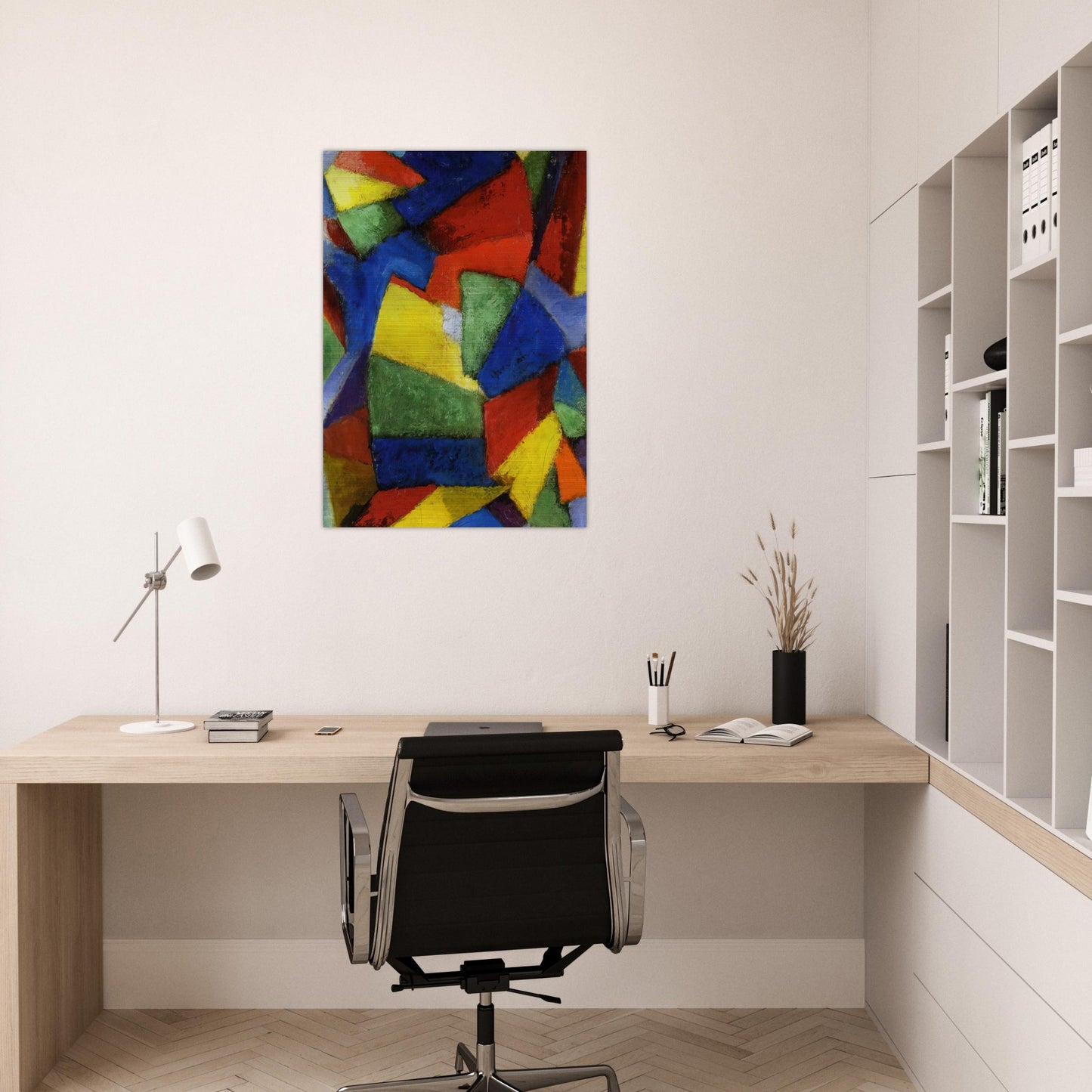
Discover Unlimited Art Possibilities
At RedKalion, you can find virtually any artwork from any artist, available in a wide range of sizes to perfectly match your space.
If you didn’t find what you’re looking for, contact us at support@redkalion.com . We will source any artwork and produce it in any size and format you need, including art prints, posters, canvas, framed pieces, framed canvas, and more.
For dedicated art enthusiasts, we also offer handcrafted replicas of any artwork, carefully painted by highly skilled artists using traditional techniques.
For custom requests, contact us at support@redkalion.com .
What is the historical significance of Synchromy in Blue-Violet?
Created in 1912 by Morgan Russell, this painting is a key work of the Synchromist movement, which emphasized color harmony and abstraction to evoke musical rhythms, influencing later modern art styles like abstract expressionism.
How does the brushed aluminum material enhance this print?
The Brushed Silver Aluminum DIBOND® provides a durable 3mm base with a metallic finish and horizontal grain, offering a dynamic look that complements the artwork's vivid colors and matte finish for a premium display.
Is the print fade-resistant and archival?
Yes, our direct print technology on aluminum ensures vivid, fade-resistant colors with archival quality, making this fine art reproduction suitable for long-term display in any environment.
What is included with the shipping?
Each order includes a complete hanging kit for easy installation; shipping details and kit variations depend on your fulfillment country for reliable delivery.
Can I hang this print in high-moisture areas like bathrooms?
Yes, the aluminum material is moisture-resistant and durable, making this museum-quality print ideal for spaces like bathrooms or kitchens without compromising its archival integrity.
How does Synchromism differ from other art movements?
Synchromism, pioneered by Russell and Macdonald-Wright, focused on using color scales to create form and movement, similar to musical symphonies, setting it apart from more representational styles of the early 1900s.
Why are blue and violet hues prominent in this artwork?
Russell used blue and violet to evoke depth and emotional resonance, aligning with Synchromist principles where colors correspond to musical tones for a harmonious, abstract composition.