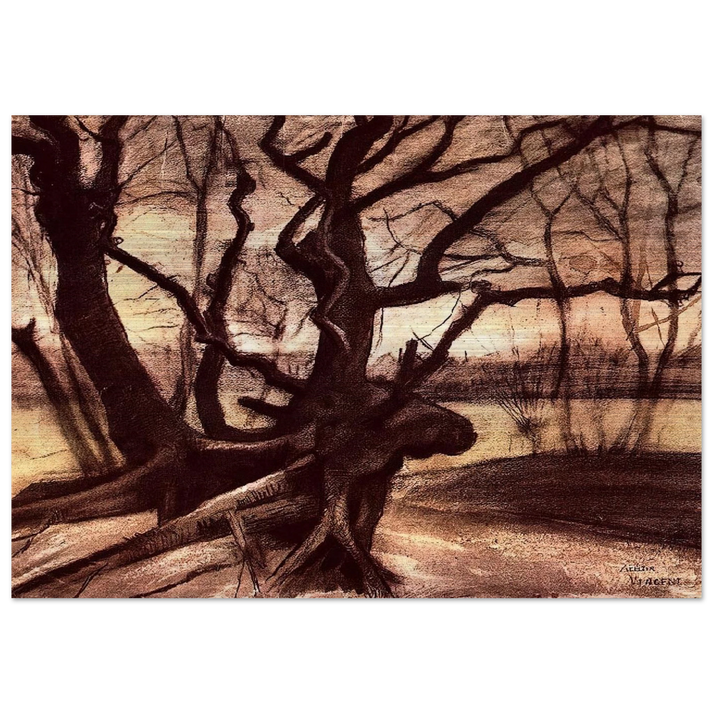


Studie eines Baumes - Vincent van Gogh Aluminiumdruck - 70x100 cm / 28x40 Zoll | Vincent van Gogh Aluminiumdruck | Vincent van Gogh Drucke
Studie eines Baumes - Vincent van Gogh Aluminiumdruck - 70x100 cm / 28x40 Zoll | Vincent van Gogh Aluminiumdruck | Vincent van Gogh Drucke
Verfügbarkeit für Abholungen konnte nicht geladen werden
Vincent van Goghs Studie eines Baumes – Ein Meisterwerk neu erstanden auf gebürstetem Aluminium
Tauchen Sie ein in die rohe, ausdrucksstarke Energie von Vincent van Goghs Studie eines Baumes, jetzt als museumreife gebürstete Aluminium-Drucke von RedKalion erhältlich. Diese 1882 entstandene Zeichnung, die während van Goghs frühen Jahren in Den Haag entstand, fängt seine tiefe Verbindung zur Natur durch kühne, rhythmische Linien ein, die zu pulsieren scheinen. Van Goghs Technik hier – mit Feder und Tinte sowie absichtsvollen, wirbelnden Strichen – offenbart seinen Übergang vom Realismus zur emotionalen Intensität, die später seine Meisterwerke prägen würde. Der Baum, fast architektonisch präzise dargestellt, steht als Beweis für seinen Glauben, dass Kunst tiefere Wahrheiten vermitteln sollte als bloße Darstellung.
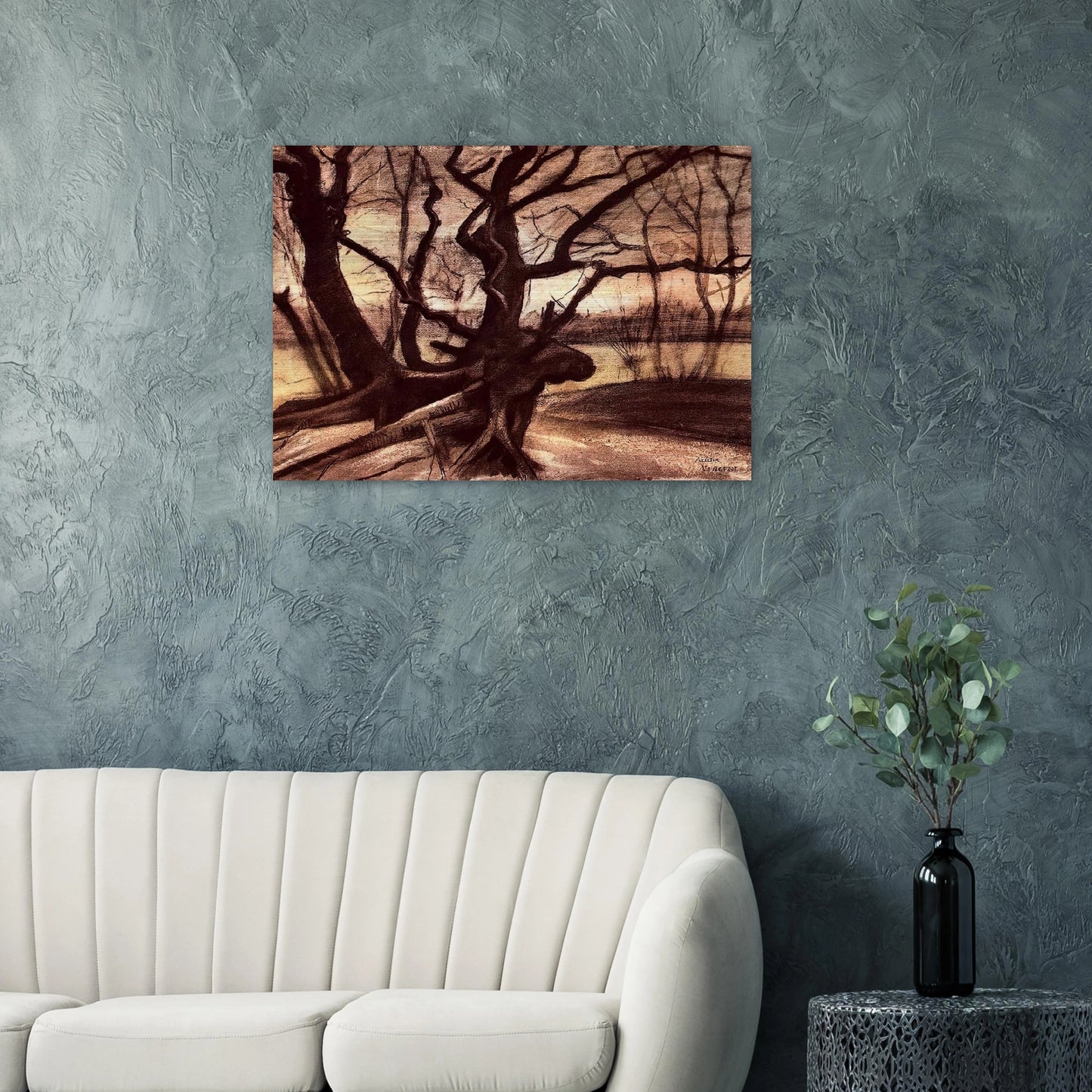
RedKalion hebt dieses historische Kunstwerk mit unserer Premium-gebürsteten silbernen Aluminium DIBOND®-Reproduktion hervor. Mit den Maßen 70x100 cm (28x40 Zoll) verfügt dieser Druck über eine 3 mm (0,12") dicke starre Basis für Langlebigkeit und ein schlankes Profil. Der Direktdruck auf AluDibond garantiert lebendige, archivqualitative Farben mit matter, blendfreier Oberfläche, während unbedruckte Bereiche einen auffälligen metallischen Silbereffekt offenbaren, der die dynamische Textur des Kunstwerks verstärkt. Die horizontale Maserung des Aluminiums verleiht ihm einen zeitgenössischen, leuchtenden Charakter und macht es zur idealen Präsentation für schwarz-weiße Designs.
Dieser Fine-Art-Druck ist mehr als nur eine Dekoration – er ist ein Stück Kunstgeschichte, das für die Ewigkeit geschaffen wurde. Jede Reproduktion enthält ein vollständiges Aufhängeset (variiert je nach Lieferland) für eine mühelose Installation. Veredeln Sie Ihr Zuhause oder Büro mit einem zeitlosen Werk, das geniale des 19. Jahrhunderts mit moderner Eleganz verbindet – exklusiv kuratiert von RedKalion.
```


Discover Unlimited Art Possibilities
At RedKalion, you can find virtually any artwork from any artist, available in a wide range of sizes to perfectly match your space.
If you didn’t find what you’re looking for, contact us at support@redkalion.com . We will source any artwork and produce it in any size and format you need, including art prints, posters, canvas, framed pieces, framed canvas, and more.
For dedicated art enthusiasts, we also offer handcrafted replicas of any artwork, carefully painted by highly skilled artists using traditional techniques.
For custom requests, contact us at support@redkalion.com .
What are the dimensions and material of this van Gogh aluminum print?
This museum-quality reproduction measures 70x100 cm (28x40 inches) and is printed on brushed silver Aluminum DIBOND® with a 3mm thickness for a durable, rigid finish.
How does the brushed aluminum enhance van Gogh's Study of a Tree?
The metallic finish and horizontal grain add a dynamic, luminous effect, highlighting van Gogh's bold lines while providing a matte, glare-free surface ideal for black-and-white art prints.
Is a hanging kit included with this fine art print?
Yes, a complete hanging kit is included; specifications may vary by fulfillment country to ensure secure installation.
What makes this a museum-quality reproduction?
It uses archival direct printing on Aluminum DIBOND® for vivid colors and longevity, replicating van Gogh's original texture with precision.
How should I care for this brushed aluminum print?
Dust gently with a soft cloth; avoid harsh chemicals. The aluminum and matte finish are designed for long-term durability in indoor settings.
Why did van Gogh create Study of a Tree in 1882?
During his early period in The Hague, van Gogh focused on nature studies to master form and expression, using pen and ink to explore emotional depth in everyday subjects.
What artistic techniques are visible in this drawing?
Van Gogh employed rhythmic, swirling pen strokes to convey the tree's vitality, showcasing his transition toward the expressive style that defined his later works.