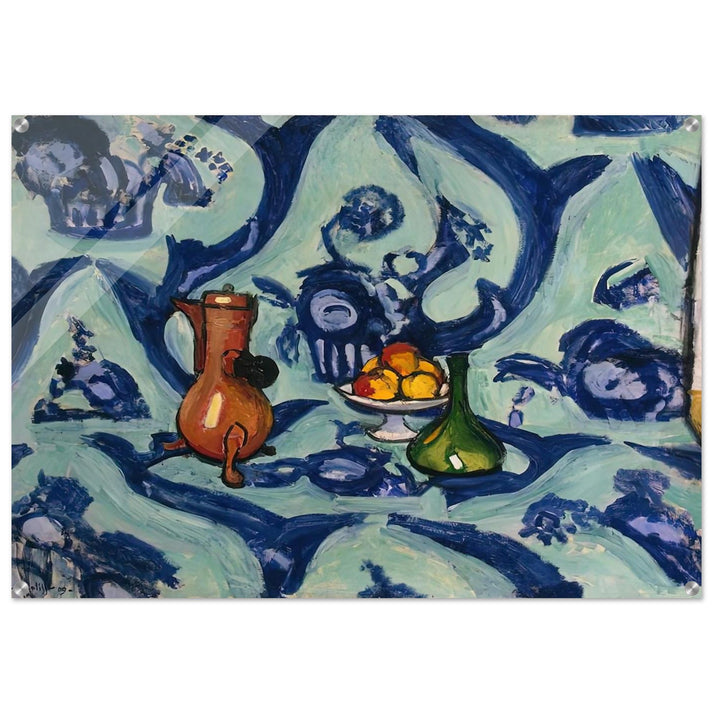


STILLLEBEN MIT BLAUER TISCHDECKE 1906 - Henri Matisse Acryl-Druck - 70x100 cm / 28x40″ Zoll
STILLLEBEN MIT BLAUER TISCHDECKE 1906 - Henri Matisse Acryl-Druck - 70x100 cm / 28x40″ Zoll
Verfügbarkeit für Abholungen konnte nicht geladen werden
Stilleben mit blauem Tischtuch (1906) von Henri Matisse
Tauchen Sie Ihren Raum in die lebendige Energie des Fauvismus mit diesem museumswürdigen Acryl-Druck von Henri Matisse' "Stilleben mit blauem Tischtuch" (1906). Dieses ikonische Werk fängt Matisse' revolutionären Einsatz von kräftigen, nicht-naturalistischen Farben und ausdrucksstarker Pinselführung ein und prägte die avantgardistische Bewegung des frühen 20. Jahrhunderts. Die Komposition – mit einem reich gemusterten blauen Tuch, Früchten und Gefäßen – strahlt eine fröhliche, dynamische Stimmung aus und verwandelt alltägliche Gegenstände in eine Symphonie aus Farbton und Form.
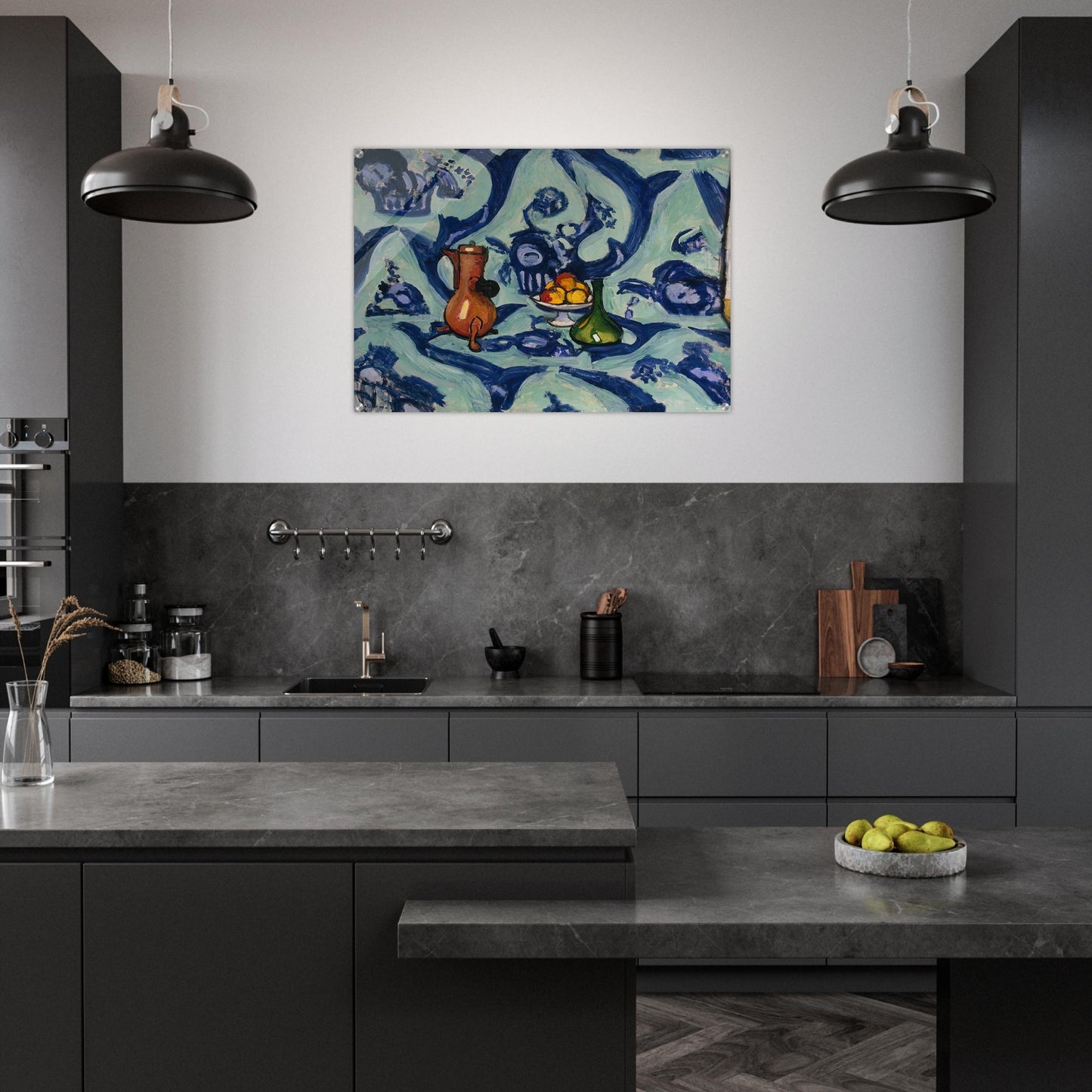
RedKalion präsentiert dieses archivwürdige Meisterwerk als hochwertigen 70x100 cm / 28x40″ Acryl-Druck, präzise gefertigt, um Matisse' ursprüngliche Vision zu ehren. Unsere Reproduktion nutzt eine 4 mm (0,15") Acrylplatte für eine schlanke, galeriefertige Oberfläche, die Farbintensität und Haltbarkeit verstärkt. Das Design weist gerade geschnittene Ecken für einen modernen Look auf, wobei transparente Hintergründe standardmäßig weiß sind, um eine optimale Präsentation in jeder Umgebung zu gewährleisten.
Jeder Druck enthält ein vollständiges Aufhängeset mit Befestigungselementen, Schrauben und vorgebohrten Schraubenlöchern an jeder Ecke (14 mm (0,55") vom Rand entfernt, mit einem 8-mm-(0,31")-Loch und 15-mm-(0,6")-Schraubenkopf), was eine mühelose Installation ermöglicht. Veredeln Sie Ihr Zuhause oder Büro mit einer hochwertigen Kunstreproduktion, die historische Bedeutung mit zeitgenössischer Handwerkskunst verbindet – unterstützt durch RedKalions Engagement für archivwürdige Qualität.
Kunsthistorische Einordnung: Während Matisse' Fauvismus-Höhepunkt gemalt, verkörpert dieses Stillleben seinen Bruch mit der realistischen Darstellung. Das intensive blaue Tischtuch, kontrastiert mit warmen Orangetönen und Grüntönen, schafft eine visuelle Spannung, die traditionelle Perspektiven herausfordert und seine Überzeugung zeigt, dass Farbe unabhängig von der Form Emotionen wecken kann – ein Prinzip, das die moderne Kunst über Jahrzehnte prägen sollte.
```


Discover Unlimited Art Possibilities
At RedKalion, you can find virtually any artwork from any artist, available in a wide range of sizes to perfectly match your space.
If you didn’t find what you’re looking for, contact us at support@redkalion.com . We will source any artwork and produce it in any size and format you need, including art prints, posters, canvas, framed pieces, framed canvas, and more.
For dedicated art enthusiasts, we also offer handcrafted replicas of any artwork, carefully painted by highly skilled artists using traditional techniques.
For custom requests, contact us at support@redkalion.com .
What are the dimensions of this Henri Matisse acrylic print?
This fine art print measures 70x100 cm (28x40 inches), making it an ideal statement piece for wall decor with a museum-quality reproduction on durable acrylic.
What material is used for the acrylic print?
It features a 4mm (0.15") acrylic panel for a sleek, vibrant finish that enhances color depth and ensures long-lasting durability in your art collection.
How is the print shipped and installed?
We include a hanging kit with hardware and screws; screw holes are pre-drilled at each corner (14mm from edge, 8mm diameter) for easy mounting of your premium art reproduction.
Transparent backgrounds default to white for optimal presentation, providing a clean, modern look that highlights Matisse's Fauvist masterpiece in any room setting.
How archival and durable is this acrylic print?
Our archival-grade acrylic print resists fading and damage, offering a durable, museum-quality reproduction that preserves the vibrant colors of Matisse's 1906 still life for years.
What is the historical significance of "Still Life with Blue Tablecloth"?
Painted in 1906, it's a key Fauvist work where Matisse used bold, non-naturalistic colors to express emotion, revolutionizing modern art with its vibrant tablecloth and dynamic composition.
Why did Matisse choose such intense colors in this painting?
Matisse employed intense blues and contrasting hues to evoke emotional impact over realism, showcasing Fauvist principles that color could independently convey mood and energy in art.