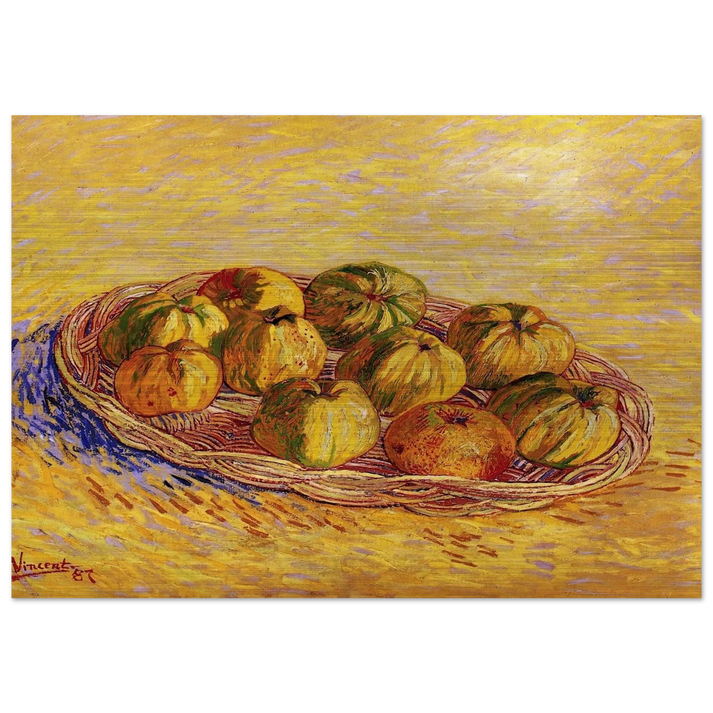


Stillleben mit Obstschale - Vincent van Gogh Aluminiumdruck - 70x100 cm / 28x40 Zoll | Vincent van Gogh Aluminiumdruck | Vincent van Gogh Drucke
Stillleben mit Obstschale - Vincent van Gogh Aluminiumdruck - 70x100 cm / 28x40 Zoll | Vincent van Gogh Aluminiumdruck | Vincent van Gogh Drucke
Verfügbarkeit für Abholungen konnte nicht geladen werden
Stilleben mit Obstkorb - Vincent van Gogh Aluminiumdruck
Tauchen Sie ein in die lebendige Intensität von Vincent van Goghs "Stilleben mit Obstkorb" (1887), jetzt als museumreife Reproduktion von RedKalion erhältlich. Dieses ikonische postimpressionistische Meisterwerk fängt van Goghs revolutionären Einsatz von kräftigen, ausdrucksstarken Pinselstrichen und lebendigen Farbkontrasten ein, die seine tiefgehende Erforschung von Textur und Licht während seiner Pariser Zeit widerspiegeln. Die Komposition – ein einfacher, überquellender Obstkorb – verwandelt alltägliche Gegenstände in eine dynamische Studie von Form und Emotion und zeigt van Goghs Weg hin zu der symbolischen Intensität, die sein späteres Werk prägen sollte.
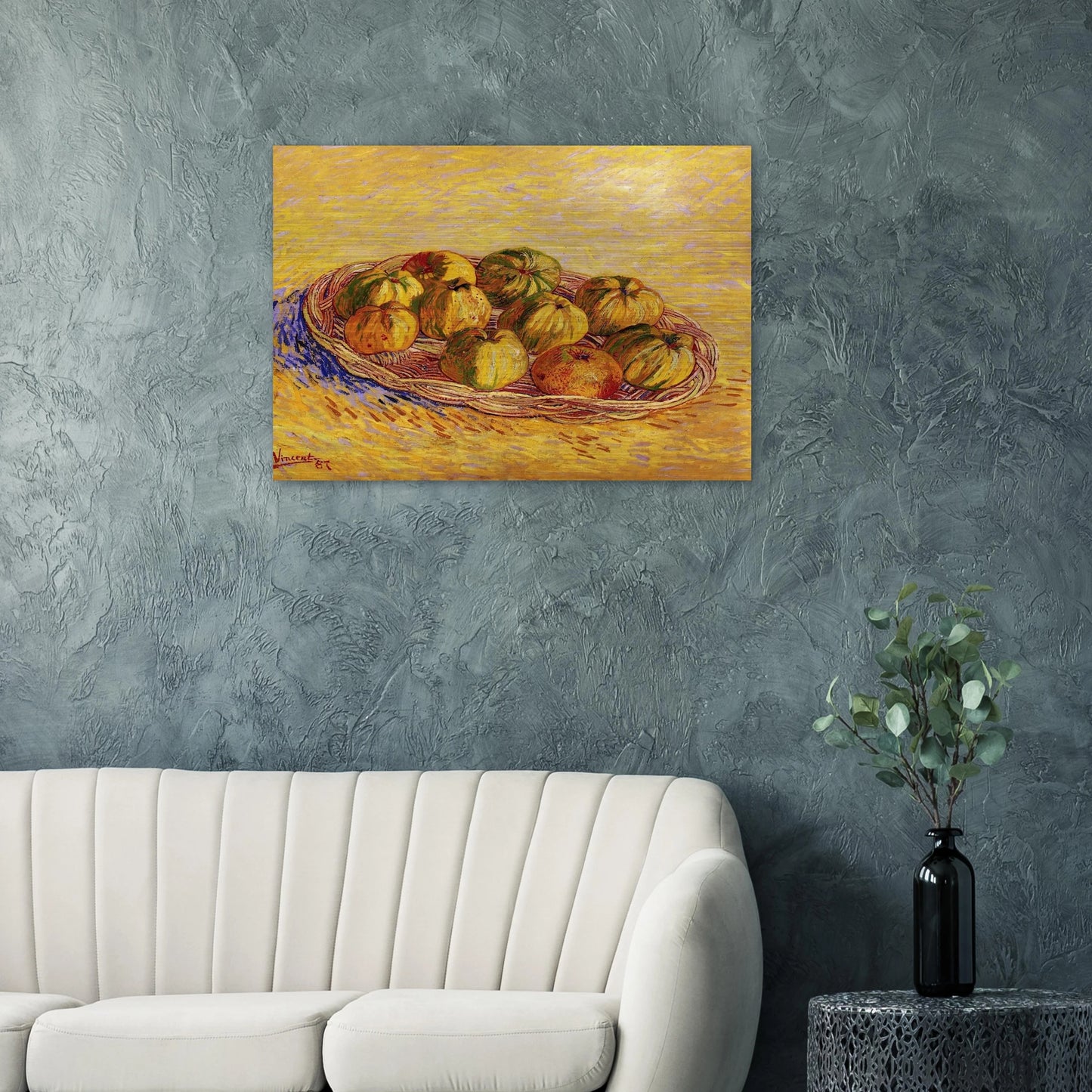
RedKalion präsentiert diesen archivtauglichen Fine-Art-Druck auf hochwertigem gebürstetem silbernem Aluminium DIBOND® mit den Maßen 70x100 cm (28x40 Zoll). Die 3 mm (0,12 Zoll) dicke Basis sorgt für eine stabile, robuste Präsentation, während der direkte Druck auf AluDibond lebendige, farbechte Farben mit matter Oberfläche liefert. Unbedruckte Bereiche zeigen einen markanten metallischen Silbereffekt, der das dynamische Erscheinungsbild des Kunstwerks mit einer horizontalen Maserung unterstreicht, die zu van Goghs texturierten Pinselstrichen passt. Diese blendfreie Präsentation eignet sich ideal für farbenfrohe und schwarz-weiß Designs und bietet eine anspruchsvolle, moderne Ästhetik.
Veredeln Sie Ihren Raum mit einem Vincent-van-Gogh-Aluminiumdruck, der historische Kunstfertigkeit mit zeitgenössischer Haltbarkeit verbindet. Jedes Stück enthält ein Aufhängeset für eine einfache Installation und ist damit eine zeitlose Bereicherung für jedes Zuhause, Büro oder Galerieumfeld. Vertrauen Sie RedKalion für sorgfältig kuratierte Reproduktionen, die künstlerisches Erbe durch hochwertige Materialien und präzise Handwerkskunst ehren.
```


Discover Unlimited Art Possibilities
At RedKalion, you can find virtually any artwork from any artist, available in a wide range of sizes to perfectly match your space.
If you didn’t find what you’re looking for, contact us at support@redkalion.com . We will source any artwork and produce it in any size and format you need, including art prints, posters, canvas, framed pieces, framed canvas, and more.
For dedicated art enthusiasts, we also offer handcrafted replicas of any artwork, carefully painted by highly skilled artists using traditional techniques.
For custom requests, contact us at support@redkalion.com .
What are the dimensions and material of this Vincent van Gogh print?
This fine art print measures 70x100 cm (28x40 inches) and is crafted on brushed silver Aluminum DIBOND® with a 3mm thickness for a durable, museum-quality reproduction.
How does the brushed aluminum finish enhance the artwork?
The metallic finish and horizontal grain create a dynamic look, with unprinted areas revealing a striking silver effect that complements van Gogh's vivid colors and matte finish.
Is a hanging kit included with this aluminum print?
Yes, a hanging kit is included for easy installation, though specific components may vary by fulfillment country to ensure optimal support.
What makes this a museum-quality reproduction?
It uses archival-grade direct printing on Aluminum DIBOND® for fade-resistant colors and a glare-free matte finish, replicating van Gogh's texture with premium durability.
How should I care for this brushed aluminum art print?
Gently dust with a soft cloth; avoid harsh chemicals. The aluminum base and matte finish ensure long-lasting vibrancy and resistance to environmental damage.
What historical context surrounds "Still Life with Basket of Apples"?
Painted in 1887 during van Gogh's Paris period, it reflects his shift toward bold brushstrokes and color contrasts, influenced by Impressionism and his study of still-life compositions.
Why did van Gogh choose apples for this still life?
Apples symbolized simplicity and abundance; van Gogh used them to experiment with texture and light, showcasing his evolving technique toward emotional expression in everyday objects.