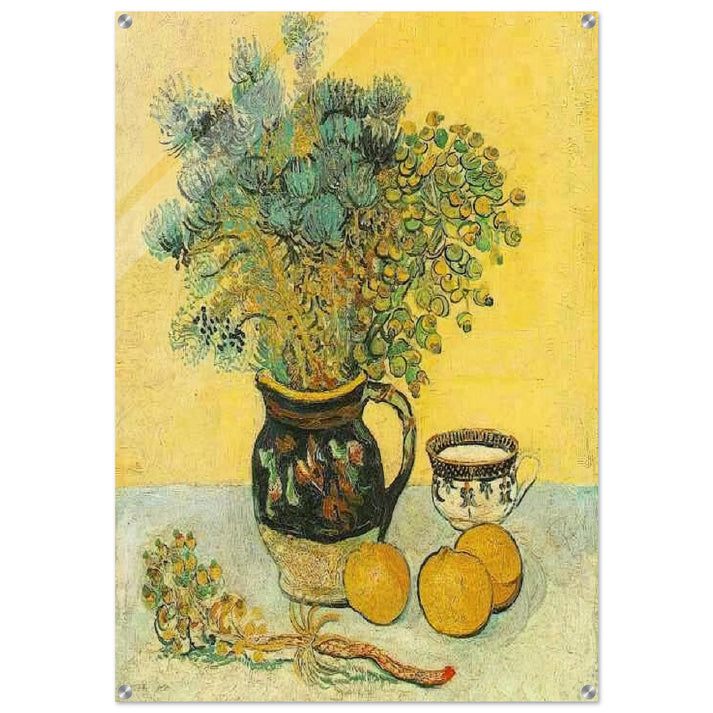
Stillleben Majolika-Kanne mit Wildblumen - Vincent van Gogh Acrylbild - 70x100 cm / 28x40″ Zoll
Stillleben Majolika-Kanne mit Wildblumen - Vincent van Gogh Acrylbild - 70x100 cm / 28x40″ Zoll
Verfügbarkeit für Abholungen konnte nicht geladen werden
Stillleben Majolika-Krug mit Wildblumen – Vincent van Gogh Acryl-Druck
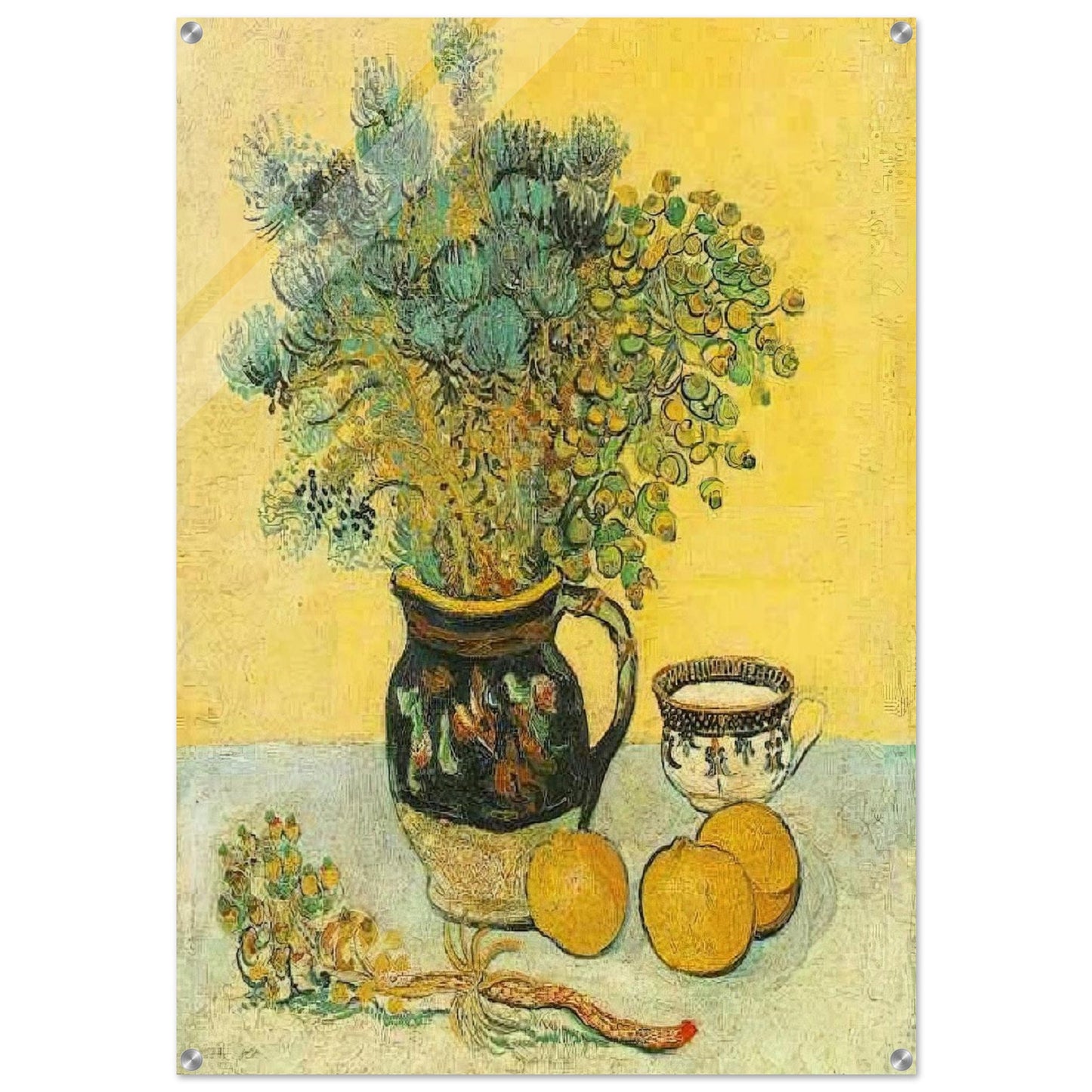
Tauchen Sie ein in die lebendige, ausdrucksstarke Welt von Vincent van Gogh mit diesem museumswürdigen Acryl-Druck von "Stillleben Majolika-Krug mit Wildblumen". Dieses Meisterwerk aus dem Jahr 1886, entstanden während van Goghs prägender Pariser Zeit, zeigt seine sich entwickelnde Farbverwendung und seinen mutigen Pinselstrich, als er sich von den düsteren Tönen seiner niederländischen Wurzeln löste. Die Komposition – ein rustikaler Majolika-Krug, gefüllt mit Wildblumen – strahlt rustikalen Charme und natürliche Vitalität aus und fängt die Faszination des Künstlers für alltägliche Schönheit sowie seine unermüdliche Suche nach emotionaler Tiefe durch Kunst ein.
RedKalion präsentiert diese archivtaugliche Reproduktion auf einer 4 mm (0,15") Acrylplatte, die für eine schlanke, lebendige und strapazierfähige Oberfläche konzipiert ist, welche van Goghs reiche Farbpalette und dynamischen Texturen zur Geltung bringt. Die geraden Ecken verleihen dem Druck ein modernes Ästhetik, während transparente Hintergründe standardmäßig weiß sind, um eine optimale Präsentation in jeder Umgebung zu gewährleisten. Jeder Druck enthält ein vollständiges Aufhängeset mit Hardware, Schrauben und vorgebohrten Schraubenlöchern (14 mm/0,55" vom Rand, 8 mm/0,31" Durchmesser, 15 mm/0,6" Schraubenkopf) für eine mühelose Installation.
Veredeln Sie Ihren Raum mit einem hochwertigen Kunstdruck, der historische Bedeutung mit zeitgenössischer Haltbarkeit vereint. Diese 70 x 100 cm / 28 x 40" große Reproduktion ist ein Beweis für RedKalions Engagement, weltklasse archivtaugliche Kunstwerke zu kuratieren, die Bestand haben.
```
Discover Unlimited Art Possibilities
At RedKalion, you can find virtually any artwork from any artist, available in a wide range of sizes to perfectly match your space.
If you didn’t find what you’re looking for, contact us at support@redkalion.com . We will source any artwork and produce it in any size and format you need, including art prints, posters, canvas, framed pieces, framed canvas, and more.
For dedicated art enthusiasts, we also offer handcrafted replicas of any artwork, carefully painted by highly skilled artists using traditional techniques.
For custom requests, contact us at support@redkalion.com .
What are the dimensions and material of this van Gogh acrylic print?
This fine art print measures 70x100 cm (28x40 inches) and is crafted on a 4mm (0.15") acrylic panel for a sleek, vibrant, and durable museum-quality reproduction.
How is the print mounted and hung?
It features straight-cut corners and includes a hanging kit with hardware, screws, and pre-drilled screw holes (14mm from edge, 8mm diameter) for easy installation.
What is the historical significance of "Still Life Majolica Jug with Wildflowers"?
Painted in 1886, it reflects Vincent van Gogh's Paris period, showcasing his shift to brighter colors and expressive brushwork inspired by Impressionism.
How does the acrylic enhance the artwork's appearance?
The 4mm acrylic provides a glossy finish that intensifies van Gogh's vibrant palette and textures, offering a modern, durable display for this archival masterpiece.
What makes RedKalion prints archival-grade?
We use premium materials and precise reproduction techniques to ensure longevity, positioning our prints as trusted, museum-quality reproductions.
What inspired van Gogh's choice of a majolica jug in this still life?
Van Gogh often used rustic objects like majolica jugs to explore texture and color, reflecting his interest in everyday beauty and Dutch artistic traditions.
How does this print compare to van Gogh's earlier works?
This 1886 piece marks a departure from his darker Dutch period, embracing brighter hues and looser brushstrokes under the influence of Parisian avant-garde artists.