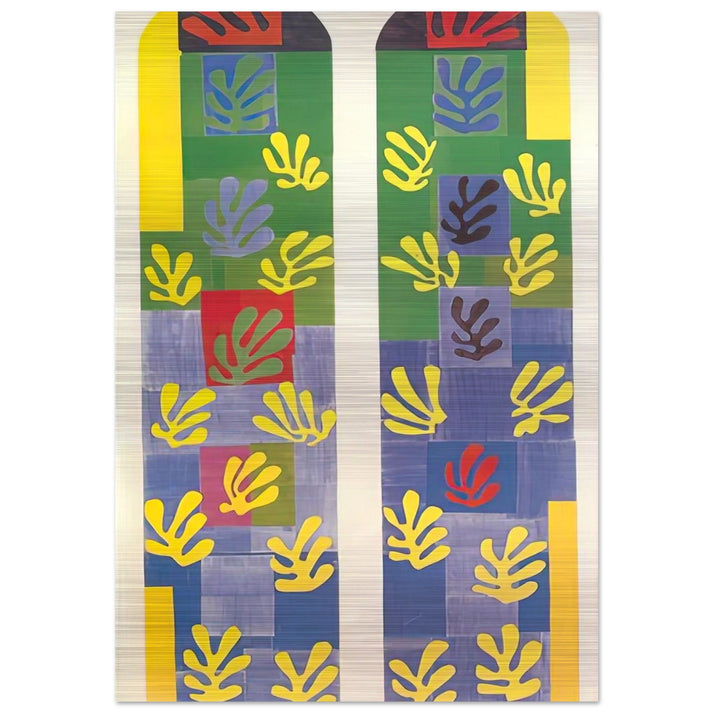


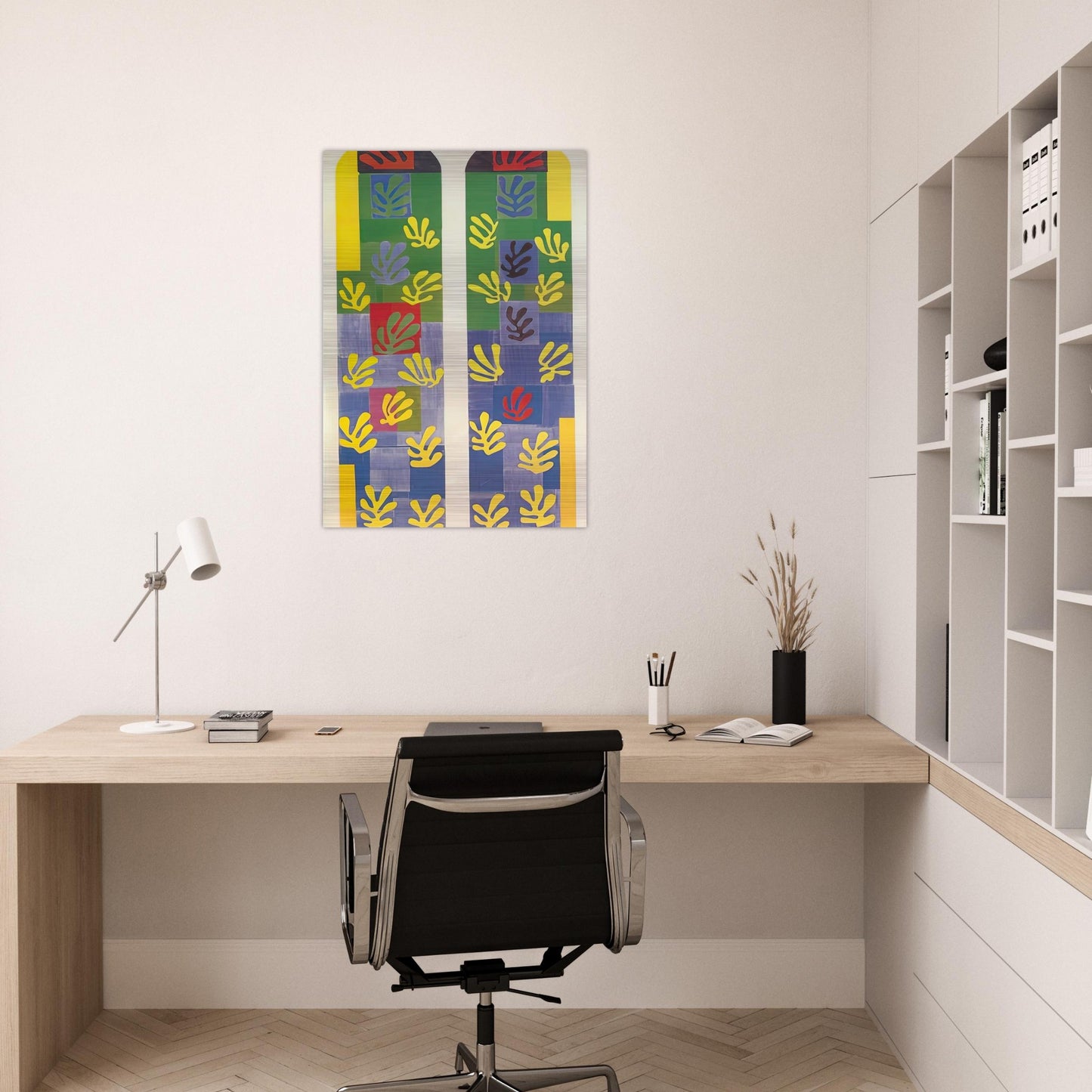
FENSTER AUS BEMALTEM GLAS DER APSIDENFENSTER DER ROSARIENKAPELLE 1949 - Henri Matisse Aluminiumdruck - 70x100 cm / 28x40 Zoll | Henri Matisse Aluminiumdruck | Henri Matisse Drucke
FENSTER AUS BEMALTEM GLAS DER APSIDENFENSTER DER ROSARIENKAPELLE 1949 - Henri Matisse Aluminiumdruck - 70x100 cm / 28x40 Zoll | Henri Matisse Aluminiumdruck | Henri Matisse Drucke
Verfügbarkeit für Abholungen konnte nicht geladen werden
Henri Matisse' Bleiglasfenster der Rosenkranzkapelle (1949) – Aluminiumdruck mit gebürsteter Oberfläche
Tauchen Sie Ihren Raum in das strahlende Leuchten von Henri Matisse' "Bleiglasfenster der Rosenkranzkapelle" (1949), einem Meisterwerk der modernen sakralen Kunst, das nun als museumsqualitativer Aluminiumdruck von RedKalion erhältlich ist. Dieses ikonische Werk, das für die Dominikanerkapelle der Rosenkranz in Vence, Frankreich, geschaffen wurde, zeigt Matisse' revolutionären Einsatz reiner Farben und vereinfachter Formen, um spirituelle Transzendenz zu evozieren. Die lebendigen Blautöne, Gelb- und Grüntöne tanzen im Licht und fangen die Spätwerk-Genialität des Künstlers ein, der Bleiglas in ein Medium emotionaler und visueller Harmonie verwandelte.
RedKalions Premium-Reproduktion ehrt Matisse' Vision mit archivtauglicher Präzision. Direkt auf 3 mm gebürstetes silbernes Aluminium DIBOND® gedruckt, bietet dieser 70 x 100 cm (28 x 40 Zoll) Fine-Art-Druck eine matte, blendfreie Oberfläche, die die leuchtenden Farben zur Geltung bringt und gleichzeitig ungedruckte Bereiche einen markanten metallisch-silbernen Effekt verleihen. Die horizontale Maserung verleiht dynamische Textur und macht ihn zu einem robusten, stabilen Blickfang für jedes Interieur. Jeder Druck enthält ein vollständiges Aufhängeset und ist bereit, Ihr Zuhause oder Büro mit einem Hauch historischer Eleganz zu veredeln.
Als führender Anbieter von archivtauglichen Reproduktionen stellt RedKalion sicher, dass dieses Werk nicht nur Matisse' innovative papiers découpés-Technik widerspiegelt – bei der ausgeschnittene Formen die Gestaltung des Fensters inspirierten –, sondern auch als Zeugnis bleibender Qualität steht. Erleben Sie, wie ein Henri Matisse Aluminiumdruck Ihre Umgebung mit Licht, Farbe und Erbe verwandeln kann.
```


Discover Unlimited Art Possibilities
At RedKalion, you can find virtually any artwork from any artist, available in a wide range of sizes to perfectly match your space.
If you didn’t find what you’re looking for, contact us at support@redkalion.com . We will source any artwork and produce it in any size and format you need, including art prints, posters, canvas, framed pieces, framed canvas, and more.
For dedicated art enthusiasts, we also offer handcrafted replicas of any artwork, carefully painted by highly skilled artists using traditional techniques.
For custom requests, contact us at support@redkalion.com .
What are the dimensions and material of this Henri Matisse aluminum print?
This fine art print measures 70x100 cm (28x40 inches) and is crafted from 3mm brushed silver Aluminum DIBOND® with a metallic finish and horizontal grain for a dynamic, museum-quality look.
How does the printing process enhance the colors of Matisse's stained glass window?
We use direct printing on Aluminum DIBOND® to achieve vivid, archival colors with a matte finish, while unprinted areas reveal a metallic silver effect for striking contrast.
Is a hanging kit included with this Henri Matisse print?
Yes, a complete hanging kit is included with your order; specific components may vary by fulfillment country to ensure secure installation.
What makes this aluminum print archival and durable?
The 3mm thickness and Aluminum DIBOND® material provide a rigid, long-lasting base resistant to warping, ideal for preserving this museum-quality reproduction.
How does the finish affect the viewing experience of this artwork?
The matte, glare-free finish minimizes reflections, making it perfect for displaying black-and-white designs and enhancing the brushed silver effect in any lighting.
What is the historical significance of Matisse's Stained Glass Window of the Rosary Chapel?
Created in 1949 for the Dominican Chapel in Vence, this work represents Matisse's late-career mastery in using stained glass to blend spiritual themes with bold, abstract color forms.
How did Matisse's technique influence this stained glass design?
Inspired by his papiers découpés (cut-out paper) method, Matisse simplified shapes and used pure colors to create a luminous, harmonious composition that defines modern sacred art.