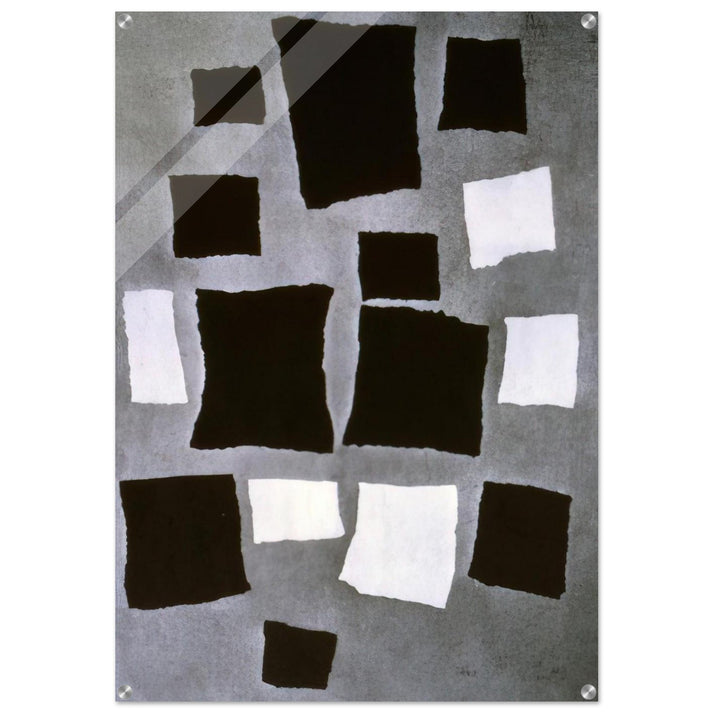
Quadrate oder Rechtecke nach den Gesetzen des Zufalls - Jean Arp Acrylbild - 70x100 cm / 28x40″ Zoll
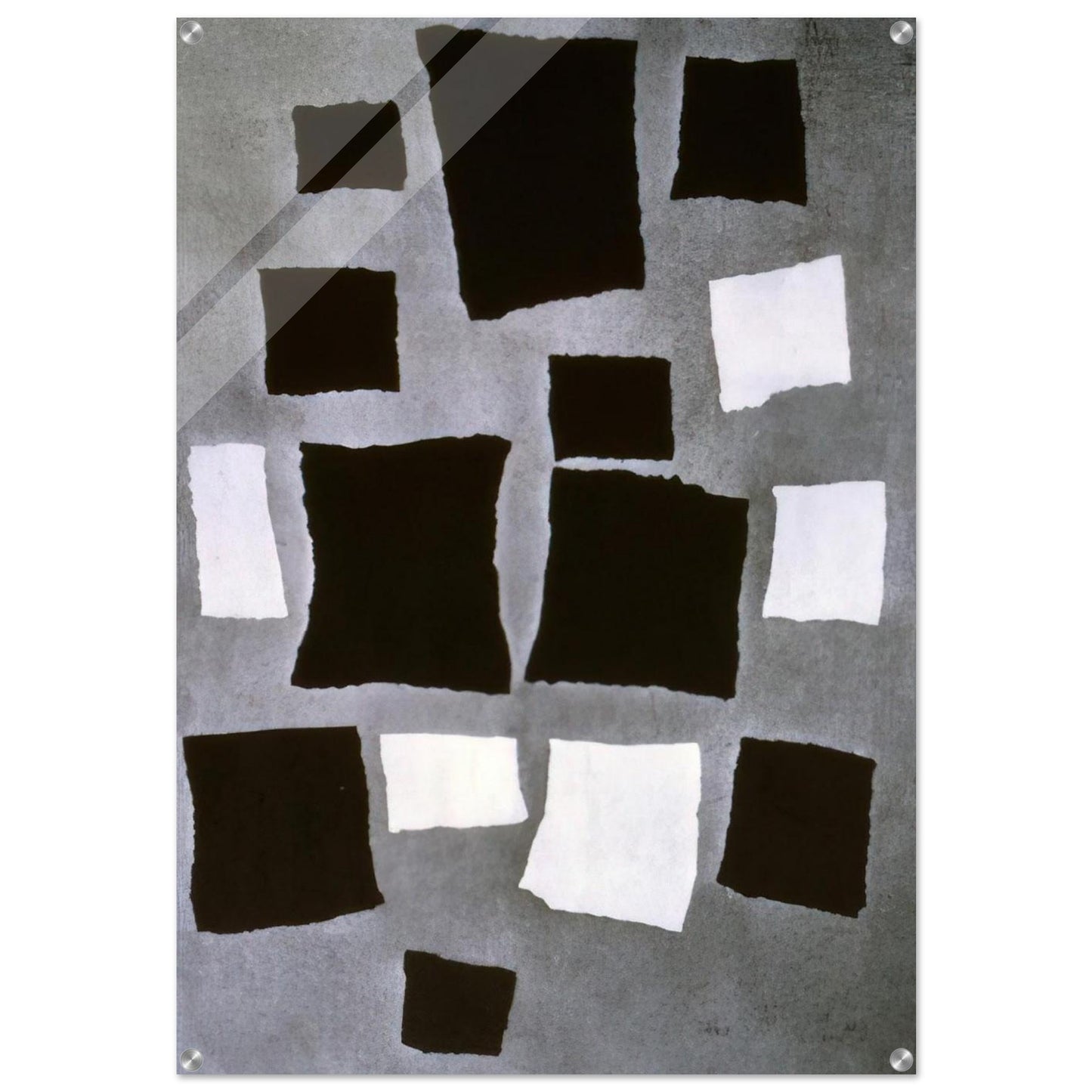
Quadrate oder Rechtecke nach den Gesetzen des Zufalls - Jean Arp Acrylbild - 70x100 cm / 28x40″ Zoll
Verfügbarkeit für Abholungen konnte nicht geladen werden
Quadrate oder Rechtecke nach den Gesetzen des Zufalls angeordnet – Acrylbild von Jean Arp
Tauchen Sie Ihren Raum in den Pioniergeist des Dadaismus mit dieser musealen Reproduktion von Jean Arps ikonischer Collage aus dem Jahr 1916, „Quadrate oder Rechtecke nach den Gesetzen des Zufalls angeordnet“. Dieses hochwertige Kunstdruck fängt den Kern von Arps revolutionärem Ansatz ein, bei dem geometrische Formen von künstlerischer Absicht befreit und durch Zufall angeordnet werden, wodurch eine dynamische Komposition entsteht, die traditionelle Ästhetik herausfordert. Als Schlüsselfigur der Zürcher Dada-Bewegung begrüßte Arp Zufallsoperationen, um Logik zu untergraben und das Unvorhersehbare zu feiern – dieses Werk ist somit ein zeitloses Symbol modernistischer Innovation.
RedKalion präsentiert dieses Meisterwerk als hochwertiges Acrylbild, das nach archivierungsgerechten Standards sorgfältig gefertigt wurde. Das Kunstwerk ist in eine schlanke 4-mm-(0,15 Zoll)-Acrylplatte eingearbeitet, die für lebendige Farben und außergewöhnliche Haltbarkeit sorgt und vor dem Verblassen schützt. Mit geraden Schnittkanten für einen modernen Look und transparenten Hintergründen, die standardmäßig in Weiß gehalten sind, bietet diese 70 x 100 cm / 28 x 40 Zoll große Reproduktion eine galeriefertige Präsentation. Veredeln Sie Ihr Zuhause oder Büro mit einem archivierungsgerechten Meisterwerk, das Bestand hat – unterstützt durch unser Engagement für Exzellenz bei hochwertigen Kunstdrucken.
- Material: 4 mm (0,15 Zoll) Acryl für einen lebendigen, strapazierfähigen Finish.
- Design: Gerade Schnittkanten; transparente Hintergründe standardmäßig in Weiß.
- Größe: 70 x 100 cm / 28 x 40 Zoll.
- Aufhängeset: Enthält Hardware, Schrauben und vorgebohrte Löcher (14 mm vom Rand, 8 mm Durchmesser, 15 mm Schraubenkopf).
Discover Unlimited Art Possibilities
At RedKalion, you can find virtually any artwork from any artist, available in a wide range of sizes to perfectly match your space.
If you didn’t find what you’re looking for, contact us at support@redkalion.com . We will source any artwork and produce it in any size and format you need, including art prints, posters, canvas, framed pieces, framed canvas, and more.
For dedicated art enthusiasts, we also offer handcrafted replicas of any artwork, carefully painted by highly skilled artists using traditional techniques.
For custom requests, contact us at support@redkalion.com .
What is the historical significance of this Jean Arp artwork?
Created in 1916, this collage is a seminal Dada work where Arp used chance operations to arrange geometric shapes, challenging artistic control and embracing randomness in modern art.
How does the acrylic print enhance the artwork's presentation?
The 4mm acrylic panel provides a sleek, vibrant finish with deep colors and high durability, making it ideal for a museum-quality reproduction of this Dada masterpiece.
What are the specifications for hanging this acrylic print?
It includes a hanging kit with hardware, screws, and pre-drilled holes (14mm from edge, 8mm diameter) for easy, secure installation in any space.
Is this print archival and fade-resistant?
Yes, our acrylic prints are crafted to archival standards, ensuring long-lasting color vibrancy and resistance to fading for a premium fine art display.
What size options are available for this artwork?
This reproduction is available in 70x100 cm / 28x40" inches, offering a substantial presence for home or gallery settings.
How did Jean Arp incorporate chance into his artistic process?
Arp dropped paper squares onto a surface and glued them where they landed, using randomness to create compositions free from deliberate design, a key Dada technique.
Why are the corners straight-cut in this design?
Straight-cut corners provide a modern, clean aesthetic that complements the geometric forms of the artwork, enhancing its contemporary appeal.