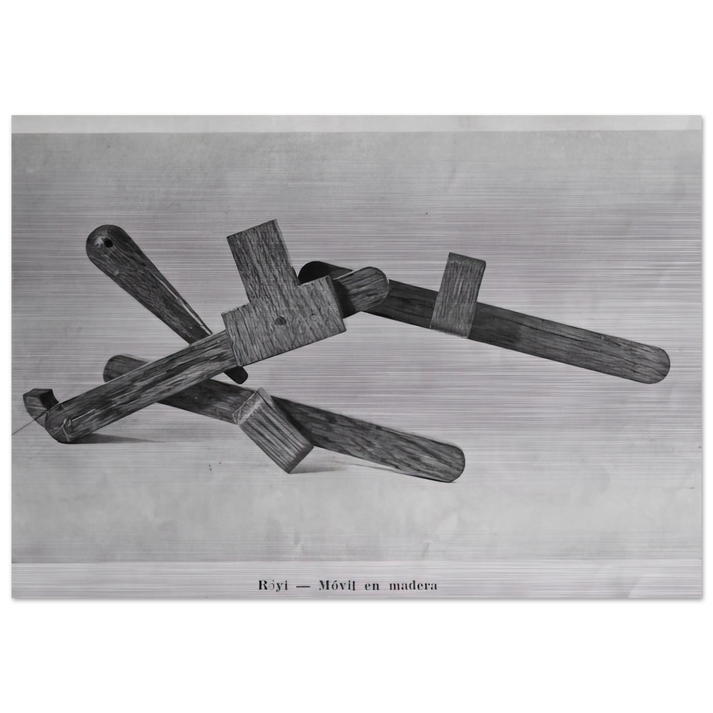


Röyi - 1945 - Gyula Kosice Aluminium-Druck - 70x100 cm / 28x40 Zoll | Gyula Kosice Aluminium-Druck | Gyula Kosice Drucke
Röyi - 1945 - Gyula Kosice Aluminium-Druck - 70x100 cm / 28x40 Zoll | Gyula Kosice Aluminium-Druck | Gyula Kosice Drucke
Verfügbarkeit für Abholungen konnte nicht geladen werden
Röyi - 1945 - Gyula Kosice Aluminium-Druck mit gebürsteter Oberfläche
Tauchen Sie Ihren Raum in die avantgardistische Brillanz von Gyula Kosice mit dieser musealen Reproduktion von Röyi (1945). Als Pionier der kinetischen und konkreten Kunstbewegung erforscht Kosice in Werken aus dieser Zeit geometrische Abstraktion und industrielle Materialien, die die postmoderne Innovation und eine mutige Neugestaltung der künstlerischen Form widerspiegeln. Dieses Stück, mit seinem dynamischen Zusammenspiel von Formen und Linien, vermittelt einen futuristischen Optimismus und strukturelle Harmonie – ein faszinierender Blickfang für moderne Innenräume.
RedKalion präsentiert diesen Archivdruck auf gebürstetem silbernem Aluminium DIBOND®, sorgfältig gefertigt, um Kosices ursprüngliche Vision zu ehren. Die 3 mm Dicke sorgt für eine stabile, robuste Basis, während der Direktdruck auf AluDibond lebendige Farben mit matter, blendfreier Oberfläche bietet. Unbedruckte weiße Bereiche zeigen einen markanten metallischen Silbereffekt, verstärkt durch eine horizontale Maserung, die Tiefe und Bewegung verleiht. Mit den Maßen 70x100 cm (28x40 Zoll) enthält dieser hochwertige Druck ein Aufhängeset für eine einfache Präsentation.
Bereichern Sie Ihre Sammlung mit einem Werk, das Kunstgeschichte und zeitgenössisches Design verbindet – unterstützt durch RedKalions Engagement für hochwertige Archiv-Reproduktionen.
```


Discover Unlimited Art Possibilities
At RedKalion, you can find virtually any artwork from any artist, available in a wide range of sizes to perfectly match your space.
If you didn’t find what you’re looking for, contact us at support@redkalion.com . We will source any artwork and produce it in any size and format you need, including art prints, posters, canvas, framed pieces, framed canvas, and more.
For dedicated art enthusiasts, we also offer handcrafted replicas of any artwork, carefully painted by highly skilled artists using traditional techniques.
For custom requests, contact us at support@redkalion.com .
What are the dimensions and material of this Gyula Kosice print?
This fine art print measures 70x100 cm (28x40 inches) and is crafted on brushed silver Aluminum DIBOND® with a 3mm thickness for a durable, museum-quality reproduction.
How does the brushed aluminum finish enhance the artwork?
The matte, glare-free finish on aluminum reveals a metallic silver effect in unprinted areas, adding a dynamic, industrial look that complements Gyula Kosice's geometric designs.
Is a hanging kit included with this aluminum art print?
Yes, a hanging kit is included for easy display; specific components may vary by fulfillment country to ensure secure installation.
What makes this a museum-quality reproduction?
This archival-grade print uses direct printing on AluDibond for vivid colors and longevity, meeting RedKalion's standards for premium fine art prints.
How should I care for my brushed aluminum print?
Gently dust with a soft, dry cloth to maintain the matte finish; avoid harsh chemicals to preserve the archival quality of this Gyula Kosice artwork.
What is the historical significance of Röyi (1945) by Gyula Kosice?
Created in 1945, Röyi reflects Kosice's early exploration of Concrete Art, emphasizing geometric abstraction and industrial influences during post-war avant-garde movements in Latin America.
Why did Gyula Kosice use industrial materials like aluminum in his art?
Kosice pioneered the use of aluminum and other industrial materials to challenge traditional art forms, aligning with his Kinetic Art philosophy that embraced modernity and movement.