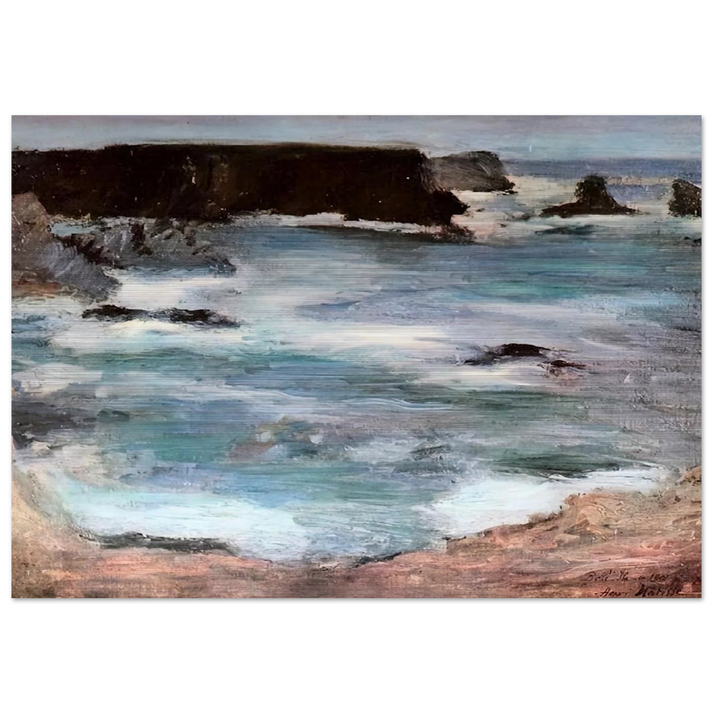


ROCHERS A BELLE ILE 1896 0 - Henri Matisse Aluminium-Druck - 70x100 cm / 28x40 Zoll | Henri Matisse Aluminium-Druck | Henri Matisse Drucke
ROCHERS A BELLE ILE 1896 0 - Henri Matisse Aluminium-Druck - 70x100 cm / 28x40 Zoll | Henri Matisse Aluminium-Druck | Henri Matisse Drucke
Verfügbarkeit für Abholungen konnte nicht geladen werden
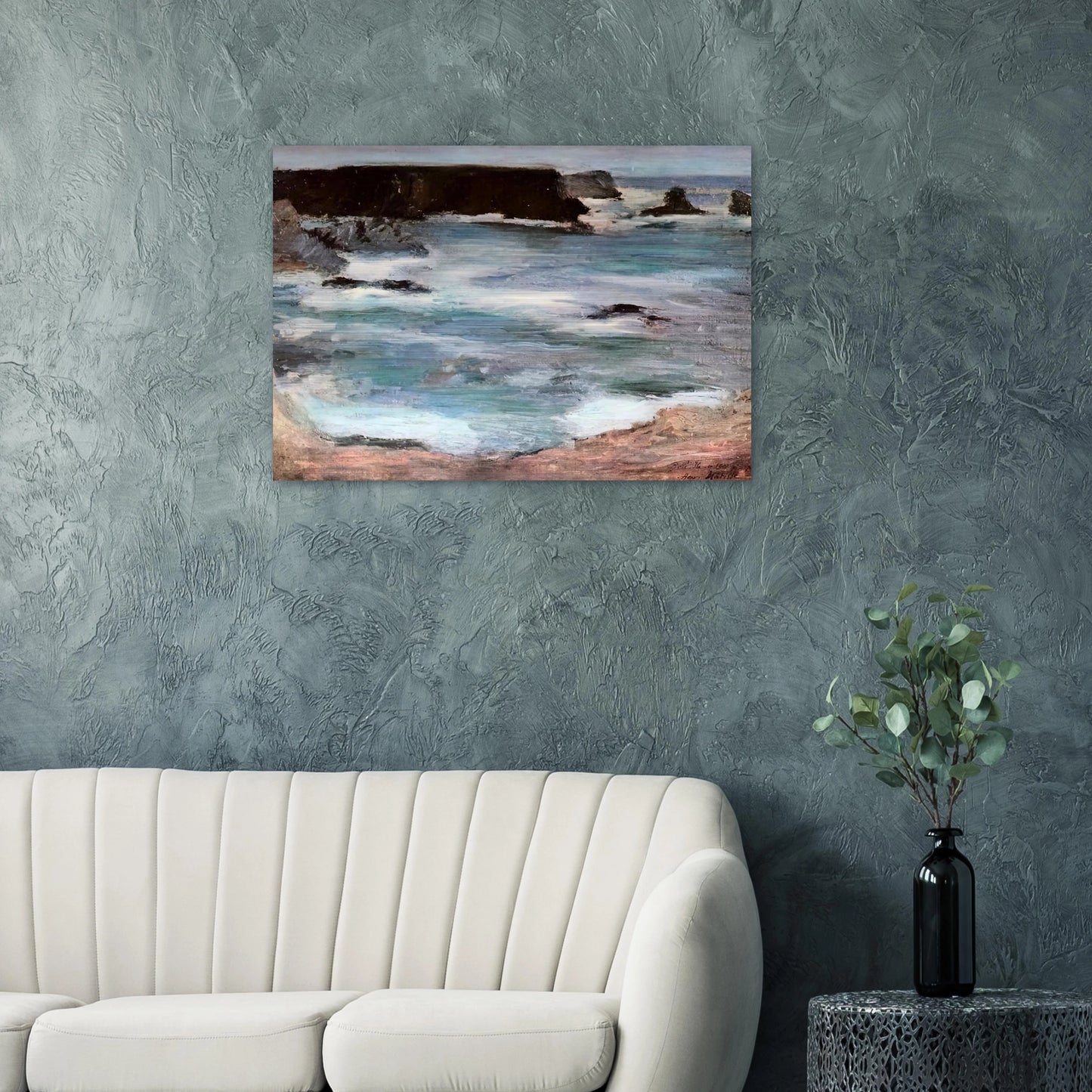
Felsen bei Belle-Île (1896) von Henri Matisse: Ein modernistisches Meisterwerk auf gebürstetem Aluminium
Dieser Henri Matisse Aluminium-Druck fängt die frühe Auseinandersetzung des Künstlers mit Licht und Form in seinem Gemälde Felsen bei Belle-Île aus dem Jahr 1896 ein. Entstanden während einer entscheidenden Reise nach der Bretagne markiert dieses Werk Matisse‘ Übergang von akademischen Stilen zu den kühnen, ausdrucksstarken Techniken, die den Fauvismus prägen sollten. Die wilden Küstenfelsen, mit dynamischen Pinselstrichen dargestellt, vermitteln ein Gefühl roher natürlicher Energie und atmosphärischer Tiefe und machen es zu einem zeitlosen Highlight für jedes moderne oder klassische Interieur.
RedKalion präsentiert diese museumsqualitative Reproduktion auf hochwertigem gebürstetem silbernem Aluminium DIBOND® in den Maßen 70x100 cm (28x40 Zoll). Die 3 mm starke Basis sorgt für Langlebigkeit, während die Direktdrucktechnologie lebendige, archivbeständige Farben mit matter, blendfreier Oberfläche liefert. Unbedruckte Bereiche zeigen einen markanten metallischen Silbereffekt, der den modernistischen Charme des Kunstwerks unterstreicht. Jeder Druck enthält ein Aufhängeset für einfache Installation und ermöglicht es Ihnen, Ihren Raum mit einem Werk zu bereichern, das kunsthistorische Bedeutung mit modernster Präsentation verbindet.
Wichtige Merkmale:
- Material: Gebürstetes silbernes Aluminium DIBOND® mit horizontaler Maserung für einen dynamischen, metallischen Look.
- Dicke: 3 mm (0,12 Zoll) für eine stabile, langlebige Basis.
- Druck: Direktdruck auf AluDibond für lebendige Farben und eine matte Oberfläche; unbedruckte weiße Bereiche zeigen einen metallischen Silbereffekt.
- Oberfläche: Matt, blendfrei – ideal zur Hervorhebung von Texturen und Kontrasten des Kunstwerks.
- Enthalten: Aufhängeset (variiert je nach Lieferland).
Als führende Online-Galerie spezialisiert sich RedKalion auf archivbeständige Reproduktionen, die die Integrität des Originals bewahren. Dieser Fine-Art-Druck spiegelt nicht nur Matisse‘ innovativen Geist wider, sondern bietet auch bleibende Schönheit – perfekt für Sammler und Designliebhaber, die nach einem Statement-Stück suchen.
```


Discover Unlimited Art Possibilities
At RedKalion, you can find virtually any artwork from any artist, available in a wide range of sizes to perfectly match your space.
If you didn’t find what you’re looking for, contact us at support@redkalion.com . We will source any artwork and produce it in any size and format you need, including art prints, posters, canvas, framed pieces, framed canvas, and more.
For dedicated art enthusiasts, we also offer handcrafted replicas of any artwork, carefully painted by highly skilled artists using traditional techniques.
For custom requests, contact us at support@redkalion.com .
What is the historical significance of Rochers à Belle-Île (1896) by Henri Matisse?
This painting marks Henri Matisse's early shift towards modernism, created during his 1896 trip to Brittany, where he experimented with light and form, foreshadowing his later Fauvist style with dynamic brushstrokes and natural energy.
How does the brushed aluminum enhance this Matisse print?
The brushed silver Aluminum DIBOND® adds a metallic finish and horizontal grain, creating a dynamic look that complements the artwork's textures, with unprinted areas revealing a striking silver effect for a contemporary display.
What are the specifications of this aluminum print?
This museum-quality reproduction measures 70x100 cm (28x40 inches), with a 3mm thick brushed aluminum base, direct print for vivid colors, and a matte, glare-free finish, ideal for fine art displays.
Is the hanging kit included with this Matisse print?
Yes, a hanging kit is included with every order, though it may vary by fulfillment country to ensure secure installation for your archival aluminum print.
How durable and archival is this aluminum print?
Made with premium Aluminum DIBOND® and direct print technology, this print offers excellent durability and colorfastness, designed for long-lasting display as a high-quality art reproduction.
Why did Matisse choose Belle-Île as a subject in 1896?
Matisse was drawn to Belle-Île for its rugged coastal landscapes, which allowed him to study natural light and form, influencing his move away from academic traditions towards more expressive techniques.
How does the matte finish benefit this black-and-white design?
The matte, glare-free finish reduces reflections, enhancing the contrasts and details in Matisse's work, making it ideal for viewing in various lighting conditions with a sophisticated brushed silver effect.