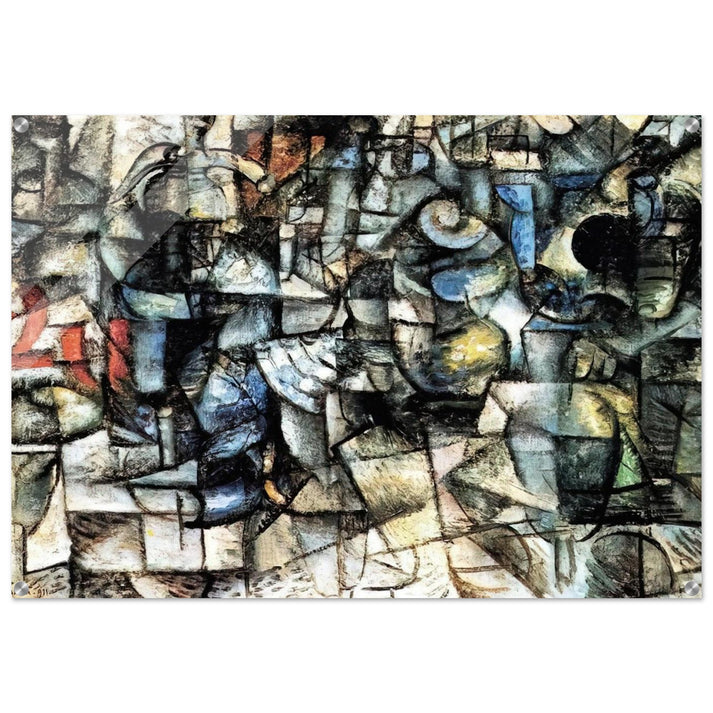


RITMI DI OGGETTI 1911 - Carlo Carrà Acryl-Druck - 70x100 cm / 28x40″ Zoll
RITMI DI OGGETTI 1911 - Carlo Carrà Acryl-Druck - 70x100 cm / 28x40″ Zoll
Verfügbarkeit für Abholungen konnte nicht geladen werden
RHYTHMEN DER GEGENSTÄNDE 1911 - Carlo Carrà Acryl-Druck
Tauchen Sie ein in die dynamische Energie der italienischen Kunst des frühen 20. Jahrhunderts mit diesem museumstauglichen Acryl-Druck von Carlo Carràs „Rhythmen der Gegenstände“ (1911). Ein wegweisendes Werk der futuristischen Bewegung, das die Essenz der Moderne durch seine rhythmische Anordnung alltäglicher Objekte einfängt und Abstraktion mit mechanischer Präzision verbindet. Carrà, eine Schlüsselfigur des Futurismus, strebte danach, die Geschwindigkeit und Vitalität des Industriezeitalters darzustellen – dieser Druck ist damit eine kraftvolle Aussage für jeden zeitgenössischen Raum.
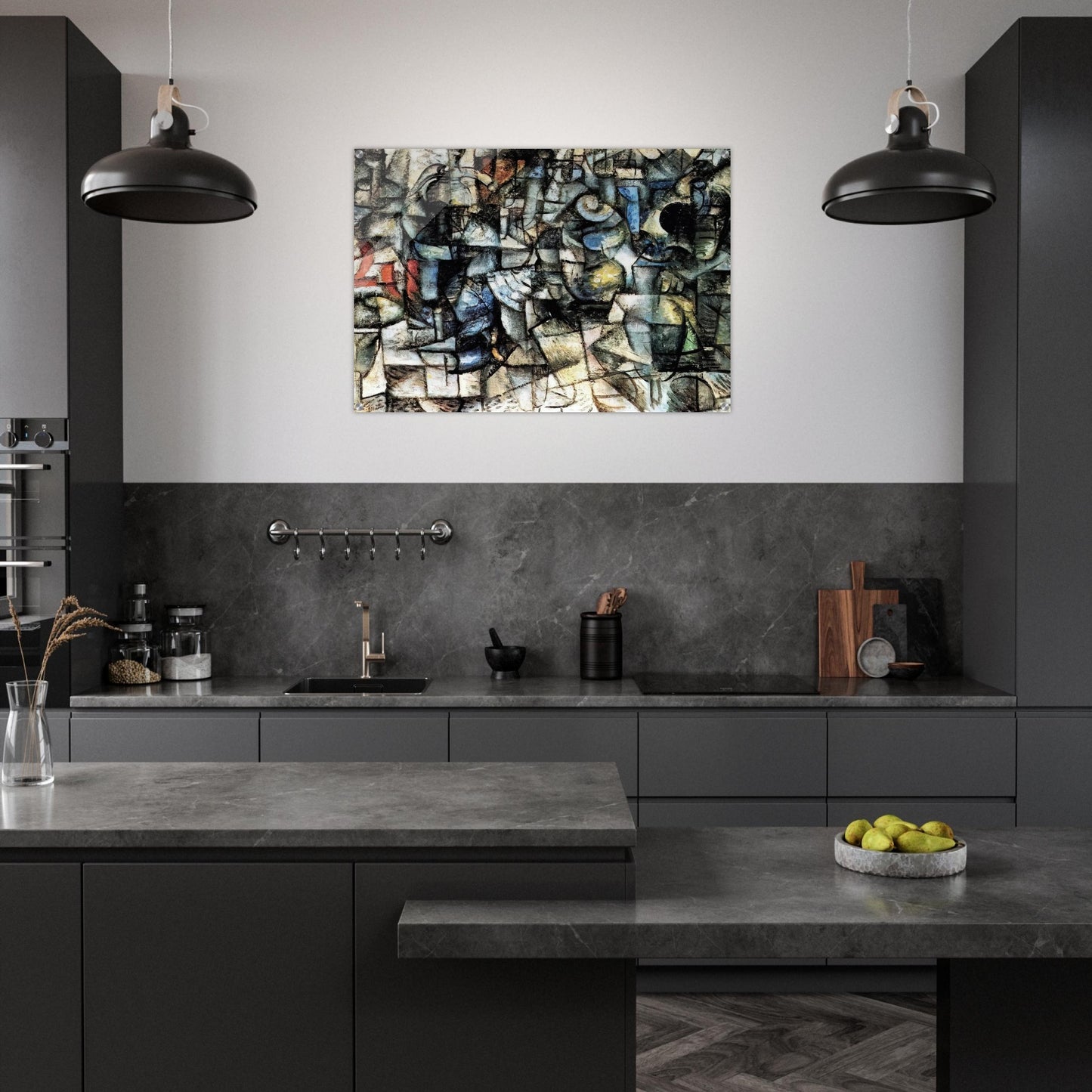
RedKalion präsentiert diese archivtaugliche Reproduktion auf 4 mm (0,15 Zoll) Premium-Acryl, das für lebendige Farben und eine elegante, strapazierfähige Oberfläche sorgt, die nicht verblasst. Die Abmessungen von 70 x 100 cm / 28 x 40 Zoll verleihen dem Werk eine beeindruckende Präsenz mit geraden Ecken für einen modernen Look. Transparente Hintergründe sind für eine optimale visuelle Klarheit auf Weiß eingestellt, während das mitgelieferte Aufhängeset – inklusive Hardware, Schrauben und vorgebohrter Löcher (14 mm vom Rand, 8 mm Durchmesser) – eine mühelose Installation ermöglicht. Veredeln Sie Ihr Zuhause oder Büro mit einem Kunstdruck, der historische Bedeutung mit bleibender Qualität vereint.
- Künstler: Carlo Carrà (1881–1966), italienischer Futurist
- Jahr: 1911, ein entscheidender Moment in der Avantgarde-Kunst
- Stil: Futurismus, der Bewegung und industrielle Themen betont
- Drucktyp: Archiv-Acryl-Reproduktion für museumstaugliche Langlebigkeit
- Abmessungen: 70 x 100 cm / 28 x 40 Zoll, ideal für Statement-Wände
- Material: 4 mm (0,15 Zoll) Acryl mit einer lebendigen, kratzfesten Oberfläche
- Design: Gerade Ecken; transparente Hintergründe auf Weiß eingestellt
- Aufhängeset: Enthält Hardware, Schrauben und vorgebohrte Löcher (14 mm vom Rand, 8 mm Durchmesser, 15 mm Schraubenkopf)


Discover Unlimited Art Possibilities
At RedKalion, you can find virtually any artwork from any artist, available in a wide range of sizes to perfectly match your space.
If you didn’t find what you’re looking for, contact us at support@redkalion.com . We will source any artwork and produce it in any size and format you need, including art prints, posters, canvas, framed pieces, framed canvas, and more.
For dedicated art enthusiasts, we also offer handcrafted replicas of any artwork, carefully painted by highly skilled artists using traditional techniques.
For custom requests, contact us at support@redkalion.com .
What is the historical significance of Carlo Carrà's "Ritmi di Oggetti" (1911)?
This artwork is a key Futurist piece from 1911, reflecting Carlo Carrà's focus on industrial rhythms and modern object abstraction in early 20th-century Italian art.
How does the acrylic print enhance the colors of this Futurist artwork?
The 4mm acrylic material provides a sleek, vibrant finish that intensifies Carrà's dynamic palette, ensuring a museum-quality reproduction with archival durability.
What are the dimensions and paper specifications for this fine art print?
It measures 70x100 cm / 28x40" inches on 4mm (0.15") acrylic, featuring straight-cut corners and white-optimized backgrounds for a modern display.
How is the hanging kit installed for this acrylic print?
The kit includes hardware and screws with pre-drilled holes (14mm from edge, 8mm diameter), making installation straightforward for secure wall mounting.
Is this print archival and resistant to fading over time?
Yes, RedKalion uses premium acrylic for archival longevity, ensuring the Futurist artwork remains vibrant and fade-resistant for years.
What inspired Carlo Carrà's use of objects in this 1911 piece?
Carrà was influenced by Futurist ideals to depict everyday objects in rhythmic, abstract forms, symbolizing the speed and energy of the industrial era.
Can I customize the background color for transparent areas in this print?
Transparent backgrounds default to white for optimal presentation, but contact RedKalion for potential custom options on this museum-quality reproduction.