


Feld mit Mohnblumen - Claude Monet Aluminiumdruck - 70x100 cm / 28x40 Zoll | Claude Monet Aluminiumdruck | Claude Monet Drucke
Feld mit Mohnblumen - Claude Monet Aluminiumdruck - 70x100 cm / 28x40 Zoll | Claude Monet Aluminiumdruck | Claude Monet Drucke
Verfügbarkeit für Abholungen konnte nicht geladen werden
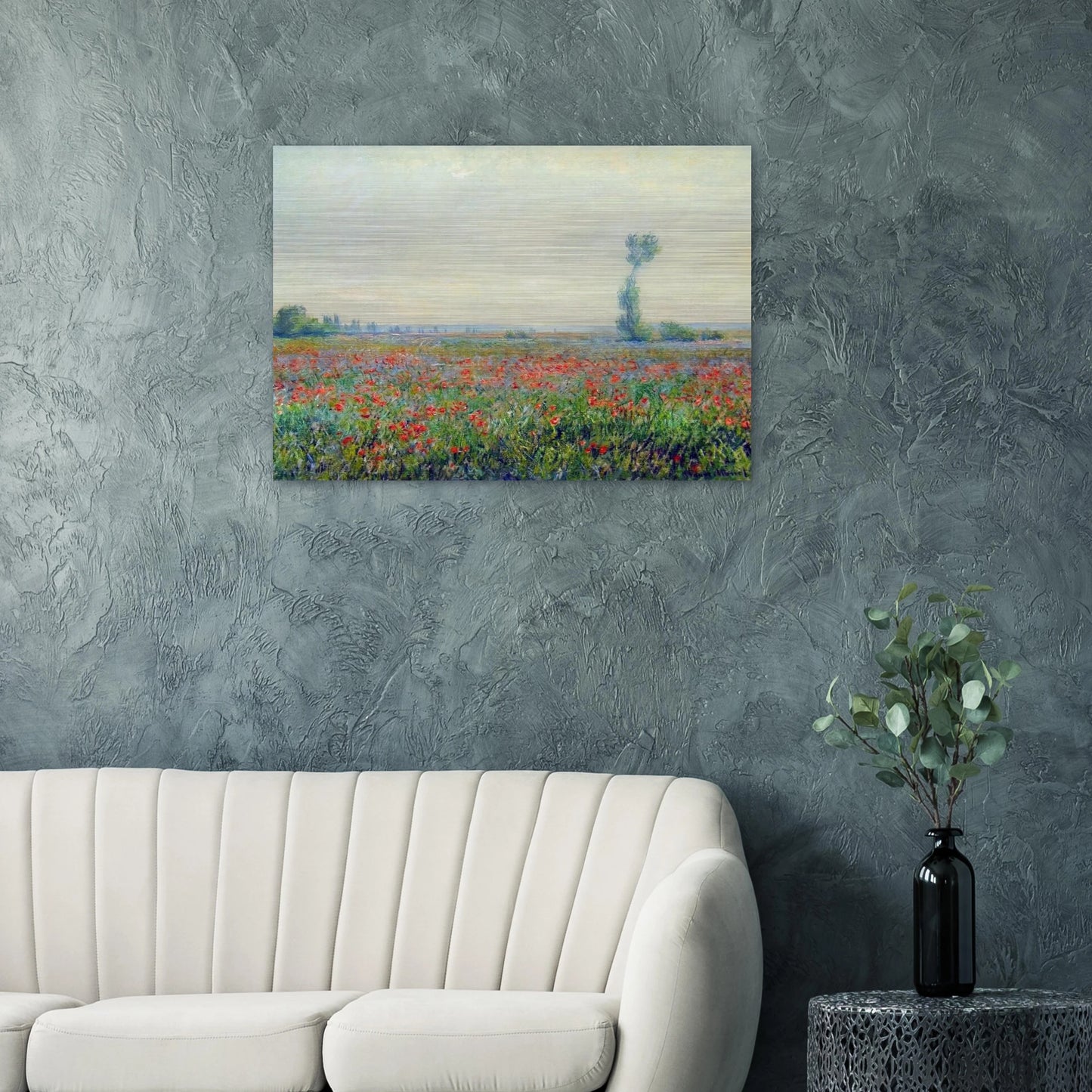
Claude Monets „Mohnfeld“ – Ein Meisterwerk des Impressionismus auf Premium gebürstetem Aluminium
Tauchen Sie ein in die lebendige Schönheit von Claude Monets ikonischem „Mohnfeld“ (auch bekannt als „Mohnfeld bei Argenteuil“), einem quintessentiellen impressionistischen Meisterwerk aus dem Jahr 1873. Dieser museumreife Kunstdruck fängt das Wesen einer sonnenverwöhnten französischen Landschaft ein, in der wilde Mohnblumen im Wind unter einem strahlenden Himmel tanzen. Monets revolutionäre Technik – schnelle, gebrochene Pinselstriche zur Darstellung von Licht und Bewegung – wird in dieser archivtauglichen Reproduktion lebendig und bietet einen zeitlosen Blickfang für jedes moderne Interieur.
RedKalion präsentiert dieses klassische Kunstwerk auf einem hochwertigen gebürsteten silbernen Aluminium-DIBOND®-Paneel mit den Maßen 70x100 cm / 28x40 Zoll. Die 3 mm (0,12 Zoll) dicke Basis sorgt für Stabilität und eine elegante, stabile Präsentation, während der Direktdruck auf AluDibond lebendige, farbechthe Farben mit einem edlen matten Finish bietet. Unbedruckte weiße Bereiche zeigen einen dynamischen metallischen Silbereffekt, der die Leuchtkraft des Kunstwerks verstärkt und einen beeindruckenden visuellen Kontrast schafft. Dieses blendfreie Finish eignet sich ideal, um Monets zarte Farbpalette und feine Details zur Geltung zu bringen – perfekt für Wohnzimmer, Büros oder Galerien.
Als führender Anbieter von archivtauglichen Reproduktionen verbindet RedKalion kunsthistorisches Fachwissen mit modernster Drucktechnologie. Monets „Mohnfeld“ verkörpert den Fokus der Impressionisten auf das Einfangen flüchtiger Naturmomente – ein Thema, das in unserer schnelllebigen Welt besonders resoniert. Veredeln Sie Ihren Raum mit diesem zeitlosen Werk, in dem jeder Pinselstrich eine Geschichte von Licht, Farbe und künstlerischer Innovation erzählt.
```


Discover Unlimited Art Possibilities
At RedKalion, you can find virtually any artwork from any artist, available in a wide range of sizes to perfectly match your space.
If you didn’t find what you’re looking for, contact us at support@redkalion.com . We will source any artwork and produce it in any size and format you need, including art prints, posters, canvas, framed pieces, framed canvas, and more.
For dedicated art enthusiasts, we also offer handcrafted replicas of any artwork, carefully painted by highly skilled artists using traditional techniques.
For custom requests, contact us at support@redkalion.com .
What are the dimensions and material of this Claude Monet 'Poppy Field' print?
This fine art print measures 70x100 cm (28x40 inches) and is crafted on premium brushed silver Aluminum DIBOND® with a 3mm thickness for a durable, museum-quality display.
How does the brushed aluminum finish enhance the artwork?
The matte, glare-free finish with a horizontal grain and metallic silver effect in unprinted areas adds dynamic luminosity, making it ideal for Impressionist pieces like Monet's 'Poppy Field'.
Is a hanging kit included with this aluminum print?
Yes, a hanging kit is included; specific components may vary by fulfillment country to ensure secure installation for your archival reproduction.
What makes this a museum-quality reproduction?
It uses direct printing on AluDibond for vivid, fade-resistant colors and archival longevity, capturing Monet's original brushstrokes with precision in a premium fine art print.
How should I care for my brushed aluminum print?
Dust gently with a soft cloth; avoid harsh chemicals. The durable 3mm aluminum base and matte finish ensure long-lasting beauty for your Claude Monet artwork.
Why did Monet paint 'Poppy Field' and what is its significance?
Painted in 1873, 'Poppy Field' near Argenteuil showcases Monet's focus on light and nature, using rapid brushstrokes to capture a fleeting moment, symbolizing the Impressionist movement's innovation.
What techniques did Monet use in this artwork?
Monet employed broken brushstrokes and a vibrant palette to depict light and movement, creating a sense of spontaneity that defines this iconic Impressionist masterpiece.