
PINES VON RAYOL 1912 Von Theo van Rysselberghe Packung mit 10 Postkarten | Theo van Rysselberghe Postkarten | A6 (10,5 x 14,8 cm) - 4,1 x 5,8 Zoll
PINES VON RAYOL 1912 Von Theo van Rysselberghe Packung mit 10 Postkarten | Theo van Rysselberghe Postkarten | A6 (10,5 x 14,8 cm) - 4,1 x 5,8 Zoll
Verfügbarkeit für Abholungen konnte nicht geladen werden
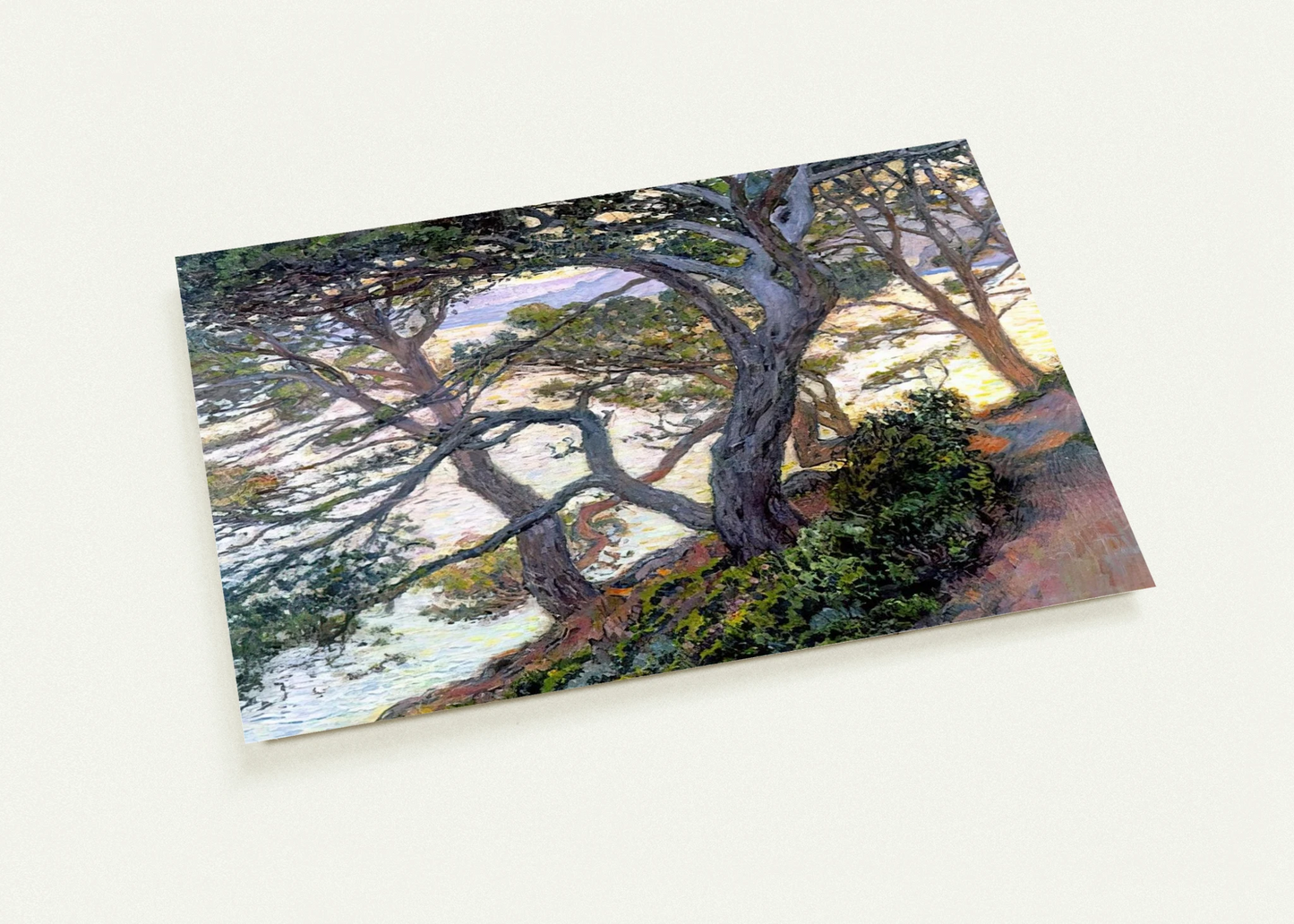
Pines of Rayol 1912 von Theo van Rysselberghe: Ein Set mit 10 Postkarten
Fangen Sie die strahlende Schönheit des Neo-Impressionismus mit diesem exklusiven Set aus 10 Postkarten ein, das Theo van Rysselberghes "Pines of Rayol 1912" zeigt. Diese museumsqualitative Reproduktion bringt die charakteristische pointillistische Technik des Künstlers zum Vorschein und präsentiert die ruhige mediterrane Landschaft mit lebendigen Farben und feinen Details. Van Rysselberghe, eine Schlüsselfigur der belgischen Avantgarde, setzte meisterhaft die Prinzipien des Divisionismus ein, um das schimmernde Licht und die friedvolle Atmosphäre der französischen Riviera einzufangen – ein zeitloses Werk des frühen 20. Jahrhunderts.
Jede Postkarte dieses Sets wird mit archivierungsgerechter Präzision hergestellt, sodass der Fine-Art-Druck seine Brillanz und Authentizität bewahrt. Auf Anfrage gedruckt ohne Mindestbestellmenge bietet diese Kollektion eine einzigartige Möglichkeit, ein Stück Kunstgeschichte zu teilen oder auszustellen. Die Größe A6 (10,5 x 14,8 cm / 4,1 x 5,8 Zoll) eignet sich perfekt zum Einrahmen, Versenden als liebevolle Geste oder zum Gestalten einer kuratierten Galeriewand.
- Farbenpracht: Durch den Einsatz von 12-Farben-Fine-Art-Drucktechnologie liefert jede Postkarte lebendige, präzise Farben mit beeindruckender Tiefe – weit überlegen gegenüber herkömmlichen 4-Farben-Tintenstrahldrucken.
- Papierfinish: Verfügt über eine glatte matte Oberfläche für eine saubere, blendfreie Darstellung, die die subtilen Texturen des Kunstwerks betont.
- Papiergewicht: Hergestellt aus 200-g/m²-Papier (80 lb) mit einer Dicke von 0,26 mm (10,3 mils), was Haltbarkeit und ein hochwertiges Gefühl garantiert.
- Umweltfreundliche Materialien: Gedruckt auf ökologisch verantwortungsvollem, FSC-zertifiziertem Papier – ein Zeichen für RedKalions Engagement für Nachhaltigkeit.
Veredeln Sie Ihre Korrespondenz oder Dekoration mit diesen archivierungsfähigen Postkarten von RedKalion, wo fachkundige Kuratierung auf herausragende Handwerkskunst trifft. Jedes Set lädt Sie ein, das Erbe von Theo van Rysselberghe in einem Format zu erleben, das künstlerische Integrität mit praktischer Eleganz verbindet.
```
Discover Unlimited Art Possibilities
At RedKalion, you can find virtually any artwork from any artist, available in a wide range of sizes to perfectly match your space.
If you didn’t find what you’re looking for, contact us at support@redkalion.com . We will source any artwork and produce it in any size and format you need, including art prints, posters, canvas, framed pieces, framed canvas, and more.
For dedicated art enthusiasts, we also offer handcrafted replicas of any artwork, carefully painted by highly skilled artists using traditional techniques.
For custom requests, contact us at support@redkalion.com .
What is the historical significance of "Pines of Rayol 1912" by Theo van Rysselberghe?
This artwork exemplifies Neo-Impressionism, showcasing van Rysselberghe's mastery of pointillism to capture the Mediterranean light and atmosphere, making it a key piece in early 20th-century European art history.
What are the dimensions and specifications of these post cards?
Each post card is A6 size (10.5 x 14.8 cm / 4.1 x 5.8 inches), printed on 200 gsm paper with a smooth matte finish, using 12-color fine art printing for vibrant museum-quality reproductions.
How does the printing technology ensure color accuracy?
Our 12-color fine art printing delivers vivid, accurate colors with stunning depth, far beyond standard 4-color inkjet technology, ensuring true-to-original Theo van Rysselberghe post cards.
Are these post cards eco-friendly and durable?
Yes, they are printed on FSC-certified paper with a 200 gsm weight and 0.26 mm thickness, offering an environmentally conscious and long-lasting fine art print option.
Can I order a custom quantity or size?
These post cards are printed on demand with no minimum orders, but currently available only in A6 size; contact us for potential custom fine art print inquiries.
What makes van Rysselberghe's technique in this artwork unique?
He used divisionist brushstrokes to create optical mixing, enhancing the luminous effect of the Mediterranean scene, a hallmark of his Neo-Impressionist style in this 1912 masterpiece.
How should I store or display these post cards for longevity?
Store in a cool, dry place away from direct sunlight to preserve the archival quality; framing with UV-protective glass can extend the life of your museum-quality reproduction.