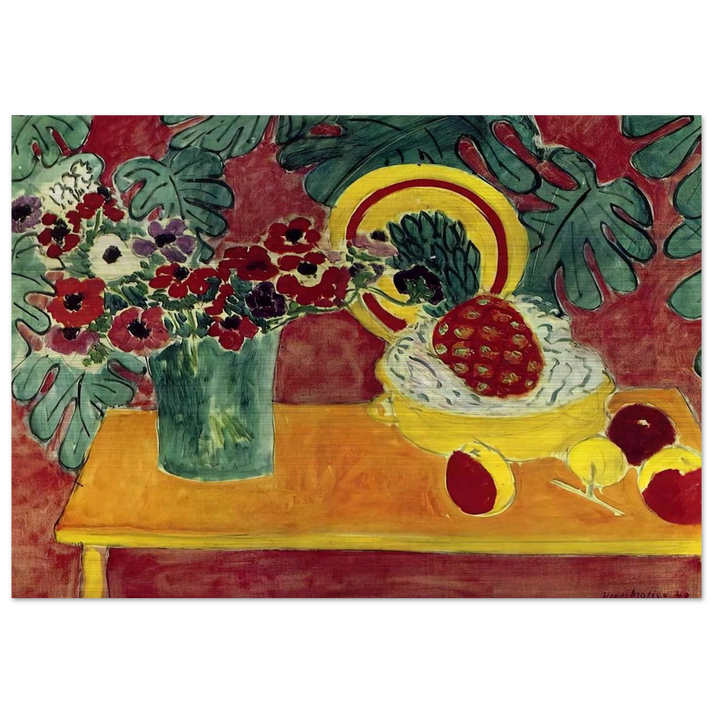


ANANAS UND ANEMONEN 1940 - Henri Matisse Aluminiumdruck - 70x100 cm / 28x40 Zoll | Henri Matisse Aluminiumdruck | Henri Matisse Drucke
ANANAS UND ANEMONEN 1940 - Henri Matisse Aluminiumdruck - 70x100 cm / 28x40 Zoll | Henri Matisse Aluminiumdruck | Henri Matisse Drucke
Verfügbarkeit für Abholungen konnte nicht geladen werden
Ananas und Anemonen 1940 – Henri Matisse Aluminiumdruck auf gebürstetem Aluminium
Tauchen Sie Ihren Raum in die lebendige Energie von Henri Matisses „Ananas und Anemonen 1940“ mit dieser musealen Reproduktion in Museumqualität. Dieser hochwertige Kunstdruck fängt Matisses charakteristischen Einsatz von kräftigen, ausdrucksstarken Farben und vereinfachten Formen ein und spiegelt seine meisterhafte Spätwerk-Komposition von Stillleben wider. Während einer Phase intensiver Kreativität entstanden, stellt das Kunstwerk die exotische Ananas den zarten Anemonen gegenüber und zeigt Matisses Fähigkeit, Alltagsgegenstände in eine Symphonie visueller Freude zu verwandeln.
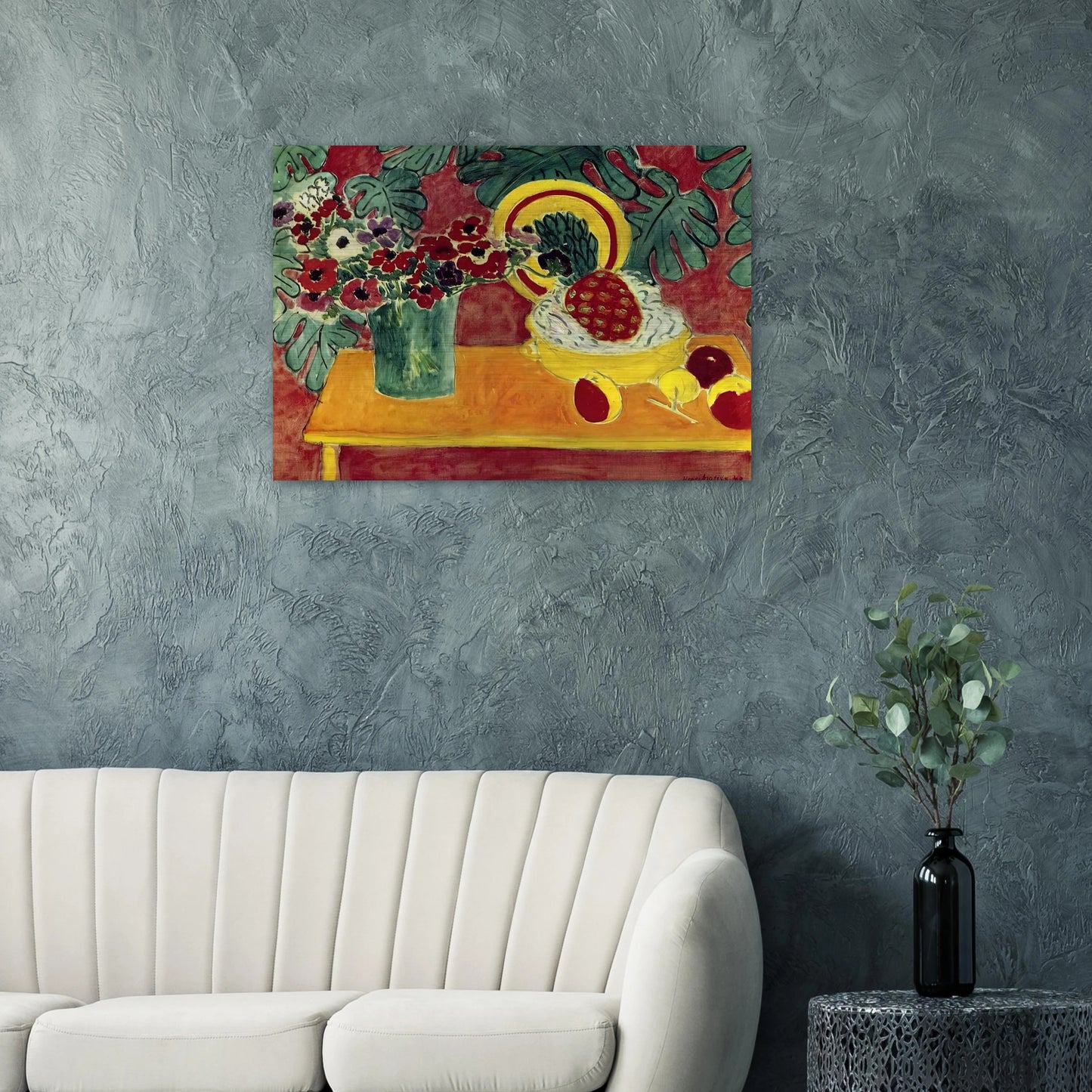
RedKalion präsentiert dieses Meisterwerk auf hochwertigem gebürstetem silbernem Aluminium DIBOND®, einer 3 mm dicken, stabilen Unterlage, die Haltbarkeit und einen zeitgemäßen ästhetischen Look garantiert. Die Direktdrucktechnologie liefert lebendige, archivbeständige Farben mit matter, blendfreier Oberfläche, während unbedruckte Bereiche durch die horizontale Maserung einen markanten metallischen Silbereffekt offenbaren. Mit den Maßen 70 x 100 cm (28 x 40 Zoll) ist dieser Henri-Matisse-Aluminiumdruck bereit, jeden Innenraum mit seiner dynamischen Präsenz zu bereichern.
Als vertrauenswürdiger Kurator archivbeständiger Reproduktionen garantiert RedKalion, dass dieses Stück nicht nur Matisses künstlerisches Erbe ehrt, sondern auch langanhaltende Schönheit bietet. Das mitgelieferte Aufhängeset sorgt für einfache Installation und macht es zur idealen Wahl für Sammler und Designliebhaber, die ein Statement-Kunstwerk suchen.
```


Discover Unlimited Art Possibilities
At RedKalion, you can find virtually any artwork from any artist, available in a wide range of sizes to perfectly match your space.
If you didn’t find what you’re looking for, contact us at support@redkalion.com . We will source any artwork and produce it in any size and format you need, including art prints, posters, canvas, framed pieces, framed canvas, and more.
For dedicated art enthusiasts, we also offer handcrafted replicas of any artwork, carefully painted by highly skilled artists using traditional techniques.
For custom requests, contact us at support@redkalion.com .
What is the historical significance of "Pineapple and Anemones 1940" by Henri Matisse?
This artwork exemplifies Matisse's late-career still-life mastery, blending bold colors and simplified forms to create a vibrant, expressive composition that highlights his innovative approach to modern art.
What materials are used for this Henri Matisse aluminum print?
It features a brushed silver Aluminum DIBOND® base with a 3mm thickness, direct printing for vivid colors, and a matte finish that reveals metallic silver in unprinted areas.
How does the brushed aluminum finish enhance this fine art print?
The horizontal grain and metallic silver effect add a dynamic, contemporary look, making it ideal for showcasing Matisse's bold designs with a glare-free, museum-quality appearance.
What are the dimensions of this Henri Matisse reproduction?
It measures 70x100 cm (28x40 inches), providing a substantial presence suitable for wall art in homes, offices, or galleries.
Is a hanging kit included with this museum-quality print?
Yes, a hanging kit is included, though specific components may vary by fulfillment country to ensure secure installation.
How durable is this brushed aluminum print for long-term display?
Made with archival-grade materials and a rigid 3mm base, it resists fading and damage, offering lasting beauty as a premium art reproduction.
Why did Matisse choose pineapple and anemones for this 1940 composition?
Matisse often used exotic and floral elements to explore color contrasts and organic shapes, reflecting his interest in natural beauty and decorative harmony during this creative period.