

Malerei - 1955 - Simon Hantai Aluminiumdruck - 70x100 cm / 28x40 Zoll | Simon Hantai Aluminiumdruck | Simon Hantai Drucke
Malerei - 1955 - Simon Hantai Aluminiumdruck - 70x100 cm / 28x40 Zoll | Simon Hantai Aluminiumdruck | Simon Hantai Drucke
Verfügbarkeit für Abholungen konnte nicht geladen werden
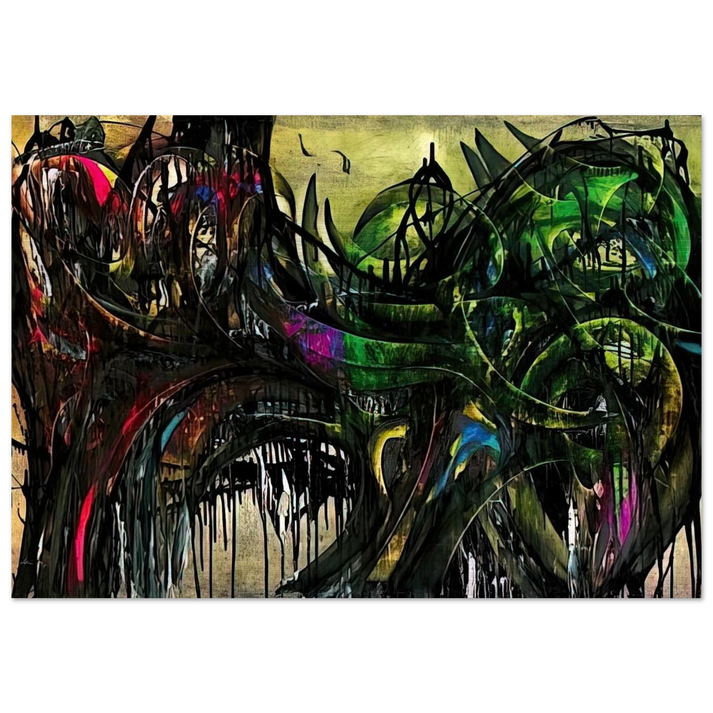
Peinture - 1955 von Simon Hantaï: Ein museumreifes Aluminiumdruck auf gebürstetem Metall
Erleben Sie die bahnbrechende Kunst von Simon Hantaï mit diesem hochwertigen Aluminiumdruck von Peinture - 1955. Dieses abstrakte Meisterwerk, entstanden während Hantaïs prägender früher Schaffensphase, fängt die revolutionäre Herangehensweise des Künstlers an Form und Textur ein und bietet eine dynamische visuelle Aussage, die zeitlos wirkt. RedKalion präsentiert dieses Werk als museumreife Reproduktion, die auf archivbeständigen Materialien sorgfältig gefertigt wurde, um seiner historischen Bedeutung gerecht zu werden.
Hantaï, ein in Ungarn geborener französischer Maler, war eine Schlüsselfigur der europäischen Nachkriegskunst. Peinture - 1955 verkörpert seine Erforschung des Automatismus und der gestischen Ausdrucksweise, bei der spontane Pinselstriche zu einer komplexen, geschichteten Komposition verschmelzen. Dieses Werk spiegelt den Bruch des Künstlers mit traditionellen Techniken wider und kündigt bereits seine spätere „Faltung“-Methode an, die die abstrakte Kunst neu definieren sollte. Unser Druck bewahrt jede Nuance seiner mutigen, texturierten Anwendung und ermöglicht es Ihnen, ein Stück Kunstgeschichte in Ihren zeitgenössischen Raum zu holen.
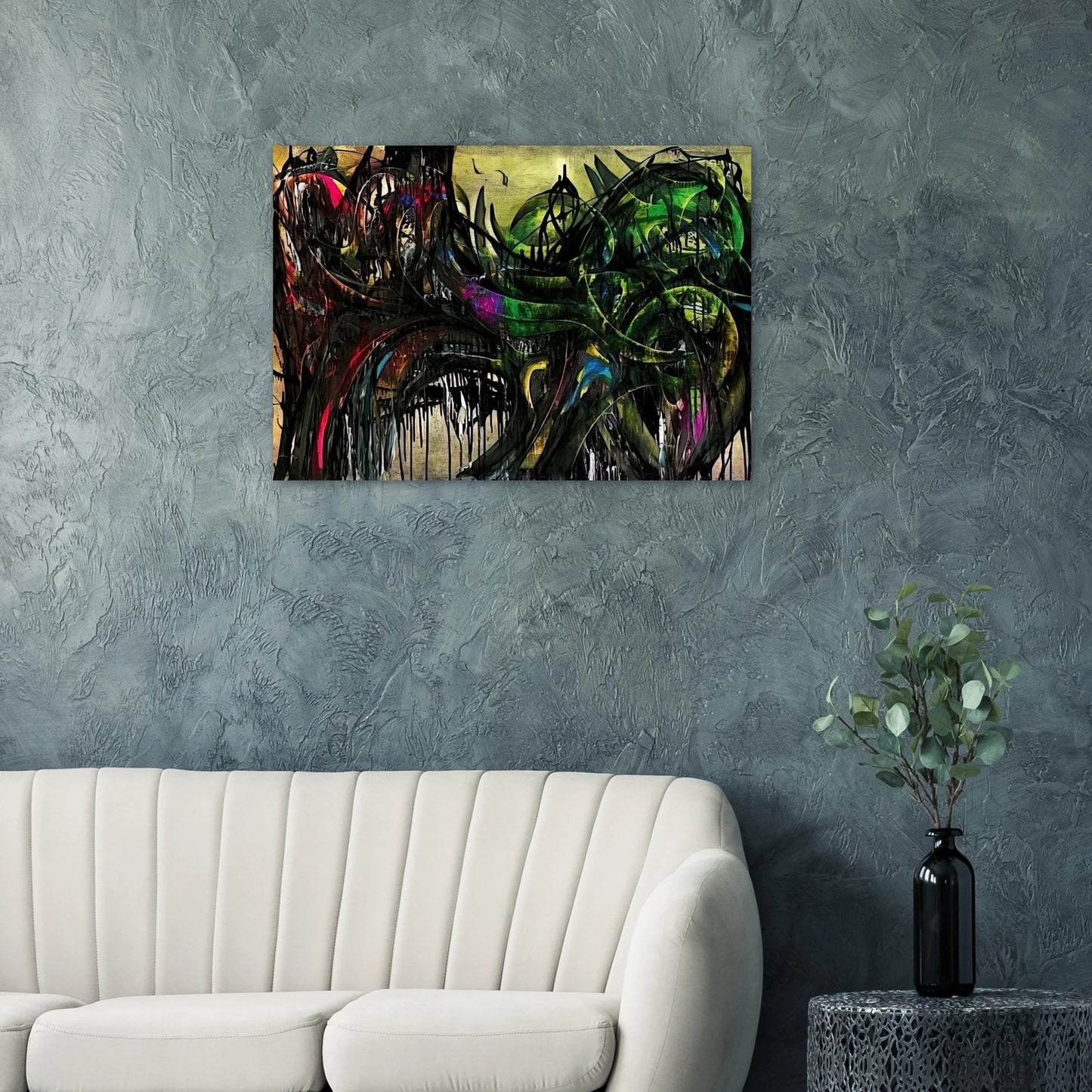
Dieser Fine-Art-Druck wird auf gebürstetem silbernem Aluminium DIBOND® hergestellt und verfügt über eine 3 mm starke, stabile Trägerplatte für Langlebigkeit. Der Direktdruck auf AluDibond liefert lebendige, farbechthe Farben mit matter, blendfreier Oberfläche, während unbedruckte weiße Bereiche durch die horizontale Maserung einen markanten metallischen Silbereffekt offenbaren. Mit den Maßen 70 x 100 cm (28 x 40 Zoll) wird er inklusive eines passenden Aufhängesets für Ihr Lieferland bereitgestellt.
Veredeln Sie Ihr Zuhause oder Büro mit einem archivwürdigen Meisterwerk, das modernistische Innovation mit RedKalions Engagement für Exzellenz verbindet. Ideal für Sammler und Designliebhaber bietet dieser Aluminiumdruck von Simon Hantaï eine anspruchsvolle Mischung aus historischer Tiefe und moderner Ästhetik.
```


Discover Unlimited Art Possibilities
At RedKalion, you can find virtually any artwork from any artist, available in a wide range of sizes to perfectly match your space.
If you didn’t find what you’re looking for, contact us at support@redkalion.com . We will source any artwork and produce it in any size and format you need, including art prints, posters, canvas, framed pieces, framed canvas, and more.
For dedicated art enthusiasts, we also offer handcrafted replicas of any artwork, carefully painted by highly skilled artists using traditional techniques.
For custom requests, contact us at support@redkalion.com .
What are the specifications of this Simon Hantaï brushed aluminum print?
This museum-quality reproduction measures 70x100 cm (28x40 inches), printed on 3mm thick brushed silver Aluminum DIBOND® with a matte finish and horizontal grain for a dynamic look.
How does the printing on aluminum enhance the artwork's details?
Direct print on AluDibond ensures vivid colors and a glare-free matte finish, with unprinted areas revealing a metallic silver effect for striking contrast in this fine art print.
Is the hanging kit included with this Simon Hantaï aluminum print?
Yes, a hanging kit is included; it varies by fulfillment country to ensure secure installation for your archival-grade reproduction.
What makes this print archival and durable?
Made with 3mm Aluminum DIBOND®, it offers a rigid, fade-resistant base ideal for long-term display as a premium art reproduction.
How does this artwork reflect Simon Hantaï's historical significance?
Peinture - 1955 showcases Hantaï's early abstract experimentation with automatism, foreshadowing his influential pliage technique in post-war European art.
Why is the brushed silver finish suitable for this design?
The horizontal grain and metallic effect complement the black-and-white elements, adding depth and a modern aesthetic to Hantaï's textured composition.
What era of Simon Hantaï's work does this piece represent?
This print captures Hantaï's pivotal 1950s period, highlighting his transition toward gestural abstraction before developing his signature folding method.