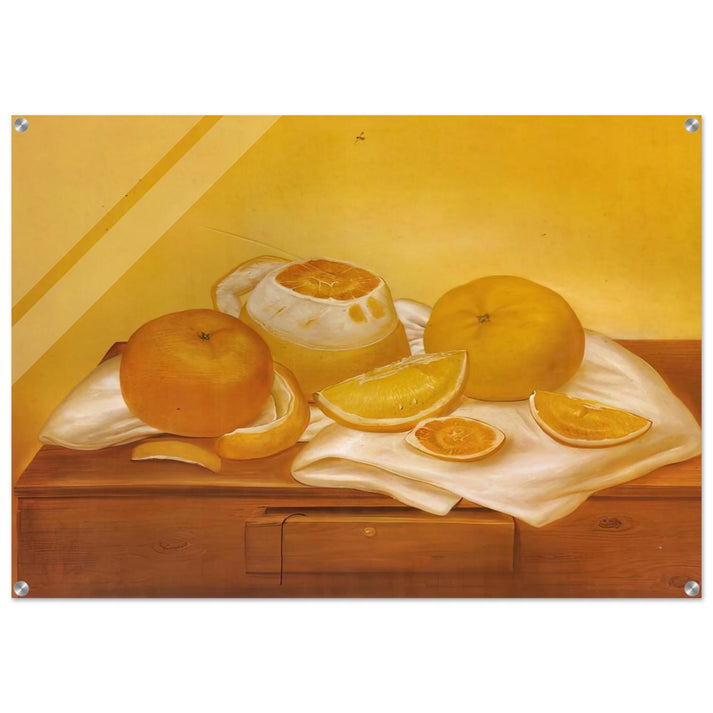


ORANGEN - Fernando Botero Acrylbild - 70x100 cm / 28x40″ Zoll
ORANGEN - Fernando Botero Acrylbild - 70x100 cm / 28x40″ Zoll
Verfügbarkeit für Abholungen konnte nicht geladen werden
Fernandos Botero Orangen – Ein monumentales Stillleben in lebendigem Acryl
Tauchen Sie ein in die verspielte, voluminöse Welt von Fernando Botero mit diesem hochwertigen Acryl-Druck seines ikonischen Stilllebens Orangen. Diese museumswürdige Reproduktion fängt jede übertriebene Kurve und jedes üppige Detail von Botero’s Markenzeichenstil Boterismo ein, bei dem Alltagsgegenstände in verspielte, monumentale Formen verwandelt werden. Die Orangen, mit einem Sinn für Gewicht und Sinnlichkeit dargestellt, werden zu Charakteren in ihrem eigenen Recht – eine Feier von Fülle, mediterraner Vitalität und der einzigartigen visuellen Sprache des Künstlers.
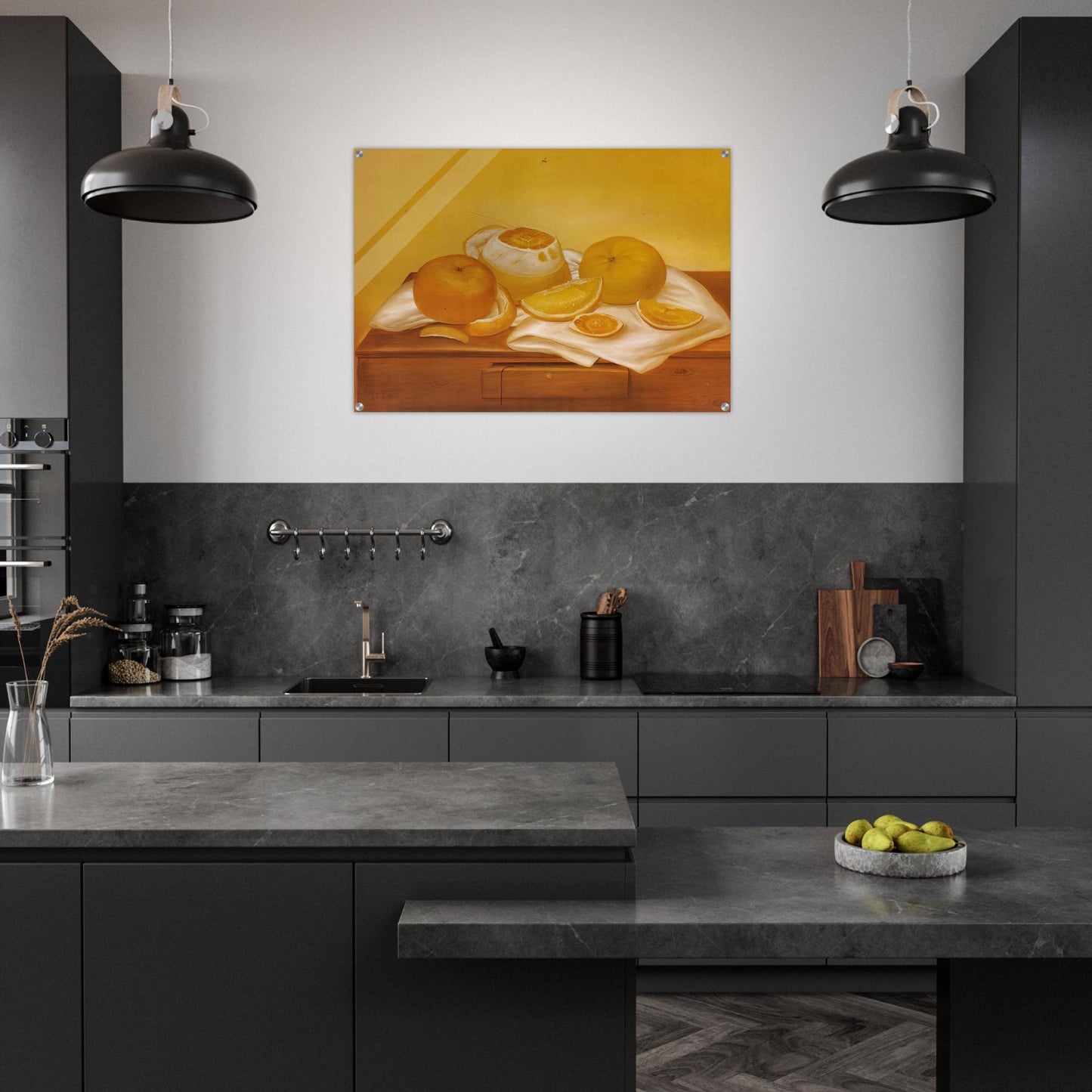
RedKalion präsentiert dieses Meisterwerk als 70x100 cm / 28x40″ Fine-Art-Druck, sorgfältig reproduziert auf 4 mm (0,15") hochglänzendem Acryl. Dieses archivbeständige Material garantiert außergewöhnliche Farbbrillanz und Tiefe mit einem schlanken, zeitgenössischen Finish, das vor Ausbleichen und Umweltschäden schützt. Die geraden Ecken und die moderne Montage (transparente Hintergründe standardmäßig weiß) schaffen eine galeriefertige Präsentation, die jeden Innenraum aufwerten kann.
Kunsthistorischer Einblick: Botero’s Orangen verkörpern seine lebenslange Erforschung von Volumen und Proportion, die er in der Mitte des 20. Jahrhunderts als Reaktion auf den Abstrakten Expressionismus entwickelte. Durch die Vergrößerung vertrauter Motive verleiht er der Tradition des Stilllebens Humor und eine fast skulpturale Präsenz – eine Hommage an die lateinamerikanische Volkskunst ebenso wie an die europäischen alten Meister.
Jeder Druck enthält ein vollständiges Aufhängeset mit Hardware, Schrauben und vorgebohrten Löchern (14 mm vom Rand, 8 mm Durchmesser) für eine mühelose Installation. Veredeln Sie Ihr Zuhause oder Büro mit einem archivbeständigen Meisterwerk, das Bestand hat und Botero’s freudvolle, ikonische Vision in Ihren Alltag bringt.
```


Discover Unlimited Art Possibilities
At RedKalion, you can find virtually any artwork from any artist, available in a wide range of sizes to perfectly match your space.
If you didn’t find what you’re looking for, contact us at support@redkalion.com . We will source any artwork and produce it in any size and format you need, including art prints, posters, canvas, framed pieces, framed canvas, and more.
For dedicated art enthusiasts, we also offer handcrafted replicas of any artwork, carefully painted by highly skilled artists using traditional techniques.
For custom requests, contact us at support@redkalion.com .
What are the dimensions and materials of this Fernando Botero acrylic print?
This fine art print measures 70x100 cm (28x40 inches) and is crafted on 4mm (0.15") high-gloss acrylic for a vibrant, durable, museum-quality reproduction.
How is the acrylic print mounted and presented?
It features straight-cut corners for a modern look, with transparent backgrounds defaulting to white to optimize display in any setting.
What is included for hanging this Botero artwork?
A complete hanging kit includes hardware, screws, and pre-drilled holes (14mm from edge, 8mm diameter) for easy, secure installation.
Is this print archival and fade-resistant?
Yes, our premium acrylic material ensures long-lasting color vibrancy and protection against fading, making it an archival-grade art print.
How does shipping and packaging work for large acrylic prints?
We use reinforced, gallery-standard packaging to ensure your Fernando Botero print arrives safely and ready to hang.
What is the historical significance of Botero's Oranges?
It showcases his Boterismo style from the mid-20th century, transforming still life with exaggerated forms to blend humor, volume, and Latin American folk influences.
Why did Botero paint oranges in this exaggerated style?
He used oranges to explore sensuality and abundance, inflating them to create playful, monumental characters that challenge traditional still life conventions.