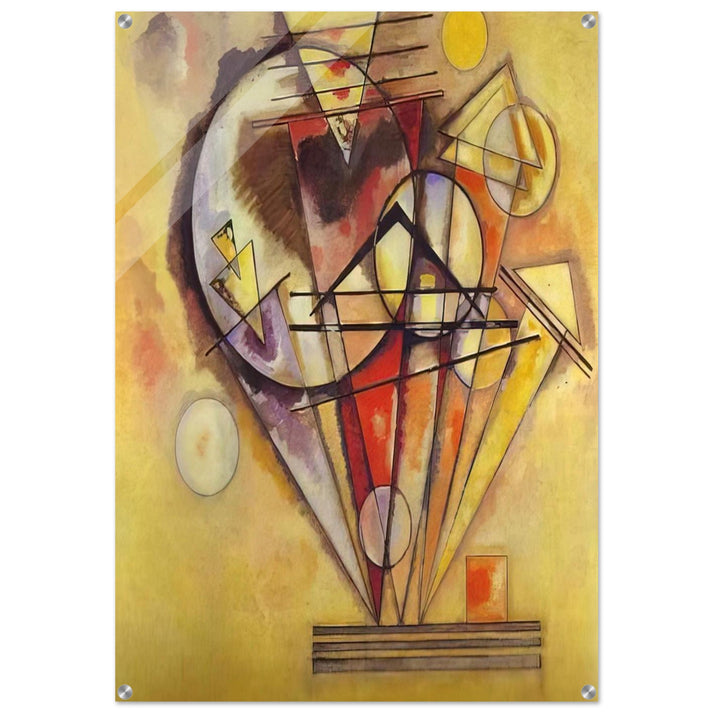
AUF DEN PUNKTEN 1928 - Wassily Kandinsky Acryl-Druck - 70x100 cm / 28x40″ Zoll
AUF DEN PUNKTEN 1928 - Wassily Kandinsky Acryl-Druck - 70x100 cm / 28x40″ Zoll
Verfügbarkeit für Abholungen konnte nicht geladen werden
Auf den Punkten 1928 - Wassily Kandinsky Acryl-Druck
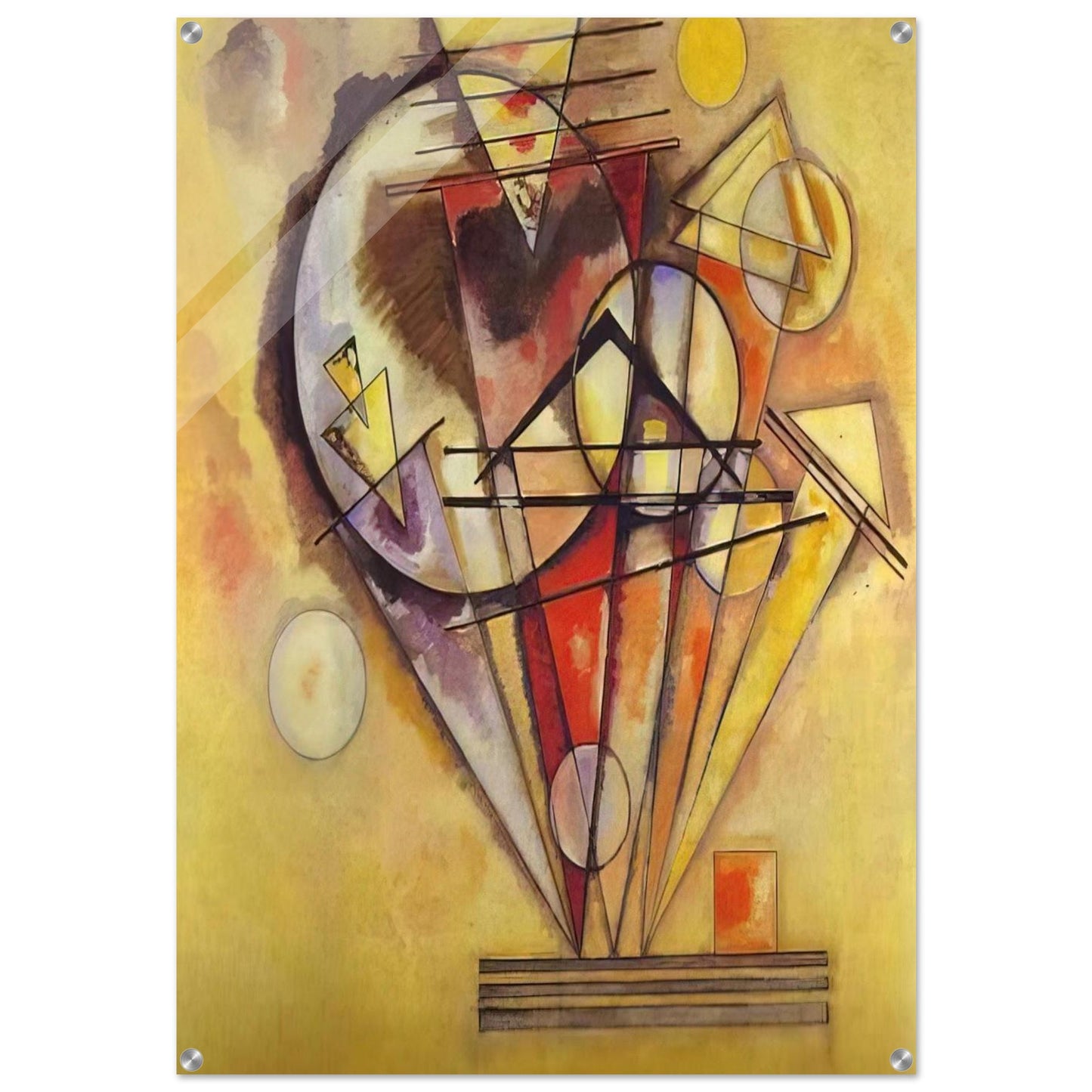
Tauchen Sie ein in die revolutionäre Abstraktion von Wassily Kandinsky mit diesem museumswürdigen Acryl-Druck von Auf den Punkten 1928. Dieses bedeutende Werk aus Kandinskys Bauhaus-Periode erkundet meisterhaft geometrische Formen, dynamische Linien und eine lebendige Farbpalette und fängt seine Suche nach reinem künstlerischem Ausdruck jenseits gegenständlicher Bilder ein. Als Pionier der abstrakten Kunst verlieh Kandinsky diesem Werk spirituelle und emotionale Resonanz, was es zu einer zeitlosen Aussage für moderne Innenräume macht.
RedKalion präsentiert diese archivwürdige Reproduktion auf einer 4 mm (0,15") Acrylplatte, die außergewöhnliche Klarheit, Farbtreue und Haltbarkeit gewährleistet. Die schlichten, gerade geschnittenen Ecken und das moderne Design – mit standardmäßig transparenten Hintergründen, die für eine optimale Präsentation weiß erscheinen – schaffen eine galeriefertige Ästhetik. Mit den Maßen 70 x 100 cm / 28 x 40" Zoll wird dieser Druck inklusive eines Aufhängesets geliefert, das Hardware, Schrauben und vorgebohrte Schraubenlöcher an jeder Ecke (14 mm vom Rand entfernt, mit einem 8-mm-Loch und 15-mm-Schraubenkopf) für eine mühelose Installation enthält.
Veredeln Sie Ihren Raum mit einem Werk, das Kunstgeschichte und zeitgenössisches Design verbindet und einen lebendigen, langlebigen Blickfang bietet, der vor Verblassen und Beschädigung geschützt ist.
```
Discover Unlimited Art Possibilities
At RedKalion, you can find virtually any artwork from any artist, available in a wide range of sizes to perfectly match your space.
If you didn’t find what you’re looking for, contact us at support@redkalion.com . We will source any artwork and produce it in any size and format you need, including art prints, posters, canvas, framed pieces, framed canvas, and more.
For dedicated art enthusiasts, we also offer handcrafted replicas of any artwork, carefully painted by highly skilled artists using traditional techniques.
For custom requests, contact us at support@redkalion.com .
What is the historical significance of Wassily Kandinsky's On the Points 1928?
On the Points 1928 is a key work from Kandinsky's Bauhaus era, showcasing his shift toward geometric abstraction and exploration of spiritual themes through dynamic forms and colors, influencing modern art movements.
How does the acrylic print enhance the artwork's details?
The 4mm acrylic panel provides a sleek, vibrant finish that amplifies Kandinsky's color palette and sharp lines, offering superior clarity and durability compared to traditional paper prints.
What are the specifications for the acrylic print material?
This fine art print uses a 4mm (0.15") acrylic panel with straight-cut corners, ensuring a modern look and long-lasting, museum-quality reproduction resistant to fading.
How is the print shipped and installed?
We ship it securely with a hanging kit, including hardware and screws, plus pre-drilled holes (14mm from edges, 8mm diameter) for easy, damage-free wall mounting.
Is this print archival and fade-resistant?
Yes, our archival-grade acrylic print is designed to resist fading and environmental damage, preserving Kandinsky's vibrant colors for years in your home or office.
What makes this reproduction museum-quality?
It combines high-resolution imaging with premium 4mm acrylic, capturing every detail of Kandinsky's original technique for an authentic, gallery-worthy display.
Can I customize the background color for transparent areas?
Transparent backgrounds default to white for optimal presentation, enhancing the geometric forms and ensuring a clean, modern aesthetic in any setting.