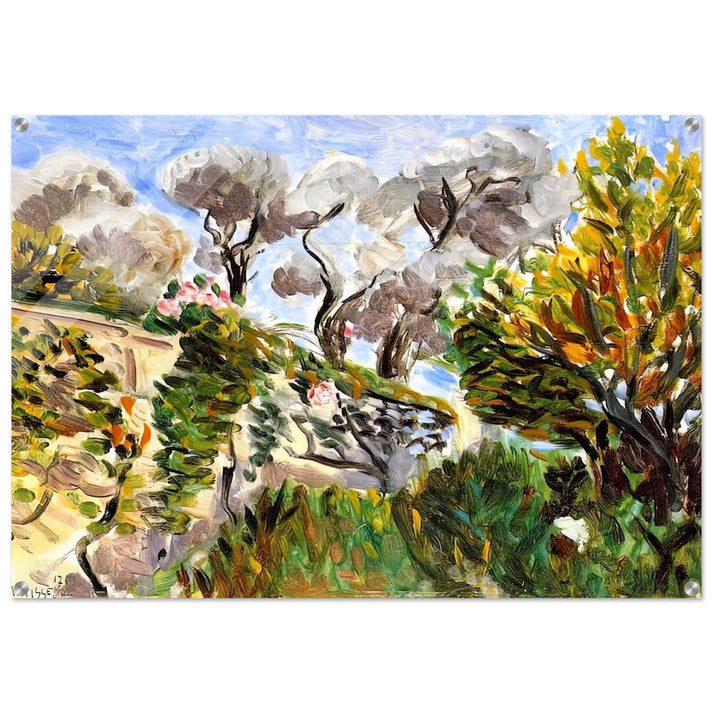


OLIVENBÄUME RENOIRS GARTEN IN CAGNES 1917 - Henri Matisse Acryl-Druck - 70x100 cm / 28x40″ Zoll
OLIVENBÄUME RENOIRS GARTEN IN CAGNES 1917 - Henri Matisse Acryl-Druck - 70x100 cm / 28x40″ Zoll
Verfügbarkeit für Abholungen konnte nicht geladen werden
Olivenbäume, Renoirs Garten in Cagnes, 1917 - Henri Matisse Acrylbild
Tauchen Sie ein in das strahlende Mittelmeerlicht, das Henri Matisse in seinem Meisterwerk von 1917, "Olivenbäume, Renoirs Garten in Cagnes", eingefangen hat. Dieses hochwertige Kunstdruck bringt die lebendige Fauvisten-Palette und den ausdrucksstarken Pinselduktus von Matisses späteren Jahren mit musealer Präzision in Ihren Raum. Während seines Aufenthalts in Cagnes-sur-Mer, wo er seinen Freund Pierre-Auguste Renoir besuchte, entstand dieses Werk, das eine harmonische Verbindung von natürlicher Schönheit und künstlerischer Innovation widerspiegelt – es vermittelt eine Ahnung von heiterer Lebendigkeit und zeitloser Eleganz.
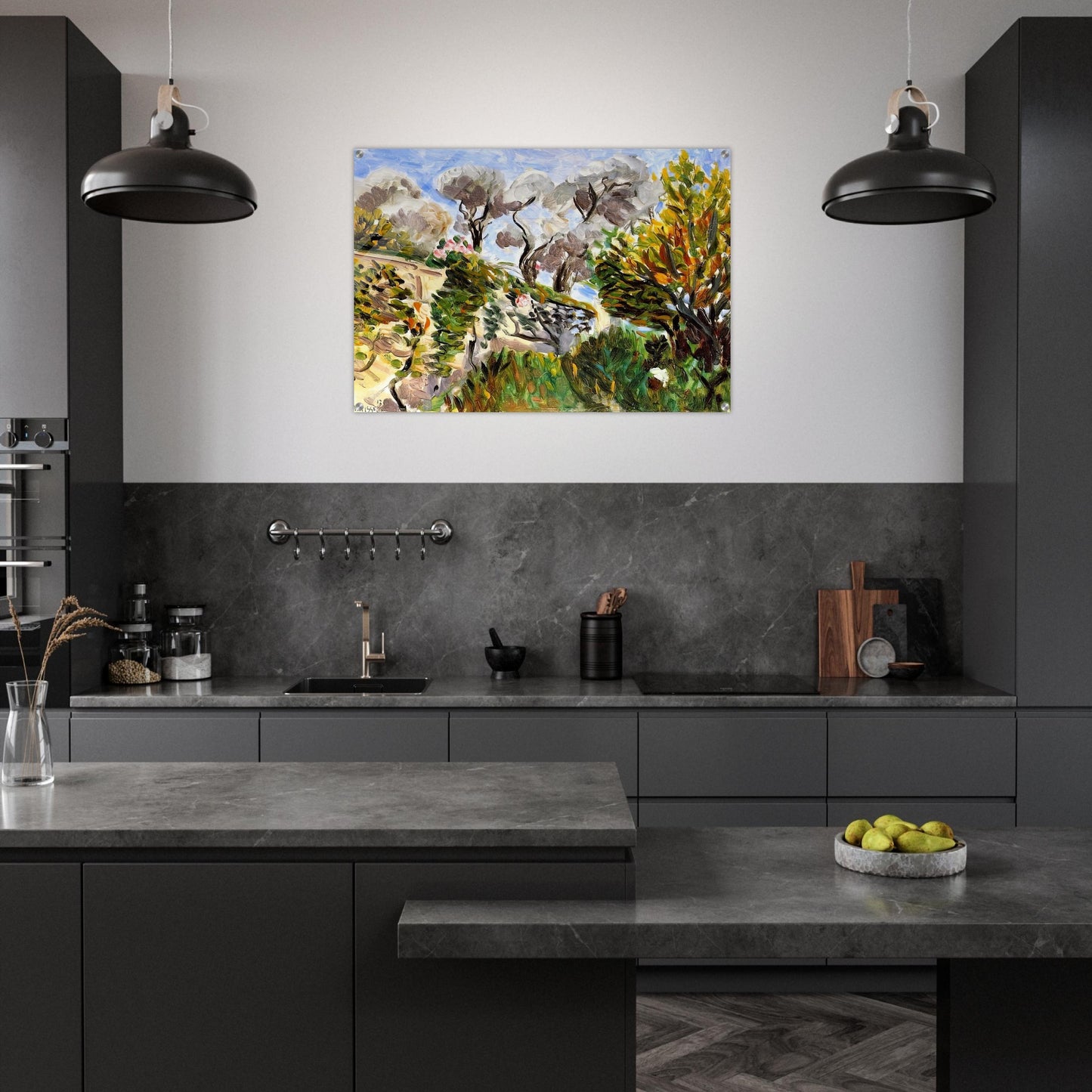
Das Premium-Acrylbild von RedKalion verwandelt dieses ikonische Kunstwerk in eine langlebige, galeriefertige Darstellung. Hergestellt mit einer 4 mm (0,15") Acrylfläche, garantiert es lebendige Farben und eine schlanke, moderne Optik, die gegen Verblassen und Beschädigungen resistent ist. Die geraden Schnittkanten und der standardmäßige weiße Hintergrund für transparente Bereiche unterstreichen den zeitgenössischen Stil und machen es zu einer anspruchsvollen Bereicherung für jedes Interieur.
Jedes Bild enthält ein vollständiges Aufhängeset mit Befestigungselementen, Schrauben und vorgebohrten Löchern (14 mm vom Rand, 8 mm Durchmesser, 15 mm Schraubenkopf) für eine mühelose Installation. Erhältlich in 70x100 cm / 28x40 Zoll, lädt diese archivtreue Reproduktion Sie ein, Matisses Genie in einem Format zu erleben, das für Beständigkeit konzipiert ist.
Veredeln Sie Ihr Zuhause oder Büro mit einem archivierten Meisterwerk, das Kunstgeschichte und modernes Handwerk verbindet. Vertrauen Sie RedKalion für kuratierte, hochwertige Reproduktionen, die die größten Künstler der Welt feiern.
```


Discover Unlimited Art Possibilities
At RedKalion, you can find virtually any artwork from any artist, available in a wide range of sizes to perfectly match your space.
If you didn’t find what you’re looking for, contact us at support@redkalion.com . We will source any artwork and produce it in any size and format you need, including art prints, posters, canvas, framed pieces, framed canvas, and more.
For dedicated art enthusiasts, we also offer handcrafted replicas of any artwork, carefully painted by highly skilled artists using traditional techniques.
For custom requests, contact us at support@redkalion.com .
What is the historical significance of "Olive Trees, Renoir's Garden in Cagnes" by Henri Matisse?
Painted in 1917, this work showcases Matisse's Fauvist style during his visit to Cagnes-sur-Mer, reflecting his friendship with Renoir and capturing the Mediterranean landscape with vibrant, expressive colors that symbolize early 20th-century modern art innovation.
What are the dimensions and material specifications of this acrylic print?
This museum-quality reproduction measures 70x100 cm (28x40 inches) and features a 4mm (0.15") acrylic face for a durable, vibrant finish with straight-cut corners and a modern design optimized for fine art display.
How is the acrylic print packaged and shipped to ensure safety?
We use protective packaging and reliable carriers to deliver your archival-grade print securely, with tracking provided for peace of mind and guaranteed safe arrival of your premium art reproduction.
What makes this print archival and resistant to fading?
Our premium acrylic material and advanced printing techniques ensure long-lasting color vibrancy and UV resistance, offering an archival-quality reproduction that preserves Matisse's masterpiece for years.
Does the print include a hanging kit, and how is it installed?
Yes, a complete hanging kit with hardware, screws, and pre-drilled holes (14mm from edge, 8mm diameter) is included for easy, secure installation of your modern acrylic art print.
How does Matisse's use of color in this painting reflect his artistic evolution?
In this 1917 work, Matisse employs bold, non-naturalistic hues typical of Fauvism to convey emotional intensity and light, demonstrating his mastery of color theory and movement away from traditional representation.
Why did Matisse choose Renoir's garden in Cagnes as the subject for this painting?
During his stay in Cagnes-sur-Mer, Matisse was inspired by the scenic olive trees and gardens of his friend Renoir, using the setting to explore themes of nature, friendship, and artistic legacy in post-Impressionist art.