

NUMMER 4 GRAU UND ROT 1948 - Jackson Pollock Aluminiumdruck - 70x100 cm / 28x40 Zoll | Jackson Pollock Aluminiumdruck | Jackson Pollock Drucke
NUMMER 4 GRAU UND ROT 1948 - Jackson Pollock Aluminiumdruck - 70x100 cm / 28x40 Zoll | Jackson Pollock Aluminiumdruck | Jackson Pollock Drucke
Verfügbarkeit für Abholungen konnte nicht geladen werden
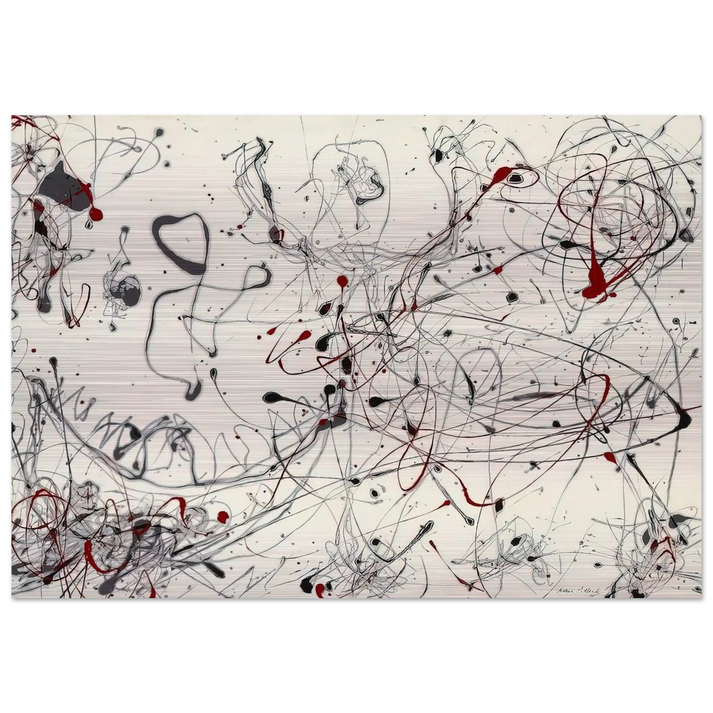
Jackson Pollocks Number 4, Grau und Rot, 1948 – Museumqualitativer Aluminiumdruck
Tauchen Sie ein in die rohe Energie des Abstrakten Expressionismus mit diesem hochwertigen gebürsteten Aluminiumdruck von Jackson Pollocks Number 4, Grau und Rot, 1948. Dieses bedeutende Werk zeigt Pollock auf dem Höhepunkt seiner revolutionären „Drip-Painting“-Technik, bei der kontrolliertes Chaos auf tiefe emotionale Tiefe trifft. Das Zusammenspiel der Grau- und Rottöne weckt eine dynamische Spannung, die die existenzielle Leidenschaft der Nachkriegszeit symbolisiert.
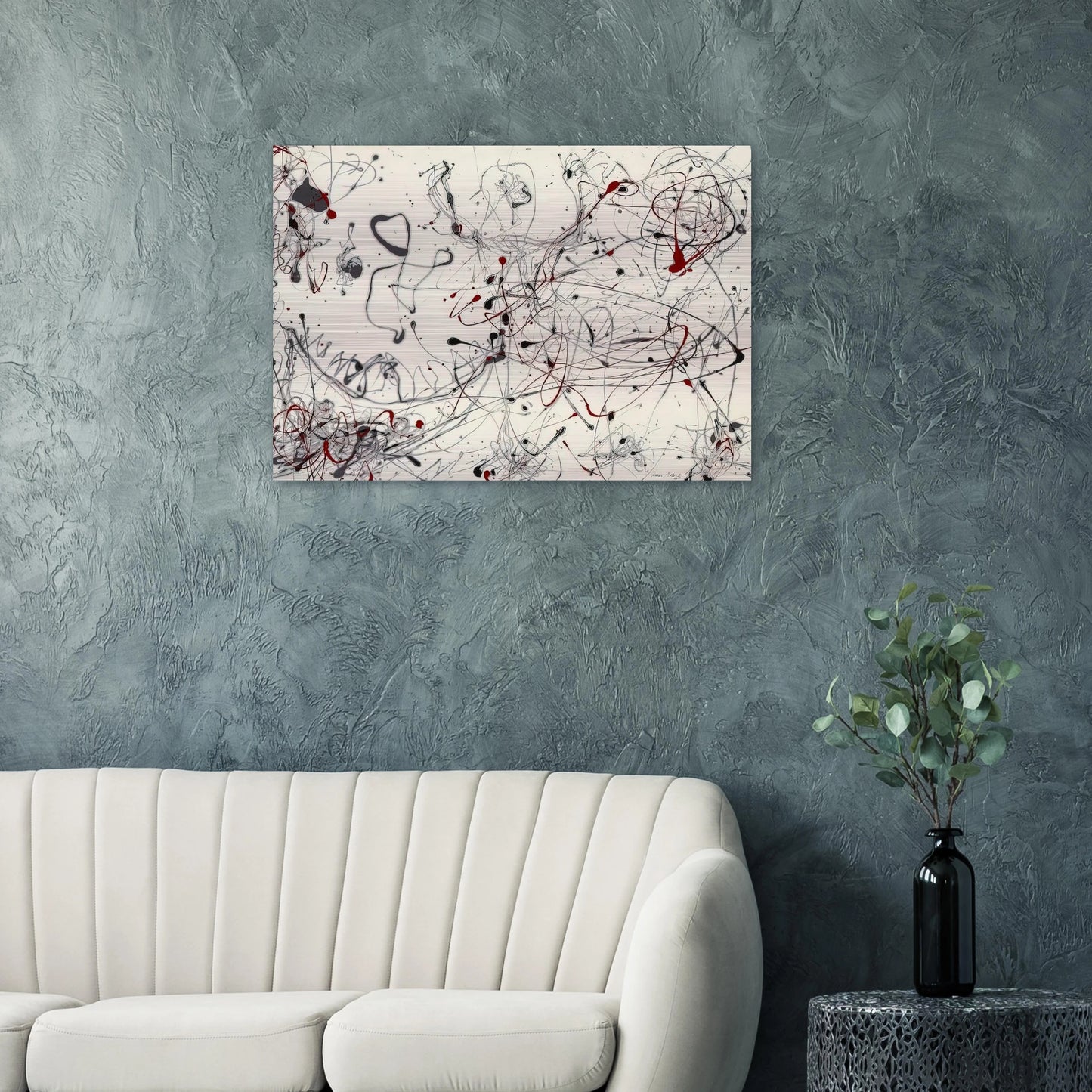
RedKalion präsentiert dieses Meisterwerk als museumqualitative Reproduktion, sorgfältig gedruckt auf 3 mm dickem gebürstetem silbernem Aluminium DIBOND®. Die Direktdrucktechnologie garantiert lebendige Farben und eine matte, blendfreie Oberfläche, während unbedruckte Bereiche einen markanten metallischen Silbereffekt freilegen, der den modernen Charme des Kunstwerks unterstreicht. Mit den Maßen 70 x 100 cm (28 x 40 Zoll) zieht dieses Stück in jedem zeitgenössischen Raum alle Blicke auf sich.
Warum Sie diesen Fine-Art-Druck wählen sollten?
- Archivqualität: Hergestellt auf strapazierfähigem Aluminium DIBOND® mit horizontaler Maserung für einen dynamischen Look, der Langlebigkeit und Farbbeständigkeit garantiert.
- Fachkundige Auswahl: RedKalion spezialisiert sich auf hochwertige Reproduktionen, die die ursprüngliche Vision des Künstlers ehren und durch kunsthistorische Genauigkeit untermauert werden.
- Hervorragende Präsentation: Enthält ein Aufhängeset für einfache Installation und verwandelt Ihr Zuhause oder Büro in eine galeriewürdige Umgebung.
Veredeln Sie Ihr Ambiente mit einem archivwürdigen Meisterwerk, das die Innovation der Mitte des 20. Jahrhunderts mit zeitlosem Design verbindet. Dieser Jackson-Pollock-Aluminiumdruck ist mehr als eine Dekoration – er ist eine Aussage von Eleganz und kulturellem Verständnis.
```


Discover Unlimited Art Possibilities
At RedKalion, you can find virtually any artwork from any artist, available in a wide range of sizes to perfectly match your space.
If you didn’t find what you’re looking for, contact us at support@redkalion.com . We will source any artwork and produce it in any size and format you need, including art prints, posters, canvas, framed pieces, framed canvas, and more.
For dedicated art enthusiasts, we also offer handcrafted replicas of any artwork, carefully painted by highly skilled artists using traditional techniques.
For custom requests, contact us at support@redkalion.com .
What is the significance of Jackson Pollock's Number 4, Gray and Red, 1948?
This artwork is a key example of Pollock's drip painting technique from 1948, showcasing abstract expressionism with gray and red hues that reflect post-war emotional intensity and artistic innovation.
What materials are used for this Jackson Pollock aluminum print?
It's printed on 3mm thick brushed silver Aluminum DIBOND® with a metallic finish and horizontal grain, offering a durable, rigid base with vivid colors and a matte finish.
How does the printing on aluminum affect the artwork's appearance?
Direct print on AluDibond ensures vibrant colors and a matte, glare-free finish, while unprinted white areas reveal a dynamic metallic silver effect for a striking look.
What are the dimensions and hanging details for this fine art print?
It measures 70x100 cm (28x40 inches) and includes a hanging kit for easy installation, with variations based on your fulfillment country for convenience.
Is this print archival and long-lasting?
Yes, this museum-quality reproduction uses archival-grade materials on Aluminum DIBOND®, designed to resist fading and maintain its vivid colors over time.
How does Pollock's technique in this piece differ from his later works?
In 1948, Pollock refined his drip method, blending controlled gestures with spontaneous energy, as seen in the gray and red interplay that predates his more chaotic later styles.
Why is the brushed silver finish ideal for this black-and-white design?
The brushed silver effect enhances the contrast in Pollock's composition, adding a modern metallic sheen that complements the abstract gray and red elements without glare.