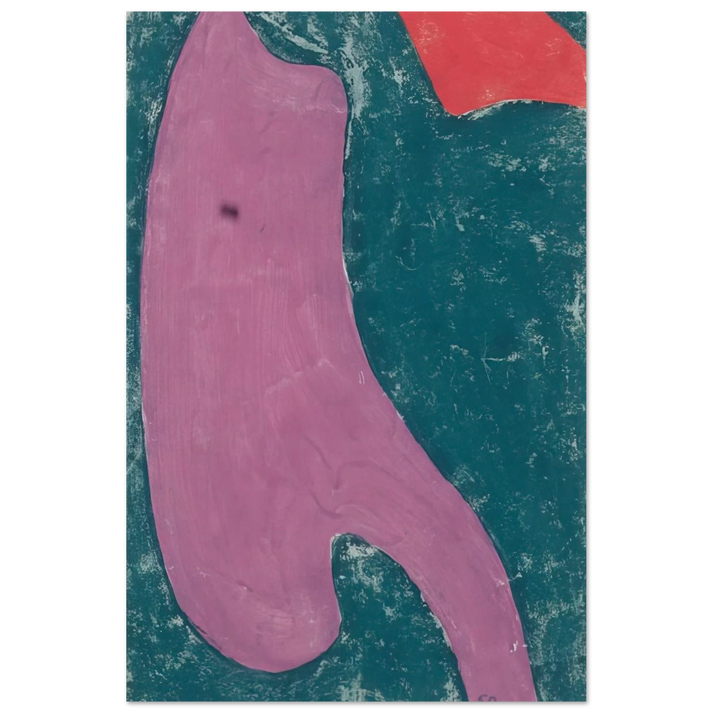


Etude de tissu - 1946 - Serge Poliakoff Art Prints - 100x150 cm / 40x60″ inches | Serge Poliakoff Poster | Serge Poliakoff Prints
Etude de tissu - 1946 - Serge Poliakoff Art Prints - 100x150 cm / 40x60″ inches | Serge Poliakoff Poster | Serge Poliakoff Prints
Verfügbarkeit für Abholungen konnte nicht geladen werden
Serge Poliakoff's Étude de Tissu (1946): A Masterpiece of Abstract Luminosity
Elevate your space with Serge Poliakoff's Étude de Tissu (1946), a defining work from the pioneer of lyrical abstraction. This museum-quality fine art print captures Poliakoff's revolutionary approach to color and form, where interlocking planes of muted ochres, deep blues, and warm grays create a mesmerizing interplay of light and texture. As a cornerstone of the École de Paris, Poliakoff's work transcends mere decoration—it invites contemplation, evoking the quiet intensity of a stained-glass window or the layered depth of a geological formation.
Rendered on RedKalion's Master's Edition archival paper, this 100x150 cm (40x60″) reproduction is a testament to both artistic genius and uncompromising craftsmanship. Our 250 gsm, acid-free, FSC-certified paper—with its matte, uncoated finish and natural off-white hue—ensures that every nuance of Poliakoff's brushwork and tonal subtleties is preserved with breathtaking fidelity. Unlike mass-produced posters, this archival-grade print is designed to endure, resisting yellowing and fading for generations.
The Art Historical Significance of Étude de Tissu
Created in 1946, Étude de Tissu marks a pivotal moment in Poliakoff's career, where he distilled his earlier influences—from Byzantine icons to Russian folk art—into a purely abstract language. The title, translating to "Study of Fabric," hints at the tactile quality of his compositions, where color fields seem to ripple and fold like heavy textiles. Poliakoff's technique involved layering thin glazes of oil paint, a method that imbued his canvases with an almost luminous depth. This print faithfully reproduces that luminosity, allowing you to experience the same visual poetry that captivated critics and collectors in post-war Paris.
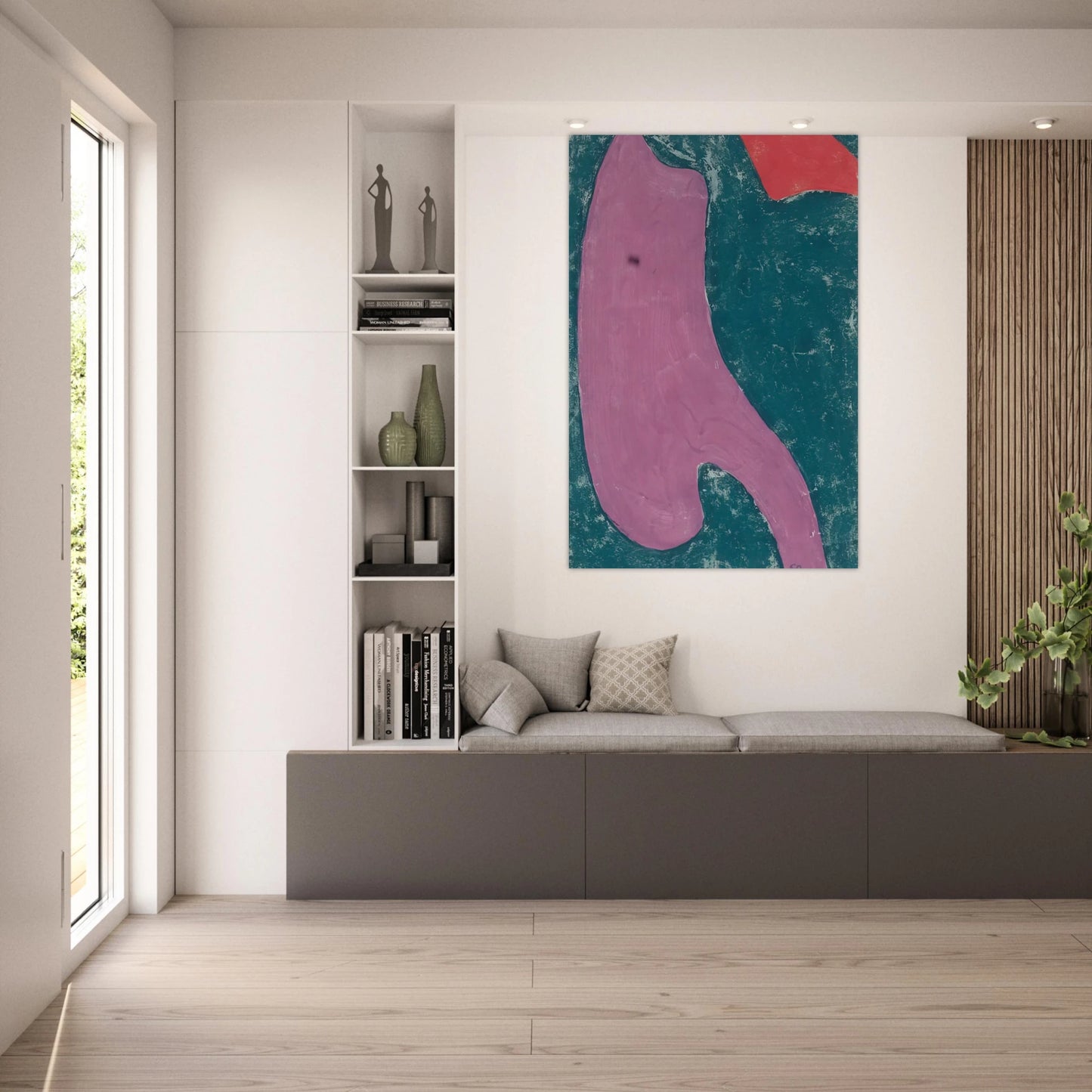
By choosing RedKalion, you're not just acquiring a Serge Poliakoff poster—you're investing in a curated, archival masterpiece that bridges the gap between gallery-quality art and the intimacy of your home. Whether displayed in a minimalist loft, a contemporary office, or a classic interior, Étude de Tissu infuses any space with sophistication and soul.
- Artist: Serge Poliakoff (Russian-French, 1900–1969)
- Artwork: Étude de Tissu (1946)
- Print Size: 100x150 cm (40x60″ inches)
- Paper: Master's Edition archival paper—250 gsm, acid-free, FSC-certified, matte uncoated finish
- Color Accuracy: Professionally calibrated to match the original artwork's tonal subtleties
- Sustainability: Eco-conscious production with FSC-certified materials


Discover Unlimited Art Possibilities
At RedKalion, you can find virtually any artwork from any artist, available in a wide range of sizes to perfectly match your space.
If you didn’t find what you’re looking for, contact us at support@redkalion.com . We will source any artwork and produce it in any size and format you need, including art prints, posters, canvas, framed pieces, framed canvas, and more.
For dedicated art enthusiasts, we also offer handcrafted replicas of any artwork, carefully painted by highly skilled artists using traditional techniques.
For custom requests, contact us at support@redkalion.com .
What makes this Étude de Tissu print different from a standard Serge Poliakoff poster?
This is a museum-quality fine art print on archival-grade paper, designed to replicate the depth and texture of Poliakoff's original oil painting. Unlike mass-produced posters, it uses acid-free, 250 gsm paper with a matte, uncoated finish for longevity and visual fidelity.
How does the paper quality ensure the longevity of my Serge Poliakoff print?
Our Master's Edition archival paper is acid-free (pH above 7) and FSC-certified, preventing yellowing and deterioration. The 250 gsm weight and 0.29 mm thickness ensure durability while preserving Poliakoff's subtle color transitions.
What are the dimensions of this Étude de Tissu art print?
This Serge Poliakoff print is available in 100x150 cm (40x60″ inches), offering a bold, immersive presence ideal for modern interiors or gallery walls.
How should I frame or display my Serge Poliakoff reproduction?
For optimal preservation, use a museum-quality frame with UV-protective glass. The matte, uncoated paper pairs beautifully with simple, contemporary frames to highlight Poliakoff's abstract composition.
Is this Étude de Tissu print eco-friendly?
Yes! Our paper is FSC-certified, sourced from sustainably managed forests, ensuring your archival art print aligns with eco-conscious values without compromising quality.
What inspired Serge Poliakoff to create Étude de Tissu in 1946?
Poliakoff drew inspiration from Byzantine mosaics and Russian folk textiles, translating their layered textures into abstract forms. The title reflects his fascination with fabric's tactile qualities, rendered through his signature glazing technique.
How does Poliakoff's technique contribute to the mood of Étude de Tissu?
Poliakoff's layered glazes create a luminous, almost translucent effect, evoking the quiet intensity of stained glass. The muted palette and interlocking shapes generate a meditative, timeless atmosphere.