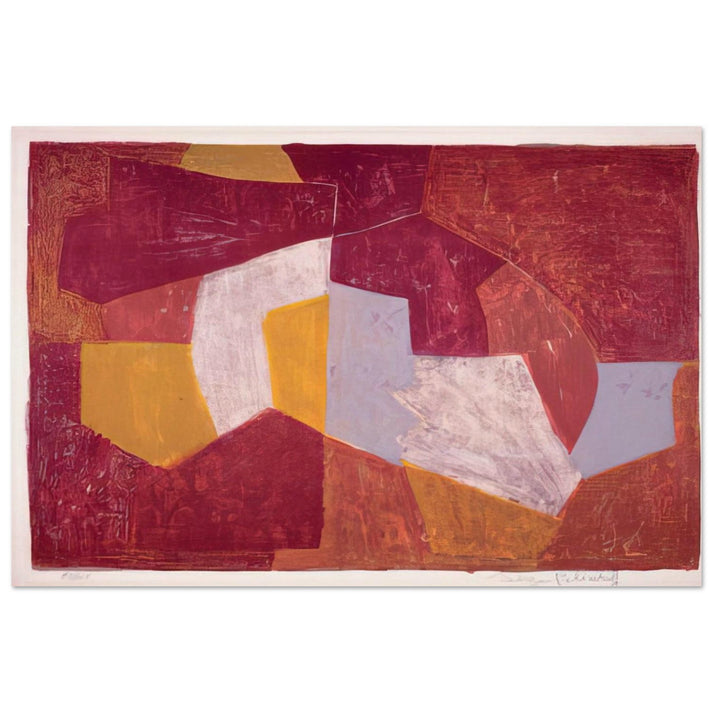


Composition carmin, brune, jaune et grise - 1956 - Serge Poliakoff Art Prints - 100x150 cm / 40x60″ inches | Serge Poliakoff Poster | Serge Poliakoff Prints
Composition carmin, brune, jaune et grise - 1956 - Serge Poliakoff Art Prints - 100x150 cm / 40x60″ inches | Serge Poliakoff Poster | Serge Poliakoff Prints
Verfügbarkeit für Abholungen konnte nicht geladen werden
Serge Poliakoff’s Composition carmin, brune, jaune et grise (1956): A Masterpiece of Lyrical Abstraction
Elevate your space with this museum-quality reproduction of Composition carmin, brune, jaune et grise (1956), a defining work by Russian-French abstract painter Serge Poliakoff. Renowned for his luminous, interlocking planes of color, Poliakoff crafted this piece during the height of the École de Paris, where his innovative approach to abstraction redefined modern art. This fine art print captures the essence of Poliakoff’s genius—where subtle chromatic harmonies and rhythmic compositions evoke a sense of quiet intensity and meditative depth.
RedKalion’s Master’s Edition archival print is meticulously reproduced on our premium, FSC-certified, acid-free paper, ensuring a lifetime of unparalleled clarity and vibrancy. The 250 gsm (110 lb), uncoated, off-white matte paper—with its natural texture and weight—faithfully replicates the tactile experience of an original artwork, while its pH-neutral composition guarantees resistance to yellowing and deterioration. Whether displayed in a gallery, home, or professional setting, this 100x150 cm (40x60″) fine art print transforms any environment into a sanctuary of sophistication.
Poliakoff’s technique in Composition carmin, brune, jaune et grise reflects his mastery of color field painting, where overlapping hues create a dynamic interplay of light and space. The warm carmin, earthy brune, and muted jaune and grise tones coalesce into a visual symphony, inviting contemplation and emotional resonance. As a pivotal figure in post-war abstraction, Poliakoff’s work bridges the gap between European modernism and the emerging American abstract expressionist movement, making this piece a timeless addition to any art collection.
Choose RedKalion for your Serge Poliakoff prints and experience the difference of a gallery-curated, archival-grade reproduction. Each print is produced with the utmost precision, ensuring that every detail—from the subtlest brushstroke to the rich pigmentation—is preserved for generations to come. This is not merely a poster; it is a museum-quality masterpiece designed to inspire and endure.


Discover Unlimited Art Possibilities
At RedKalion, you can find virtually any artwork from any artist, available in a wide range of sizes to perfectly match your space.
If you didn’t find what you’re looking for, contact us at support@redkalion.com . We will source any artwork and produce it in any size and format you need, including art prints, posters, canvas, framed pieces, framed canvas, and more.
For dedicated art enthusiasts, we also offer handcrafted replicas of any artwork, carefully painted by highly skilled artists using traditional techniques.
For custom requests, contact us at support@redkalion.com .
What is the size of this Serge Poliakoff print?
This Serge Poliakoff fine art print is available in 100x150 cm (40x60″ inches), offering a bold and immersive presence for any space.
What type of paper is used for this museum-quality reproduction?
Our Master’s Edition archival print is crafted on 250 gsm (110 lb), uncoated, off-white matte paper, ensuring a luxurious texture and long-lasting durability.
Is this Serge Poliakoff poster acid-free and archival?
Yes, the paper is acid-free with a pH above 7, preventing yellowing and ensuring your Serge Poliakoff print remains vibrant for decades.
How does this print compare to an original Serge Poliakoff artwork?
While this is a museum-quality reproduction, it captures the essence of Poliakoff’s original Composition carmin, brune, jaune et grise (1956) with archival precision, offering an accessible way to enjoy his masterpiece.
What is the shipping time for this Serge Poliakoff print?
Shipping times vary by location, but we ensure secure, tracked delivery of your fine art print within 5-10 business days for domestic orders.
Why did Serge Poliakoff use such muted tones in Composition carmin, brune, jaune et grise?
Poliakoff’s muted palette reflects his focus on chromatic harmony and emotional depth, where subtle shifts in tone create a meditative, almost spiritual effect.
How does Poliakoff’s work fit into the broader abstract art movement?
Poliakoff was a key figure in post-war abstraction, blending European modernism with lyrical color field techniques, influencing both the École de Paris and American abstract expressionists.