Burnt Umber Ultramarine Blue - 2007 - Yun Hyong-keun Art Prints - 100x150 cm / 40x60″ inches | Yun Hyong-keun Poster | Yun Hyong-keun Prints
Burnt Umber Ultramarine Blue - 2007 - Yun Hyong-keun Art Prints - 100x150 cm / 40x60″ inches | Yun Hyong-keun Poster | Yun Hyong-keun Prints
Verfügbarkeit für Abholungen konnte nicht geladen werden
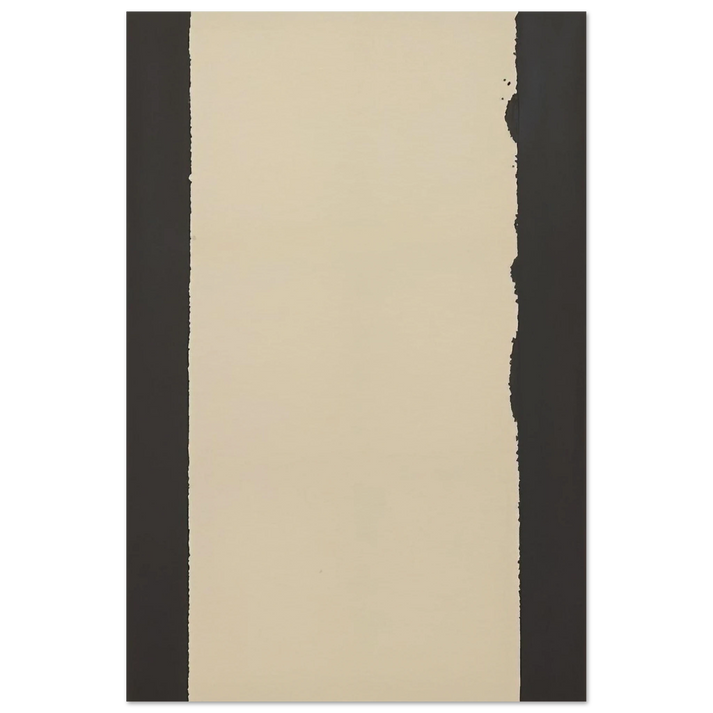
Yun Hyong-keun’s Burnt Umber & Ultramarine Blue (2007): A Masterpiece of Minimalist Meditation
Elevate your space with a museum-quality reproduction of Yun Hyong-keun’s Burnt Umber & Ultramarine Blue (2007), a defining work from Korea’s most revered abstract painter. This archival fine art print captures the profound simplicity of Yun’s signature style—where earth and sky converge in a meditative dance of deep, velvety hues. Each stroke, meticulously layered, evokes the quiet power of nature and the passage of time, a hallmark of the Dansaekhwa movement.
RedKalion’s Master’s Edition print is crafted on 250 gsm (110 lb) FSC-certified, acid-free paper, ensuring your artwork remains vibrant and unblemished for generations. The matte, uncoated, off-white surface enhances the depth of Yun’s pigments, replicating the tactile richness of the original canvas. With a thickness of 0.29 mm (11.4 mils), this print exudes luxury and durability, making it a timeless addition to any collection.
Yun Hyong-keun’s work is celebrated for its emotional resonance and technical precision. In Burnt Umber & Ultramarine Blue, he employs a restrained palette to explore the interplay of light and shadow, creating a composition that feels both intimate and expansive. The artist’s use of burnt umber—a pigment derived from natural earth—grounds the piece in organic warmth, while ultramarine blue, historically prized for its rarity, adds a celestial depth. This juxtaposition reflects Yun’s lifelong fascination with the duality of existence: the tangible and the transcendent.
Measuring 100x150 cm (40x60″ inches), this large-format print commands attention, transforming any room into a sanctuary of contemplation. Whether displayed in a modern gallery, a minimalist home, or a corporate space, Burnt Umber & Ultramarine Blue invites viewers to pause and reflect. As Yun himself once said, "Art is not about making something beautiful, but about revealing the truth."
RedKalion is your trusted curator of world-class art reproductions. Our commitment to archival-quality materials and sustainable practices ensures that every print we offer is a testament to both artistic excellence and environmental responsibility. Experience the legacy of Yun Hyong-keun with a print that honors his vision—faithfully reproduced, ethically crafted, and designed to endure.

Discover Unlimited Art Possibilities
At RedKalion, you can find virtually any artwork from any artist, available in a wide range of sizes to perfectly match your space.
If you didn’t find what you’re looking for, contact us at support@redkalion.com . We will source any artwork and produce it in any size and format you need, including art prints, posters, canvas, framed pieces, framed canvas, and more.
For dedicated art enthusiasts, we also offer handcrafted replicas of any artwork, carefully painted by highly skilled artists using traditional techniques.
For custom requests, contact us at support@redkalion.com .
What is the significance of Burnt Umber & Ultramarine Blue in Yun Hyong-keun’s body of work?
This 2007 piece exemplifies Yun’s mastery of the Dansaekhwa movement, using minimalist earth tones to evoke nature’s quiet power. Its layered pigments create depth, making it a pivotal work in Korean abstract art.
What paper is used for this fine art print?
Our Master’s Edition archival paper is 250 gsm (110 lb), acid-free, uncoated, and FSC-certified, ensuring museum-quality longevity and a natural off-white finish.
How does the matte finish enhance the print’s appearance?
The matte, uncoated surface reduces glare and highlights the velvety texture of Yun’s pigments, closely replicating the original artwork’s tactile depth.
Is this print suitable for framing?
Absolutely. The 100x150 cm (40x60″) size and 0.29 mm thickness make it ideal for custom framing, enhancing its gallery-like presentation.
How long will this archival print last?
Our acid-free, pH-neutral paper prevents yellowing, ensuring your print remains vibrant for 100+ years under proper display conditions.
What is the Dansaekhwa movement, and how does Yun Hyong-keun fit into it?
Dansaekhwa (Korean monochrome painting) emerged in the 1970s, emphasizing materiality and minimalism. Yun’s work, like Burnt Umber & Ultramarine Blue, embodies its meditative, process-driven ethos.
Why did Yun Hyong-keun use burnt umber and ultramarine blue?
Burnt umber symbolizes earth, while ultramarine blue represents the sky. Yun’s pairing reflects his exploration of nature’s duality—grounded yet transcendent—in his art.