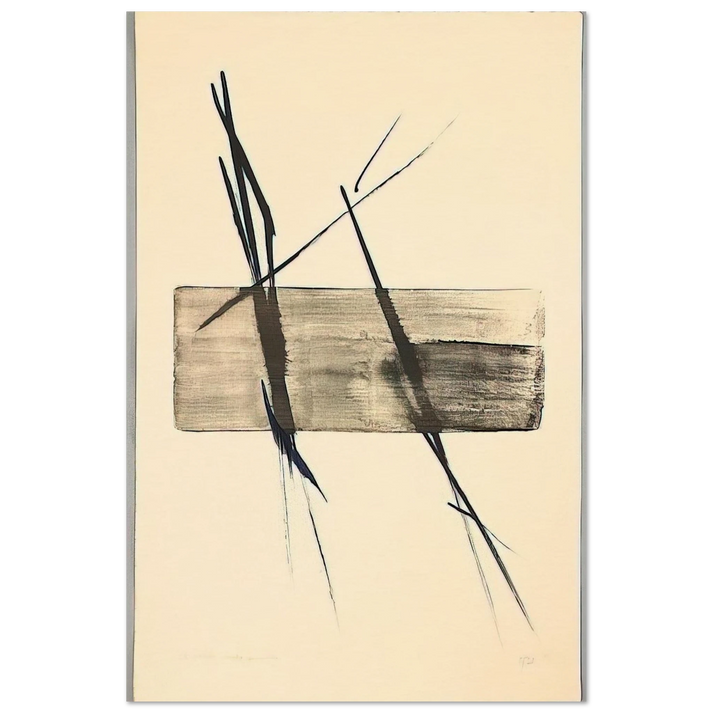


Beyond - Abstract Expressionism - Toko Shinoda Art Prints - 100x150 cm / 40x60″ inches | Toko Shinoda Poster | Toko Shinoda Prints
Beyond - Abstract Expressionism - Toko Shinoda Art Prints - 100x150 cm / 40x60″ inches | Toko Shinoda Poster | Toko Shinoda Prints
Verfügbarkeit für Abholungen konnte nicht geladen werden
Toko Shinoda's Beyond: A Masterpiece of Abstract Expressionism Reimagined
Elevate your space with Beyond, a breathtaking Toko Shinoda print that transcends the boundaries of Abstract Expressionism. Renowned for her poetic fusion of Japanese calligraphy and Western abstraction, Shinoda's work embodies the soul of mid-20th-century innovation. This museum-quality reproduction captures the essence of her signature brushwork—fluid, dynamic, and deeply emotive—rendered in a 100x150 cm (40x60″) format that commands attention.
RedKalion's Master's Edition archival paper ensures this fine art print endures as a timeless centerpiece. Crafted on FSC-certified, acid-free paper with a pH above 7, it resists yellowing and degradation, preserving Shinoda's vision for generations. The 250 gsm (110 lb) weight and 0.29 mm thickness lend a luxurious, gallery-worthy texture, while the matte, uncoated finish in natural off-white enhances the artwork's organic depth.
Shinoda's Beyond is more than a print—it's a dialogue between tradition and modernity. Her use of sumi ink and spontaneous brushstrokes reflects the zenga (Zen painting) tradition, yet her bold compositions resonate with the energy of Pollock and Rothko. This piece invites contemplation, making it ideal for collectors who seek art with both historical significance and contemporary allure.
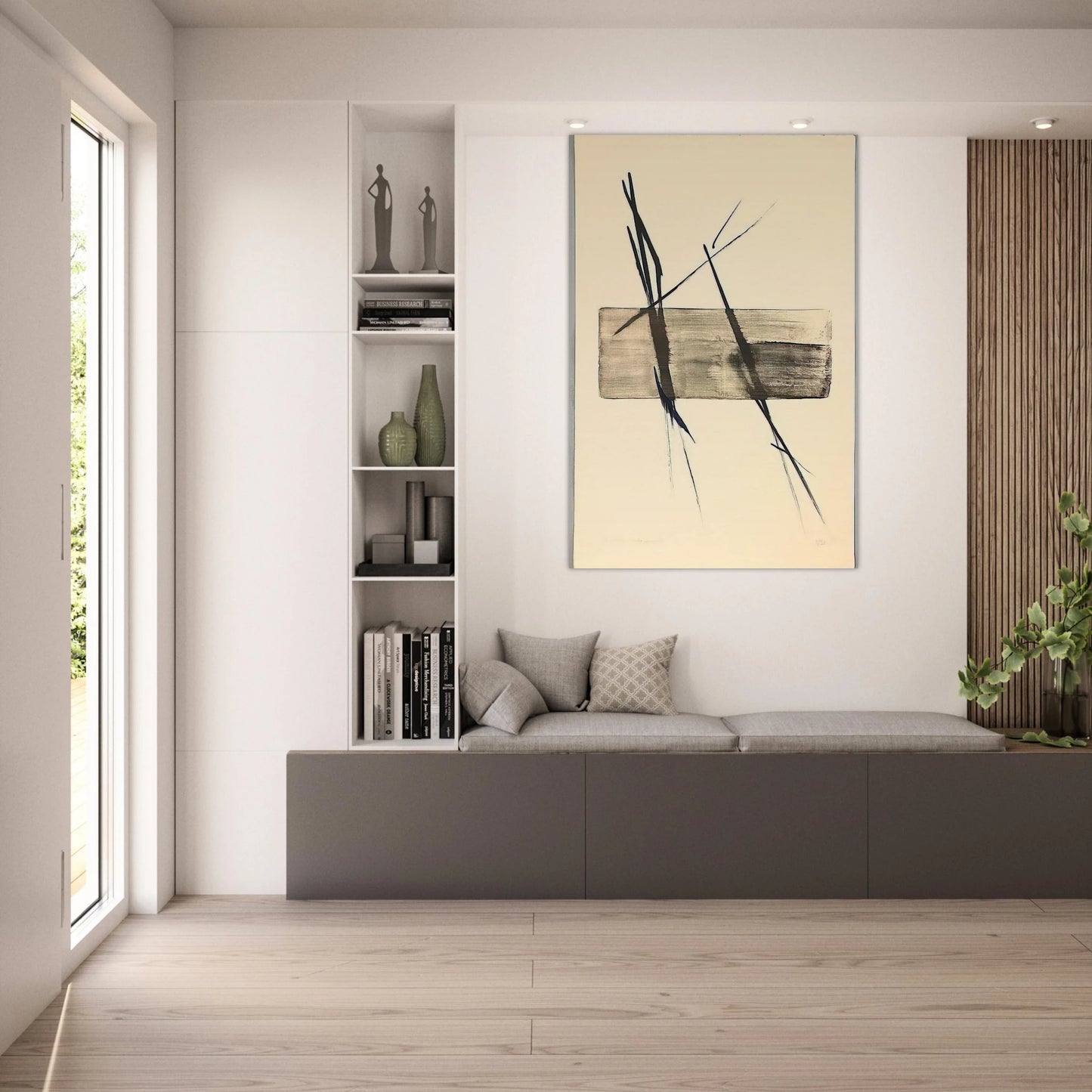
Trust RedKalion to deliver an archival-grade Toko Shinoda poster that meets the exacting standards of museums and connoisseurs. Each print is produced with meticulous attention to color accuracy and detail, ensuring a reproduction as close to the original as possible. Whether displayed in a minimalist loft or a classic gallery setting, Beyond transforms any environment into a sanctuary of refined taste.


Discover Unlimited Art Possibilities
At RedKalion, you can find virtually any artwork from any artist, available in a wide range of sizes to perfectly match your space.
If you didn’t find what you’re looking for, contact us at support@redkalion.com . We will source any artwork and produce it in any size and format you need, including art prints, posters, canvas, framed pieces, framed canvas, and more.
For dedicated art enthusiasts, we also offer handcrafted replicas of any artwork, carefully painted by highly skilled artists using traditional techniques.
For custom requests, contact us at support@redkalion.com .
What makes this Toko Shinoda print museum-quality?
Our Master's Edition archival paper is acid-free (pH above 7), FSC-certified, and 250 gsm thick, ensuring longevity and resistance to yellowing. The matte, uncoated finish preserves the artwork's depth and texture, meeting museum standards for fine art reproductions.
How does the paper's off-white color enhance the print?
The natural off-white hue of our uncoated archival paper complements Shinoda's sumi ink tones, creating a warm, organic backdrop that highlights the artwork's subtle nuances and brushwork.
Is this Toko Shinoda poster suitable for framing?
Absolutely. The 100x150 cm (40x60″) size is a standard gallery dimension, and the 250 gsm weight ensures durability. We recommend a museum-quality frame with UV-protective glass to preserve the print's archival integrity.
How does RedKalion ensure color accuracy in reproductions?
We use high-resolution scanning and Giclée printing with pigment-based inks to achieve precise color matching. Each Toko Shinoda print undergoes rigorous quality checks to replicate the original's vibrancy and detail.
What is the environmental impact of this print?
Our paper is FSC-certified, sourced from sustainably managed forests. The acid-free, archival-grade materials minimize environmental harm while ensuring the print's longevity.
How does Toko Shinoda's work bridge Eastern and Western art?
Shinoda merges Japanese calligraphy with Abstract Expressionism, using sumi ink and spontaneous brushstrokes to create compositions that resonate with both Zen minimalism and Western avant-garde energy.
What inspired the title Beyond for this artwork?
While Shinoda rarely explained her titles, Beyond likely reflects her exploration of transcendence—where calligraphic tradition meets abstract innovation, inviting viewers to look past the visible into deeper emotional and spiritual realms.