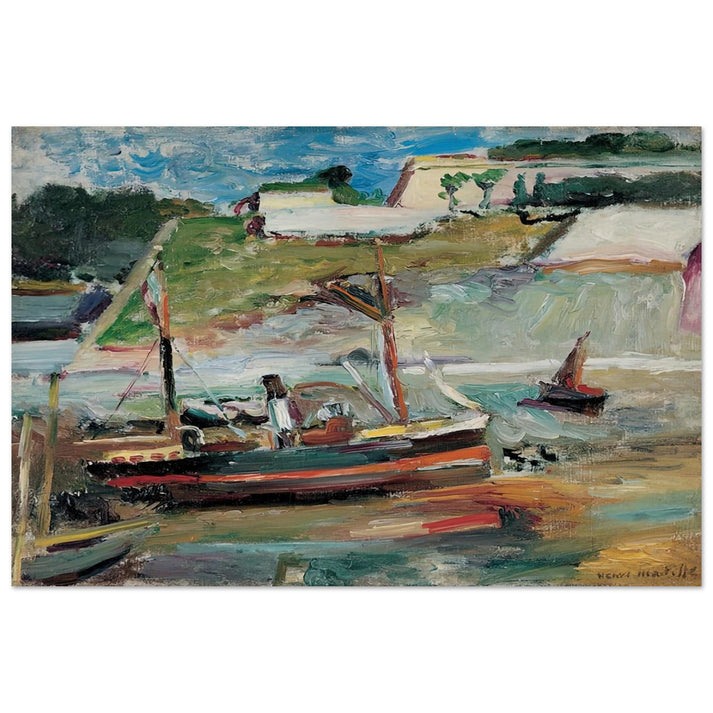


BELLE ILE LE PORT DE PALAIS 1896 - Henri Matisse Art Prints - 100x150 cm / 40x60″ inches | Henri Matisse Poster | Henri Matisse Prints
BELLE ILE LE PORT DE PALAIS 1896 - Henri Matisse Art Prints - 100x150 cm / 40x60″ inches | Henri Matisse Poster | Henri Matisse Prints
Verfügbarkeit für Abholungen konnte nicht geladen werden
Henri Matisse’s Belle Île, Le Port de Palais, 1896: A Masterpiece Reborn in Archival Splendor
Step into the vibrant coastal world of Henri Matisse with this exquisite museum-quality reproduction of Belle Île, Le Port de Palais, 1896. Capturing the rugged beauty of Brittany’s Belle Île, this early work reveals Matisse’s burgeoning mastery of color and light—long before his Fauvist revolution. Now, RedKalion brings this historic painting to life as a fine art print of unparalleled depth and authenticity, meticulously crafted to grace your walls for generations.
This Henri Matisse poster is not merely a print; it is a museum-quality reproduction on our Master’s Edition archival paper, designed to mirror the texture and tonal richness of the original. The off-white, uncoated matte surface enhances the artwork’s subtle nuances, while the 250 gsm (110 lb) weight and 0.29 mm thickness provide a luxurious, gallery-worthy presence. Acid-free and FSC-certified, this paper ensures your Henri Matisse print remains vibrant and pristine, free from the yellowing that plagues lesser reproductions.
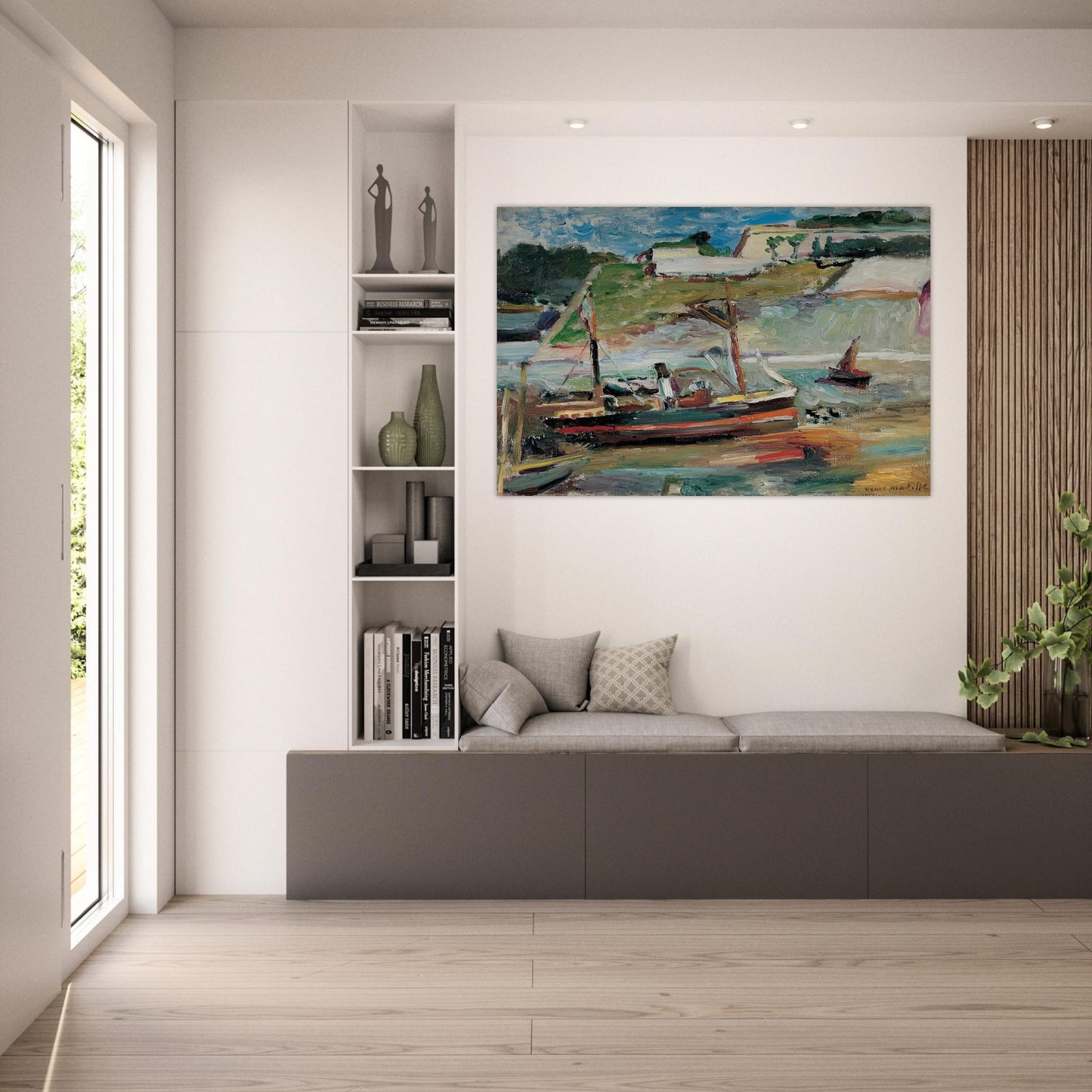
Measuring an impressive 100x150 cm (40x60 inches), this large-format print commands attention, transforming any space into a sanctuary of art and culture. Whether displayed in a modern loft, a classic study, or a sunlit gallery wall, Belle Île, Le Port de Palais evokes the serene yet dynamic spirit of the French coastline, where Matisse first honed his revolutionary vision.
In 1896, Matisse embarked on a pivotal journey to Belle Île, a remote island off the coast of Brittany. Here, he abandoned the muted palettes of his academic training, embracing instead the bold, luminous hues that would later define his Fauvist period. Le Port de Palais captures this transition—its brushstrokes a dance of earthy ochres, deep blues, and sunlit greens, all rendered with a spontaneity that foreshadows his later genius. This print is not just a decorative piece; it is a window into the evolution of one of history’s greatest artists.
At RedKalion, we curate only the finest archival-grade reproductions, ensuring each print meets the exacting standards of museums and collectors worldwide. Elevate your space with a piece of art history—where every detail, from the paper’s natural off-white tone to its sustainable, FSC-certified composition, reflects our commitment to excellence. This is not just a Henri Matisse art print; it is an investment in beauty, craftsmanship, and timeless elegance.


Discover Unlimited Art Possibilities
At RedKalion, you can find virtually any artwork from any artist, available in a wide range of sizes to perfectly match your space.
If you didn’t find what you’re looking for, contact us at support@redkalion.com . We will source any artwork and produce it in any size and format you need, including art prints, posters, canvas, framed pieces, framed canvas, and more.
For dedicated art enthusiasts, we also offer handcrafted replicas of any artwork, carefully painted by highly skilled artists using traditional techniques.
For custom requests, contact us at support@redkalion.com .
What makes this Belle Île, Le Port de Palais print a museum-quality reproduction?
Our Henri Matisse print is crafted on Master’s Edition archival paper, featuring a matte, uncoated, off-white surface, 250 gsm weight, and acid-free composition to ensure longevity and fidelity to the original artwork.
How does the paper’s off-white, uncoated finish enhance the print?
The natural white (off-white) matte paper reduces glare and enhances color depth, closely replicating the texture and appearance of the original painting’s canvas.
Is this Henri Matisse poster suitable for framing?
Absolutely. The 100x150 cm (40x60″) size and 250 gsm thickness make it ideal for professional framing, ensuring a gallery-ready presentation.
How does RedKalion ensure the print’s archival longevity?
Our paper is acid-free (pH above 7) and FSC-certified, preventing yellowing and degradation over time, so your fine art print remains vibrant for decades.
What are the shipping options for this large Henri Matisse art print?
We offer secure, worldwide shipping with tracking. The print is carefully rolled in a protective tube to prevent damage during transit, ensuring it arrives in pristine condition.
Why did Matisse paint Belle Île, Le Port de Palais in 1896?
In 1896, Matisse visited Belle Île to escape Paris and explore new artistic directions. The island’s rugged landscapes inspired him to experiment with bold colors and loose brushwork, marking a turning point in his career.
How does this print compare to Matisse’s later Fauvist works?
Belle Île, Le Port de Palais showcases Matisse’s early transition from academic realism to Fauvism. While less vibrant than his later works, it reveals his growing emphasis on color and light, foreshadowing his revolutionary style.