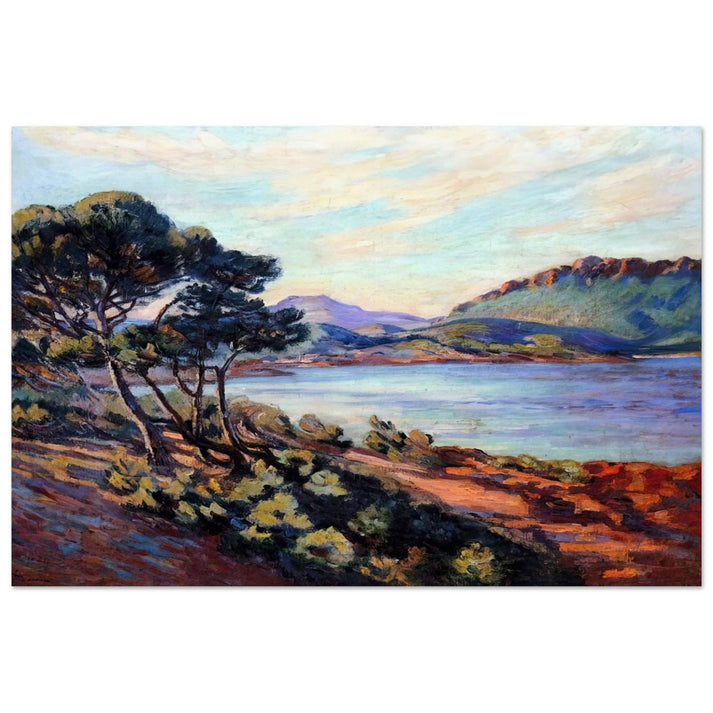


Agay Bay - 1910 - Armand Guillaumin Art Prints - 100x150 cm / 40x60″ inches | Armand Guillaumin Poster | Armand Guillaumin Prints
Agay Bay - 1910 - Armand Guillaumin Art Prints - 100x150 cm / 40x60″ inches | Armand Guillaumin Poster | Armand Guillaumin Prints
Verfügbarkeit für Abholungen konnte nicht geladen werden
Agay Bay (1910) by Armand Guillaumin – Museum-Quality Fine Art Print
Elevate your space with Agay Bay (1910), a luminous masterpiece by Armand Guillaumin, a pivotal yet often understated figure in the Impressionist movement. This fine art print captures Guillaumin’s signature vibrancy—his bold, expressive brushwork and mastery of light—rendering the serene coastal landscape of Agay Bay in the South of France with unparalleled depth and emotion.
Guillaumin, a close associate of Cézanne and Pissarro, was renowned for his ability to infuse landscapes with a sense of raw, natural beauty. Agay Bay exemplifies his later work, where his palette grew richer and his technique more liberated, foreshadowing the boldness of Fauvism. This piece is not merely a reproduction; it is a museum-quality archival print that honors the artist’s original vision while meeting the exacting standards of contemporary collectors.
Why This Print Belongs in Your Collection
- Archival Excellence: Printed on RedKalion’s Master’s Edition paper, a 250 gsm (110 lb) uncoated, acid-free stock with a natural off-white finish. This FSC-certified paper ensures longevity, resisting yellowing and degradation for generations.
- True-to-Life Reproduction: Our state-of-the-art printing process captures every nuance of Guillaumin’s brushstrokes, from the shimmering turquoise waters to the warm, sun-drenched cliffs. The matte finish eliminates glare, allowing the artwork’s colors to shine in any lighting.
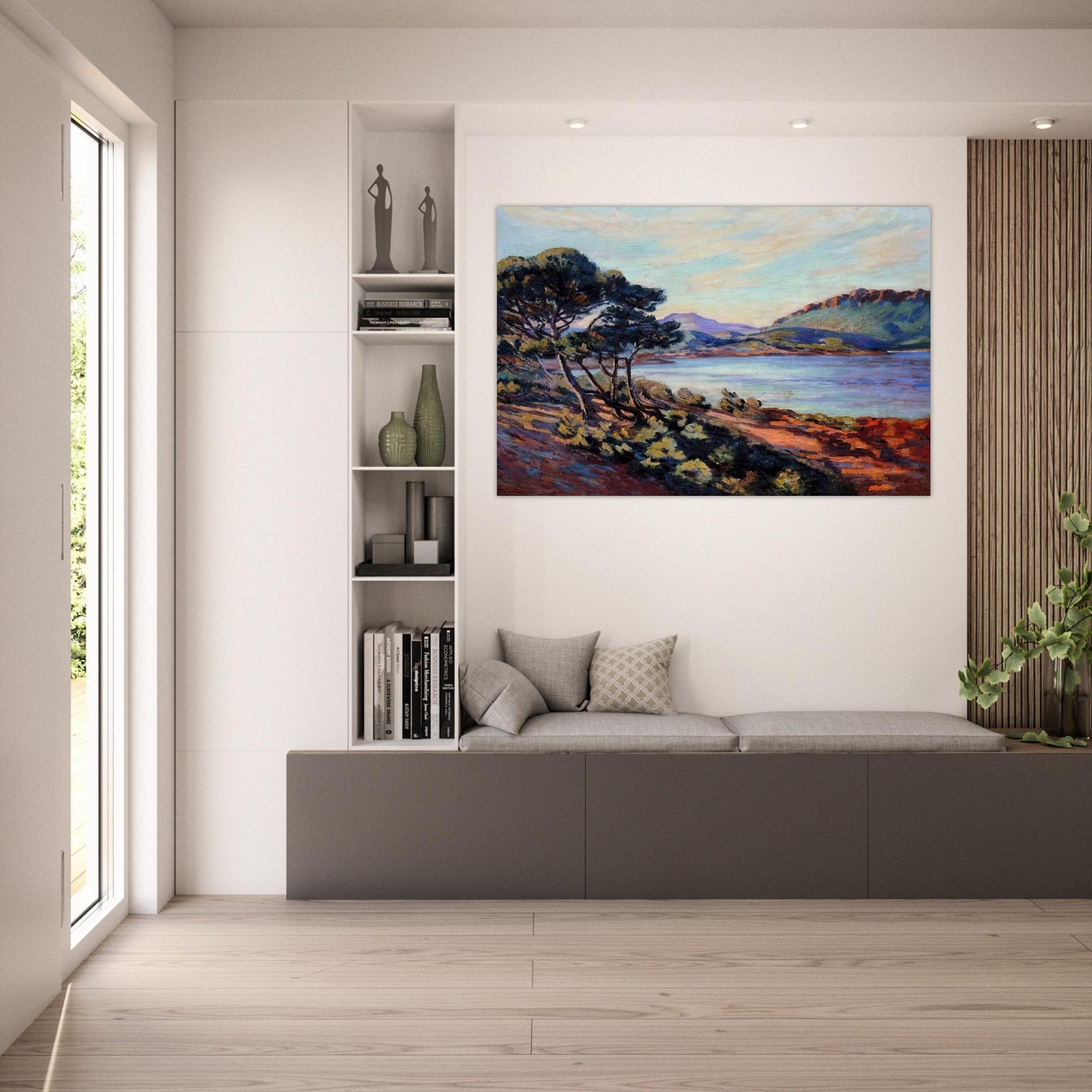
- Generous Scale: Presented in a commanding 100x150 cm (40x60″) format, this print transforms any room into a gallery. Whether displayed in a living space, office, or studio, its presence is both immersive and inspiring.
- Sustainable Luxury: Crafted with eco-conscious materials, this print aligns with the values of discerning collectors who demand both beauty and responsibility.
Guillaumin’s Agay Bay is more than a decorative piece—it is a window into the soul of Impressionism, a movement that celebrated the fleeting beauty of light and nature. By choosing this Armand Guillaumin poster, you are not only acquiring a stunning visual experience but also a piece of art history, meticulously reproduced to stand the test of time.
RedKalion is your trusted curator of world-class art reproductions. Each print is crafted with the utmost care, ensuring that every detail—from the paper’s texture to the ink’s vibrancy—reflects the original artwork’s brilliance. Bring home a masterpiece that resonates with history, emotion, and unparalleled quality.


Discover Unlimited Art Possibilities
At RedKalion, you can find virtually any artwork from any artist, available in a wide range of sizes to perfectly match your space.
If you didn’t find what you’re looking for, contact us at support@redkalion.com . We will source any artwork and produce it in any size and format you need, including art prints, posters, canvas, framed pieces, framed canvas, and more.
For dedicated art enthusiasts, we also offer handcrafted replicas of any artwork, carefully painted by highly skilled artists using traditional techniques.
For custom requests, contact us at support@redkalion.com .
What makes this Armand Guillaumin print "museum-quality"?
Our Agay Bay (1910) print is produced on acid-free, 250 gsm archival paper with a matte finish, ensuring color fidelity and longevity. The paper’s pH-neutral composition prevents yellowing, making it ideal for collectors who demand museum-quality reproductions.
How does the uncoated, off-white paper enhance the print?
The natural off-white, uncoated paper mimics the texture of traditional art paper, providing a soft, organic feel that complements Guillaumin’s Impressionist style. The matte finish reduces glare, allowing the artwork’s colors to appear rich and true to life.
What are the dimensions of this Armand Guillaumin poster?
This Armand Guillaumin print is available in a 100x150 cm (40x60″) size, offering a bold, immersive presence that transforms any space into a gallery.
Is the paper sustainably sourced?
Yes! Our Master’s Edition paper is FSC-certified, ensuring it is sourced from responsibly managed forests. Sustainability is at the heart of our commitment to eco-conscious art reproduction.
How should I care for my fine art print to ensure its longevity?
To preserve your Agay Bay print, avoid direct sunlight and humidity. Use archival-quality framing with UV-protective glass. Handle the print by the edges to prevent oils from transferring to the paper.
What inspired Armand Guillaumin’s Agay Bay?
Agay Bay reflects Guillaumin’s fascination with the Mediterranean coastline. Painted in 1910, it captures the region’s luminous light and vibrant colors, a hallmark of his later Impressionist works.
How does Guillaumin’s technique differ from other Impressionists?
Guillaumin’s bold, expressive brushwork and vibrant palette set him apart. Unlike Monet’s softer hues, Guillaumin’s work often features intense contrasts, foreshadowing the Fauvist movement.